DIYables 10K Ohm Potentiometer B10K Linear Rotary, Presoldered XH2.54 Cable, 3 Pack
 Click to zoom
Quick Overview
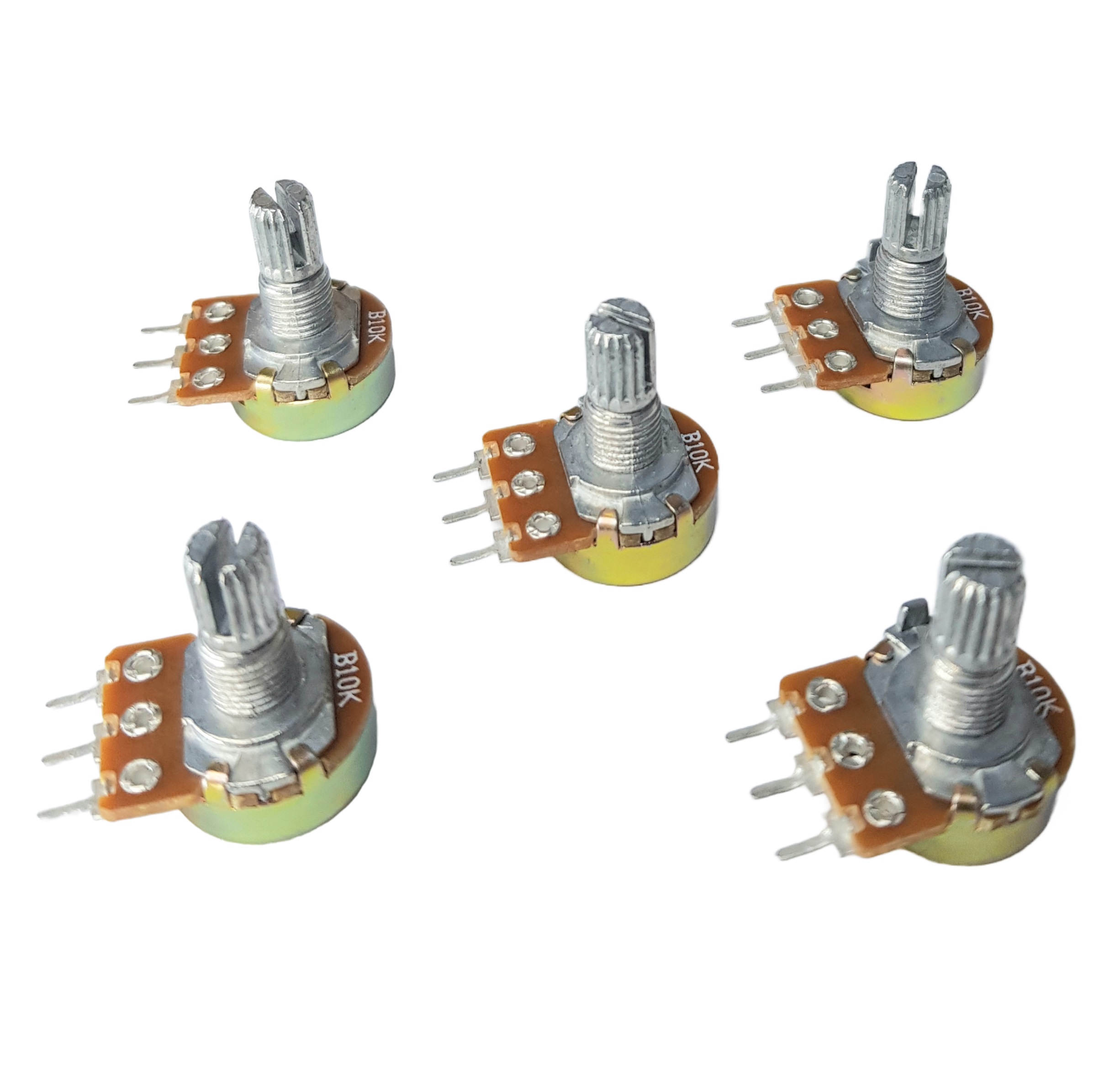
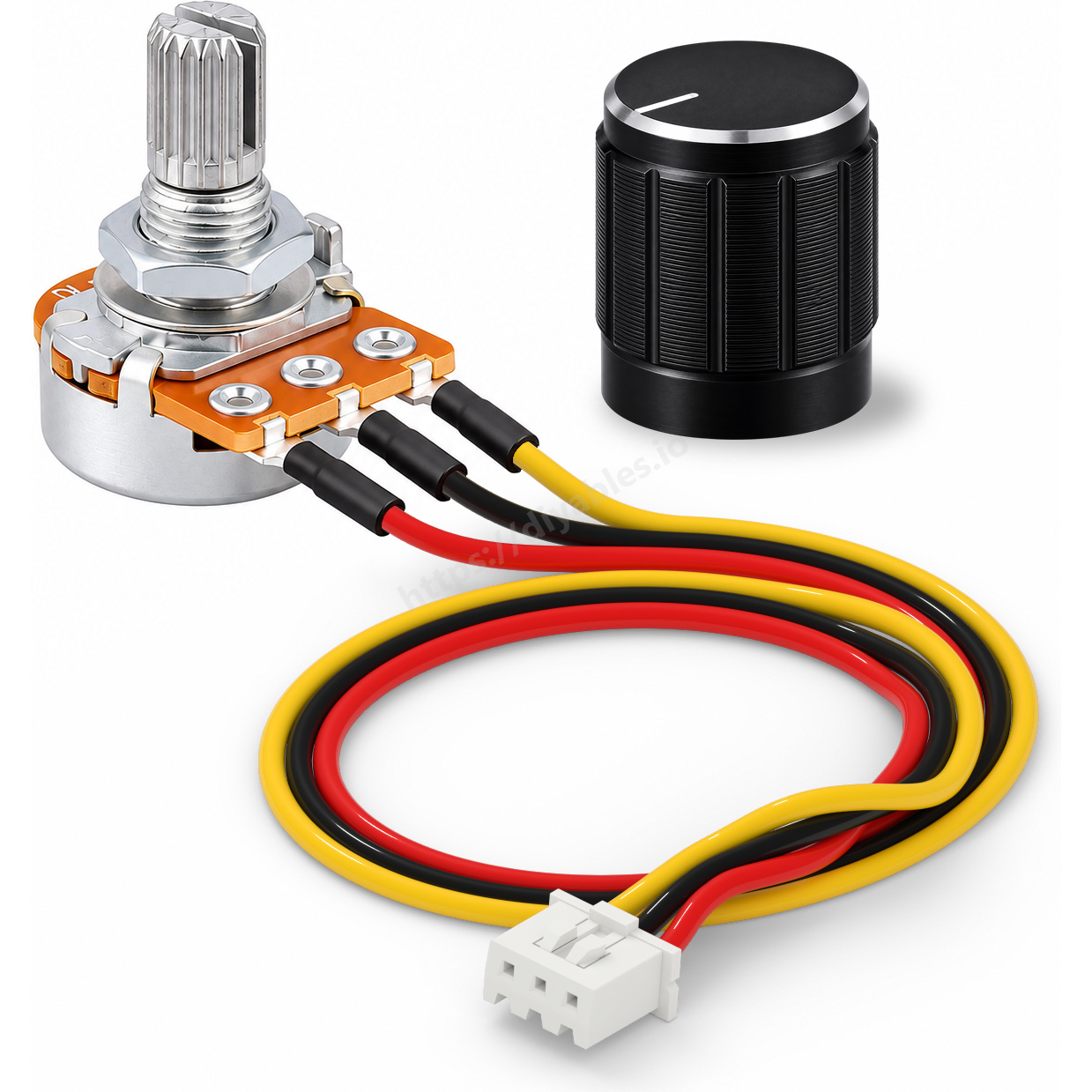
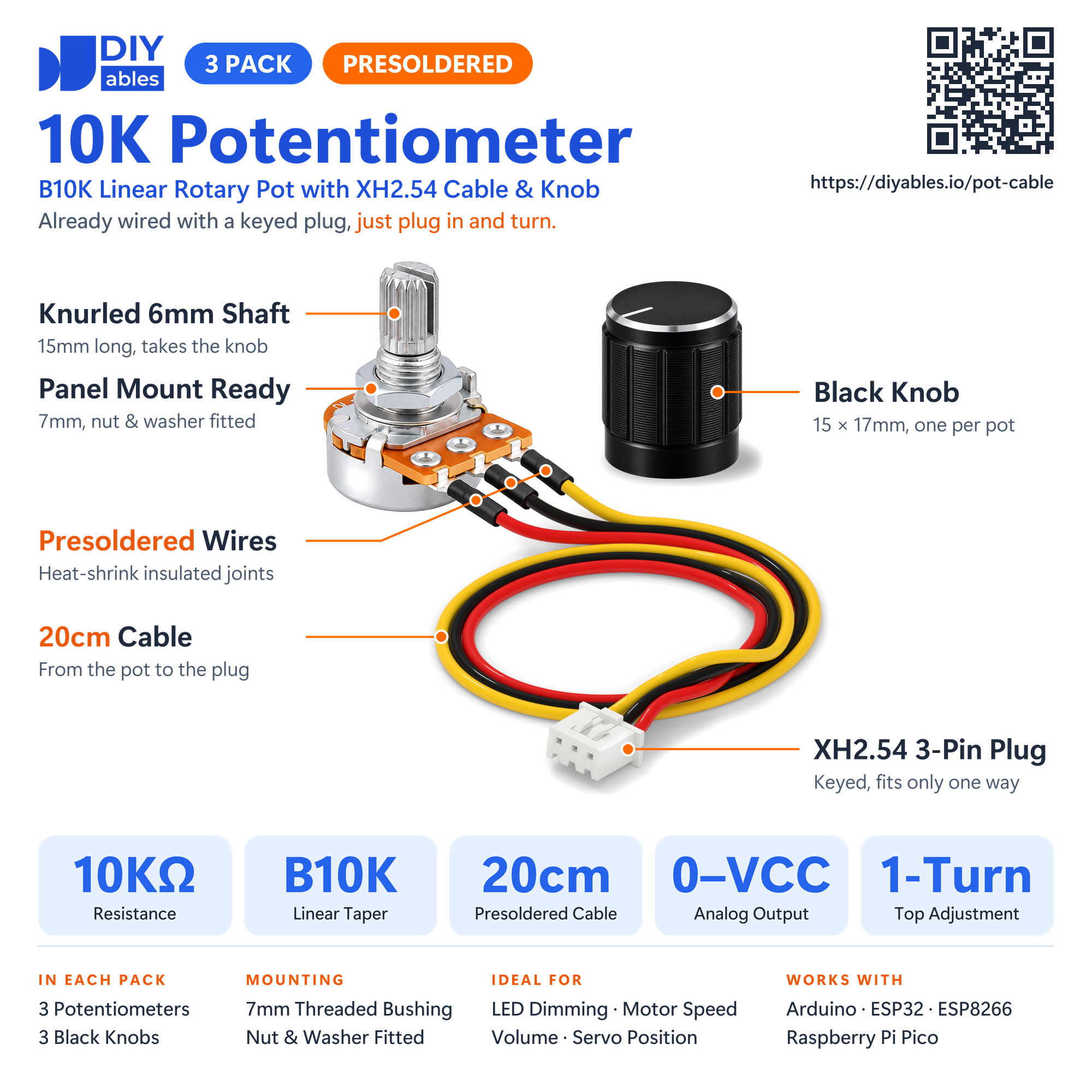
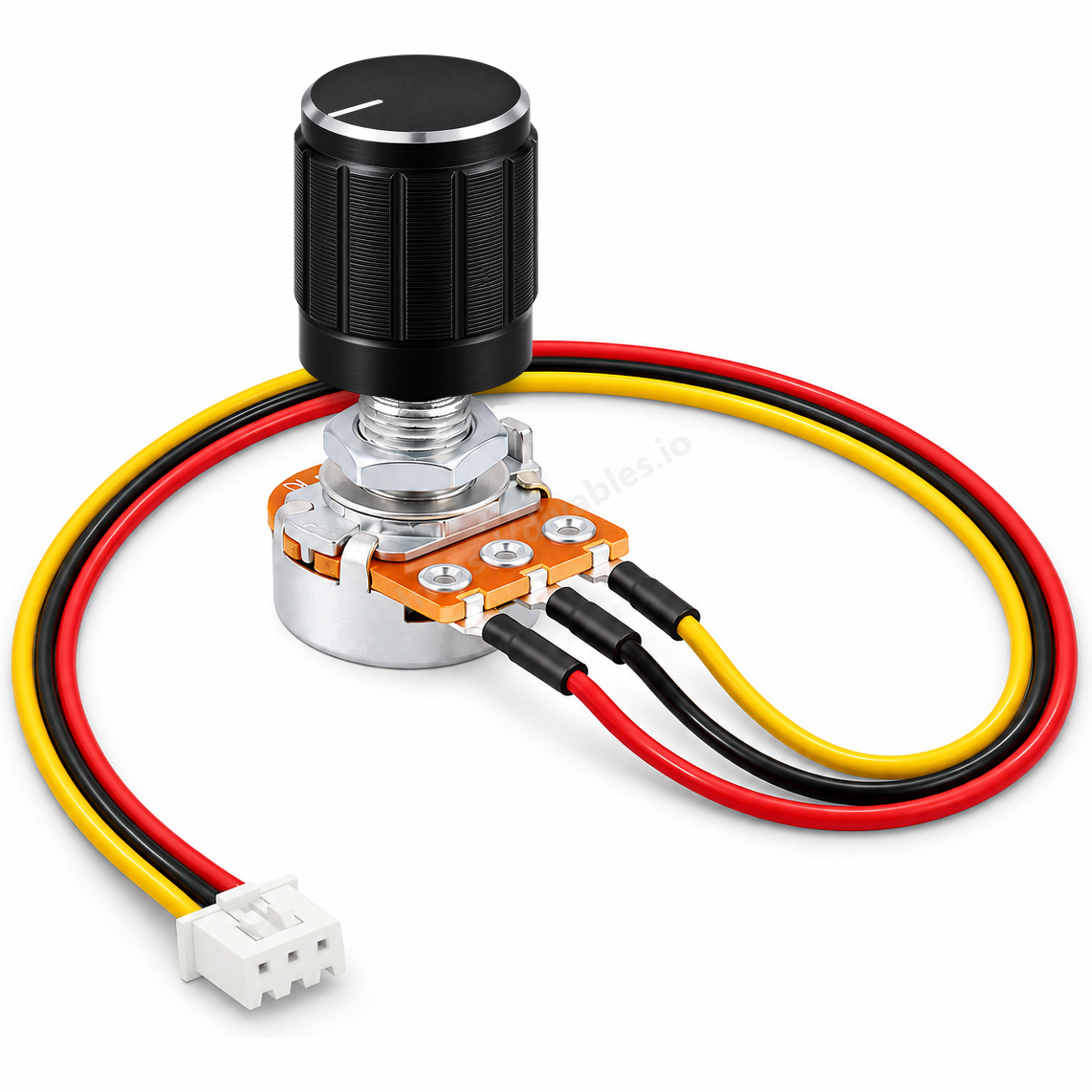
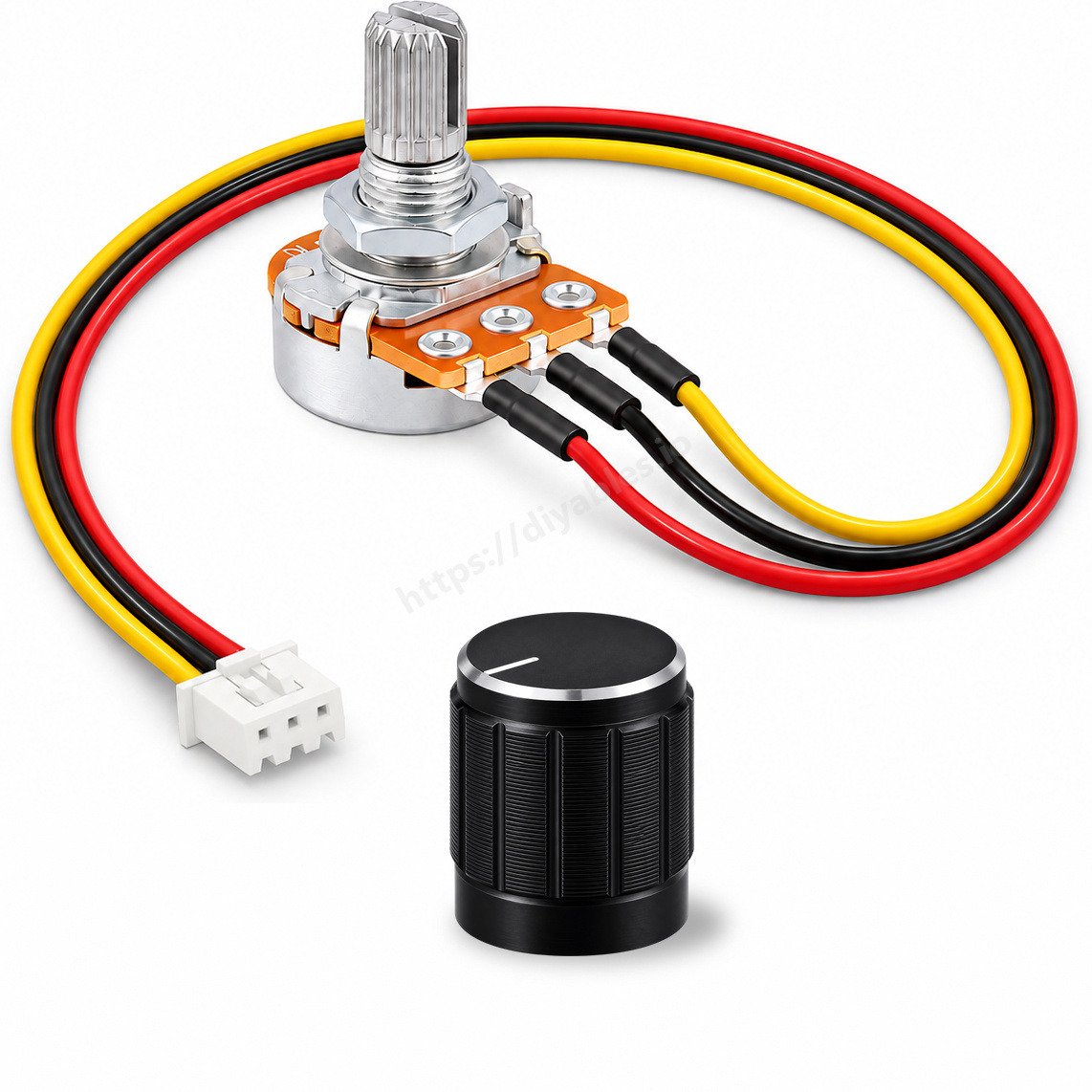
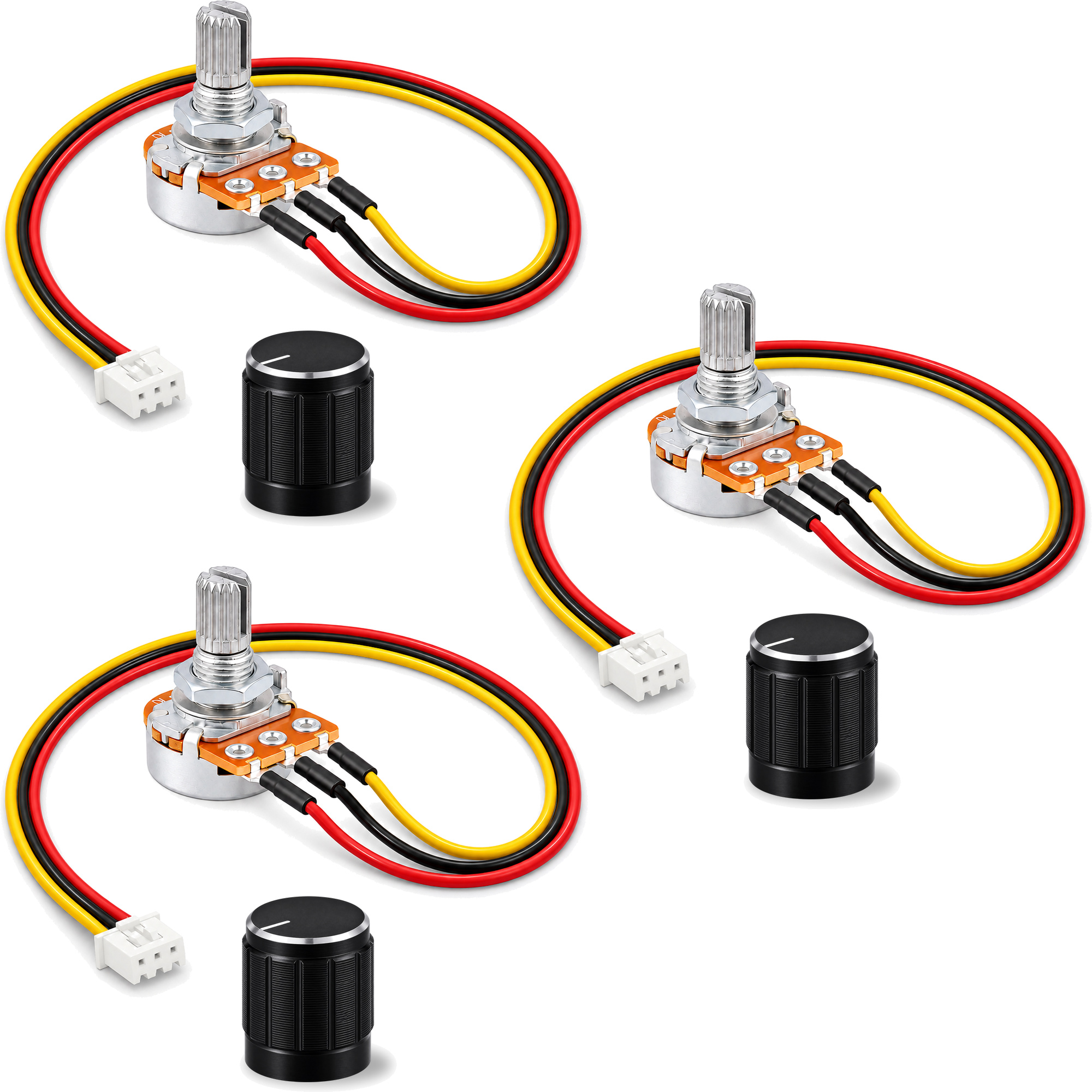
The DIYables 10K ohm rotary potentiometer set includes three WH148 B10K linear taper potentiometers, each presoldered to a 200mm cable with an XH2.54 3-pin connector, so they plug straight into your project without any soldering. The linear (type B) taper changes resistance evenly across the rotation, making it a natural fit for analog input on Arduino, ESP32, ESP8266, and Raspberry Pi Pico boards.
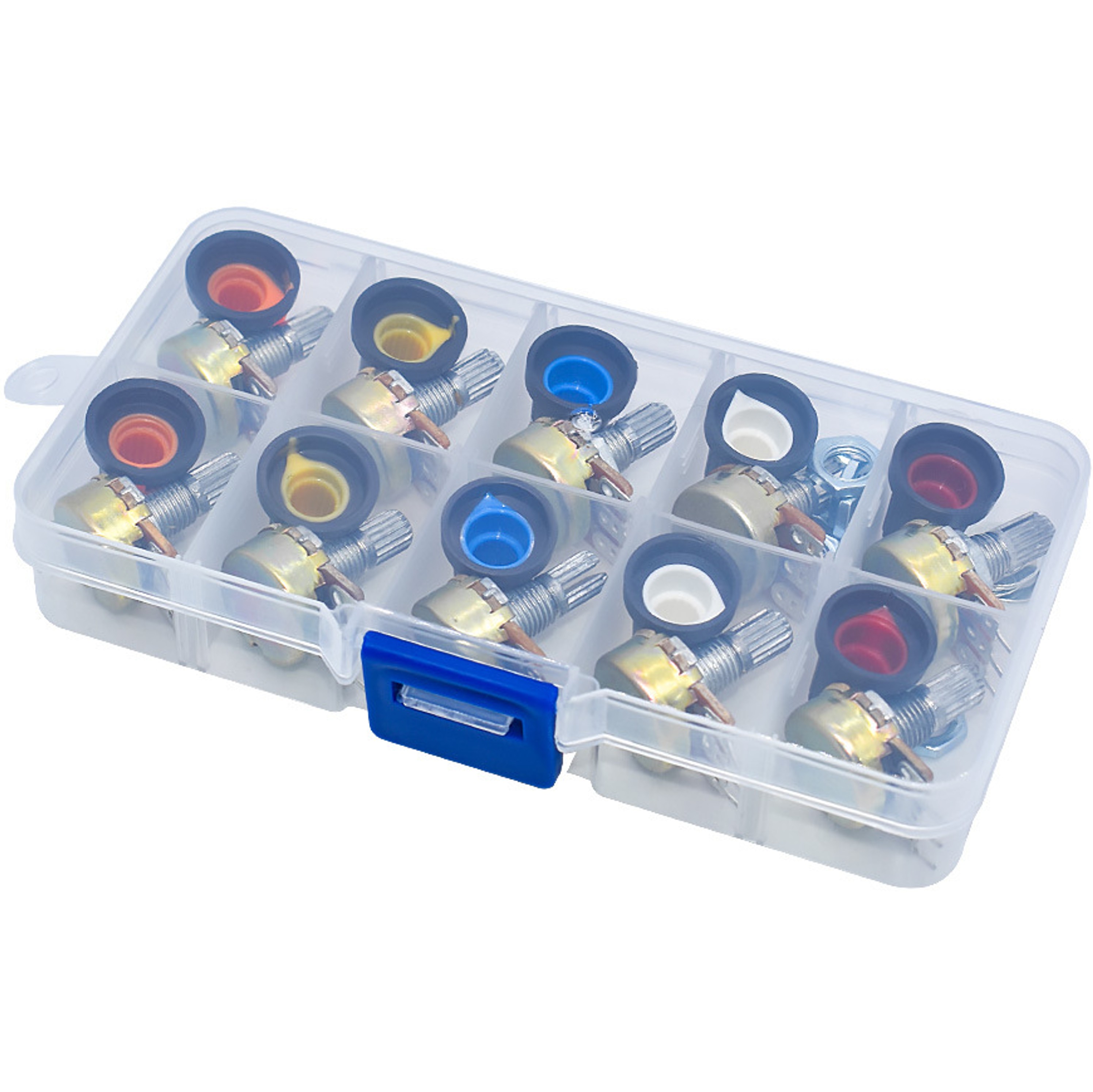
Wire the two outer pins to power and ground and read the middle wiper pin with an analog input to get a voltage proportional to the knob position. The 6mm knurled shaft is 15mm long, and the 7mm threaded bushing mounts through a panel or enclosure using the included nut and washer. Each potentiometer comes with a black 15 x 17mm knob for a clean, easy-to-grip finish.
Ideal for adjusting LED brightness, motor speed, servo position, audio volume, and menu or setpoint values in DIY electronics, robotics, synth and audio builds, and custom control panels.
Key Features
- B10K Linear Taper — WH148 10K ohm potentiometer with type B linear taper for even resistance change across the rotation
- Presoldered Cable — 200mm wires come presoldered to all three terminals, no soldering needed
- XH2.54 3-Pin Connector — Keyed XH2.54-3P plug for fast, tidy, removable connection to control boards
- Knurled 6mm Shaft — 15mm long shaft grips knobs securely for top adjustment
- Panel Mount Ready — 7mm threaded bushing with included nut and washer mounts through panels and enclosures
- Black Knobs Included — 15 x 17mm black knob for each potentiometer for an easy-to-grip finish
- Analog Input Control — Acts as a voltage divider for reading position through any ADC input
- Wide Compatibility — Works with Arduino, ESP32, ESP8266, Raspberry Pi Pico, and other boards with analog inputs
- Tutorial Support — Step-by-step potentiometer tutorials for Arduino, ESP32, ESP8266, and Raspberry Pi
- 3 Pack Value Set — Three potentiometers and three knobs for multi-control projects or spares
- ...NOTE
- Raspberry Pi single board computers (Pi 3, 4, 5) do not have analog inputs. Use an external ADC module such as the ADS1115 or MCP3008 to read the potentiometer.
- ...NOTE
SPECIFICATION
| Specification | Value |
|---|---|
| Product Type | Single Linear Rotary Potentiometer with Cable |
| Model | WH148 B10K |
| Resistance | 10K ohm |
| Taper | Linear (Type B) |
| Adjustment Type | Top adjustment, single turn |
| Shaft | 6mm diameter, 15mm length, knurled |
| Mounting Thread | 7mm diameter |
| Connector | XH2.54-3P (3-pin, 2.54mm pitch) |
| Cable Length | 200mm |
| Knob | Black, 15 x 17mm (D x H) |
| Interface | Analog (voltage divider) |
| Package Quantity | 3 potentiometers, 3 knobs, nuts and washers |
| Compatibility | Arduino, ESP32, ESP8266, Raspberry Pi Pico, any board with ADC input |
| Applications | LED dimming, motor speed control, servo positioning, volume control, control panels |
PACKAGE
A package includes:
| Qty | Items |
|---|---|
| 3 | WH148 B10K 10K Ohm Rotary Potentiometer with XH2.54-3P Cable (200mm) |
| 3 | Black Knob (15 x 17mm) |
| 3 | Mounting Nut and Washer Set |
Tutorials
- Arduino - Potentiometer
- Arduino Uno R4 - Potentiometer
- Arduino Uno Q - Potentiometer
- Arduino Nano - Potentiometer
- Arduino Nano ESP32 - Potentiometer
- Arduino Nano 33 IoT - Potentiometer
- Arduino Mega - Potentiometer
- Arduino Giga R1 WiFi - Potentiometer
- Arduino MicroPython - Potentiometer
- ESP32 - Potentiometer
- ESP32-S3 - Potentiometer
- ESP32-S3 Uno - Potentiometer
- ESP32 MicroPython - Potentiometer
- ESP8266 - Potentiometer
- Raspberry Pi - Potentiometer
- Raspberry Pi Pico - Potentiometer
COMPATIBLE HARDWARE
- Arduino boards (UNO, Mega, Nano, etc.) — Analog input pins (A0 to A5)
- Arduino Uno R4 WiFi/Minima — Analog input pins
- ESP32 development boards — ADC input pins
- ESP8266 boards (NodeMCU, Wemos D1, etc.) — A0 analog input
- Arduino Nano ESP32 — Analog input pins
- Raspberry Pi Pico — ADC pins (GP26 to GP28)
- Raspberry Pi (all models) — Through an external ADC module such as ADS1115 or MCP3008
- Any microcontroller with an ADC input — 3.3V or 5V reference