
DIYables Rotary Potentiometer Module 20K with Black Metal Knob
 Click to zoom
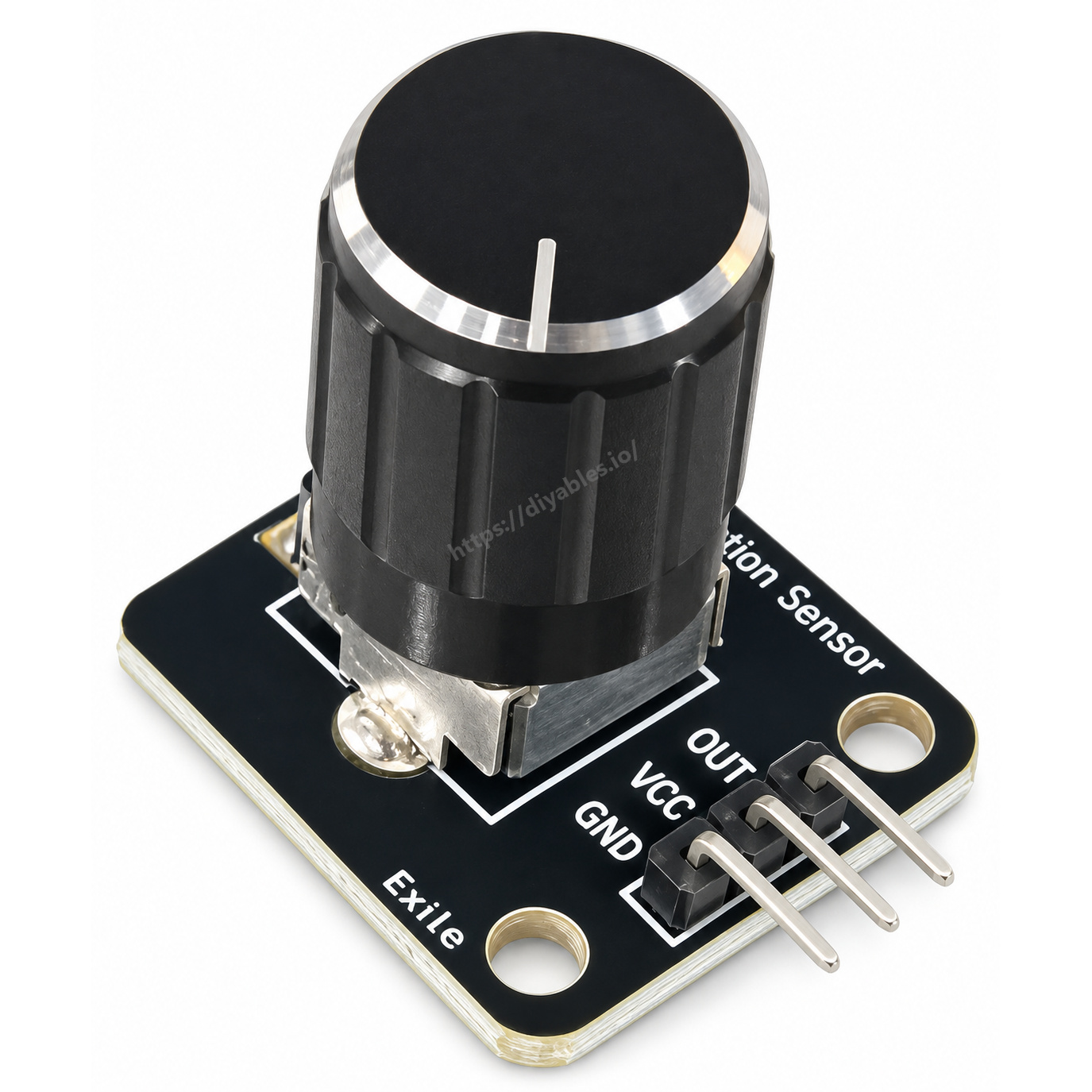
Quick Overview
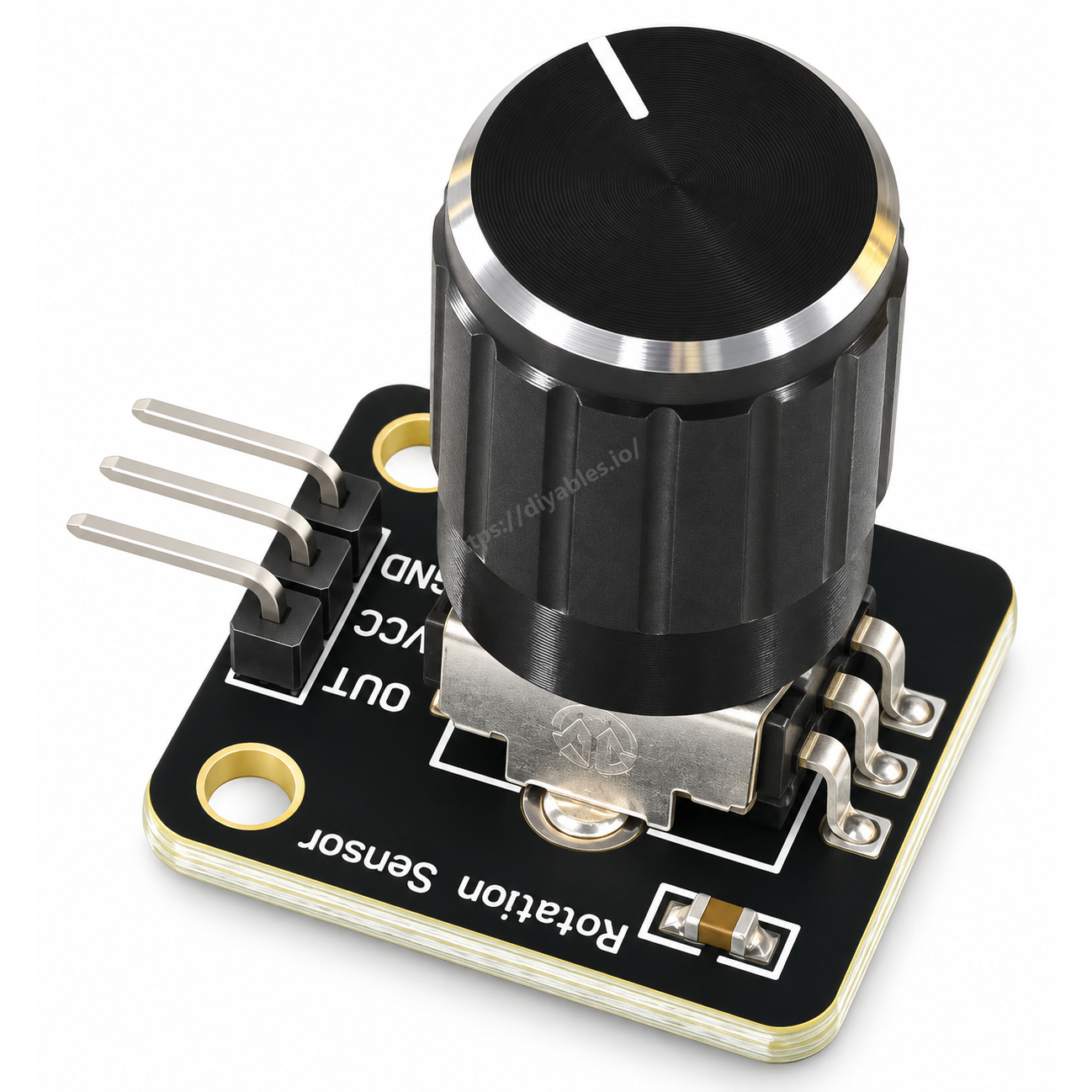
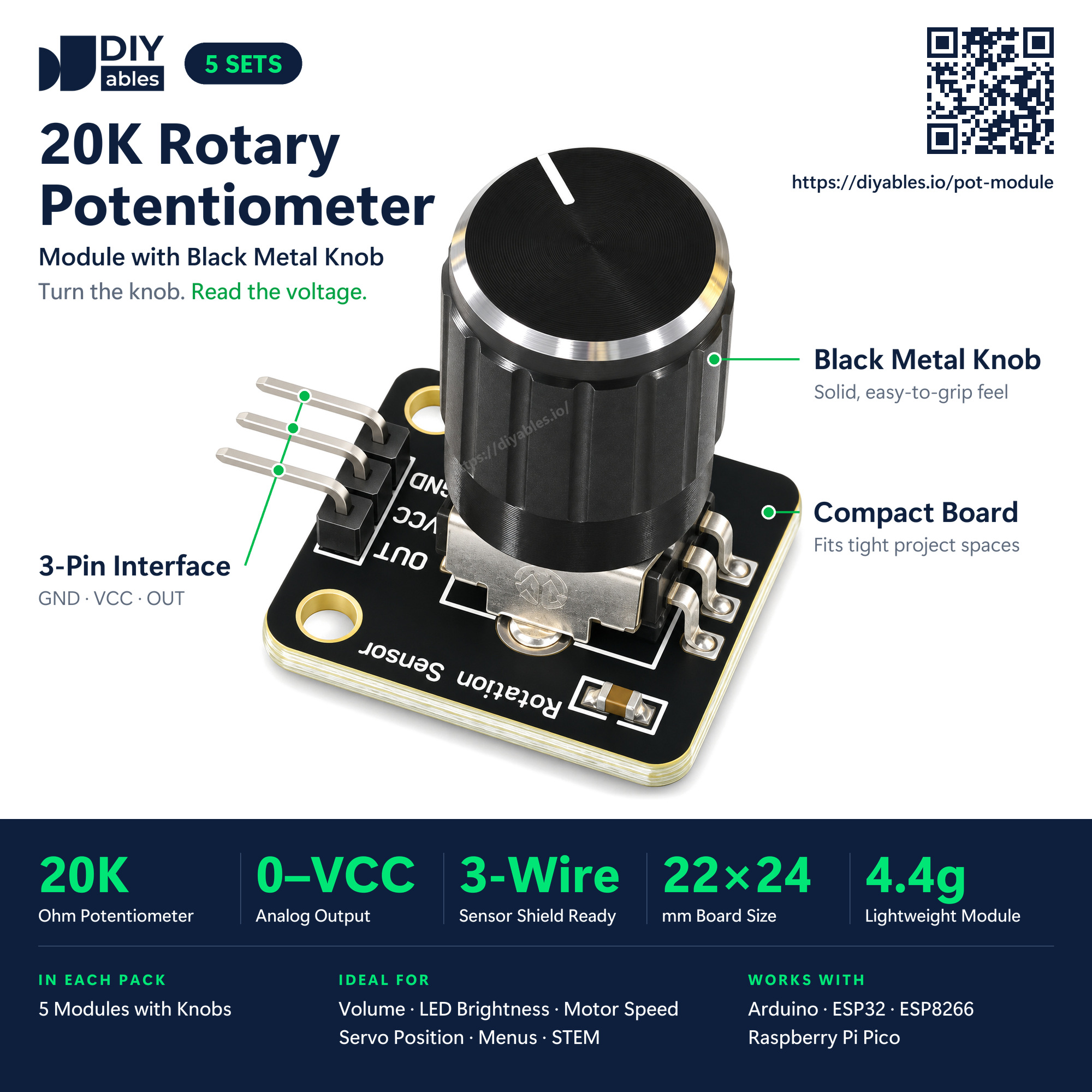
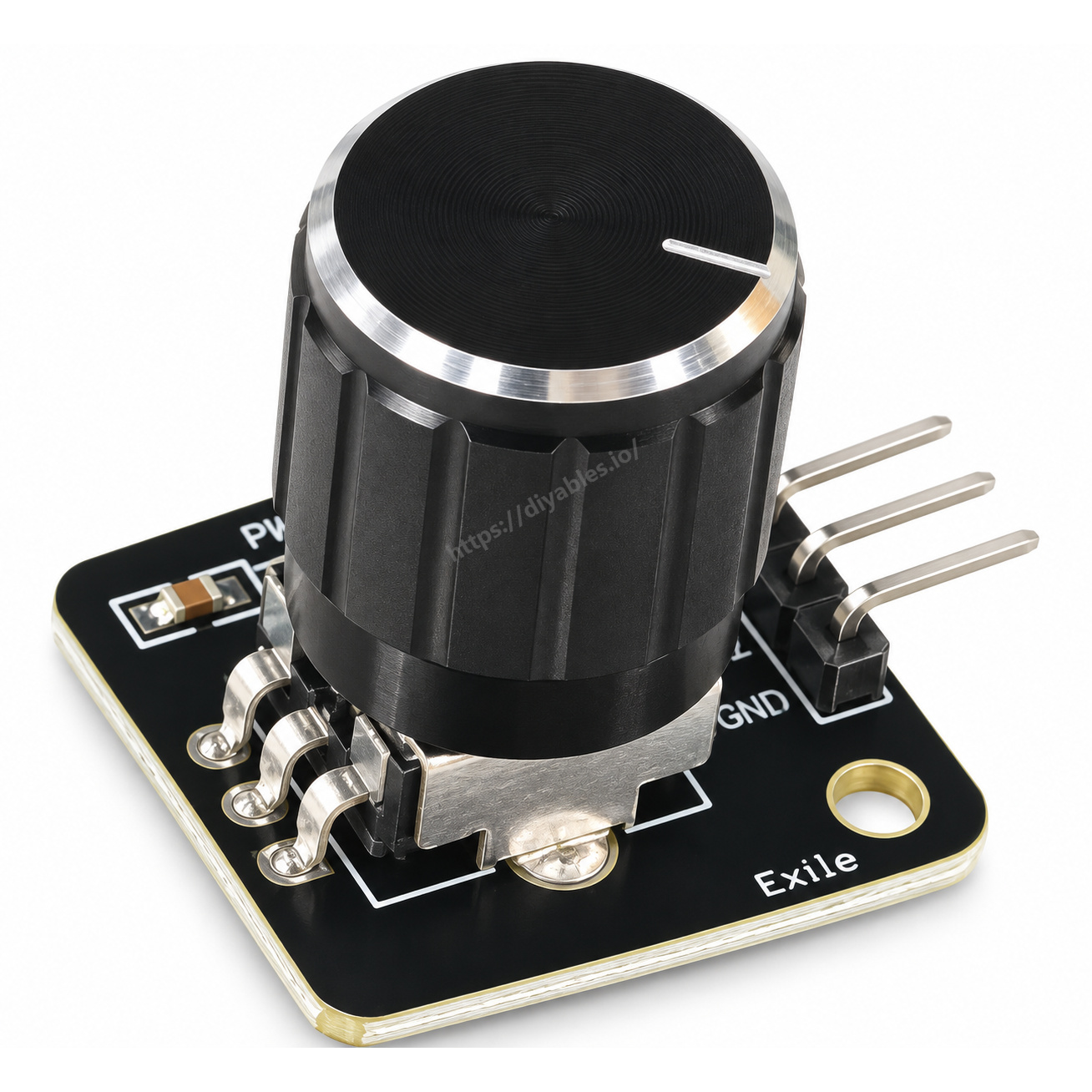
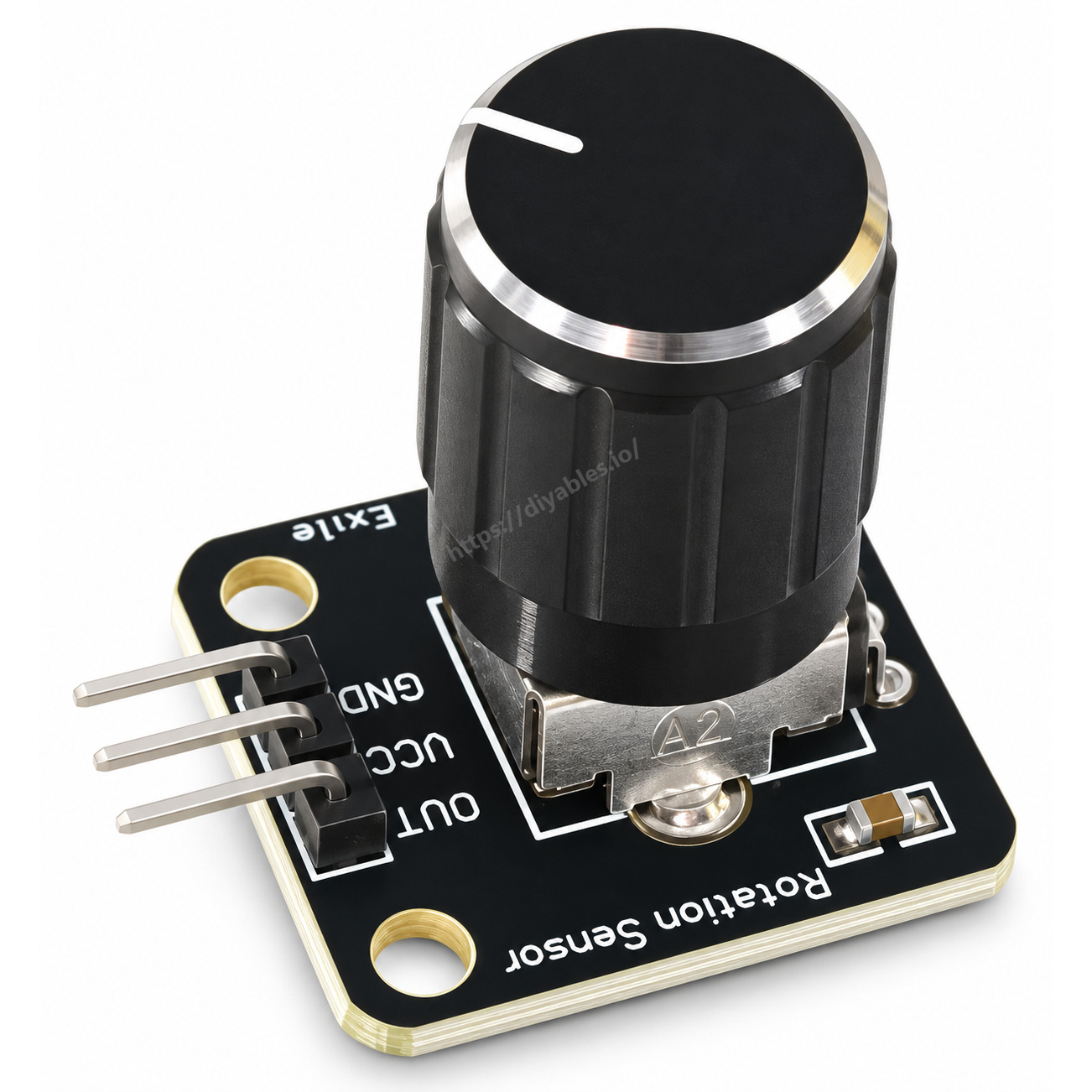
The DIYables Rotary Potentiometer Module mounts a 20K ohm potentiometer on a compact 22 x 24mm board topped with a black metal knob. It turns knob position into a smooth analog voltage for Arduino, ESP32, ESP8266, and Raspberry Pi Pico projects.
Because the potentiometer is already on a module, wiring comes down to a 3 pin interface for power, ground, and signal. The pin layout plugs straight into common sensor expansion shields with a single 3 wire cable, so there is no need to work out which leg of a bare potentiometer goes where. Powered from 5V, the signal pin outputs 0 to 5V depending on knob position, which you read through an analog to digital input. At about 4.4g, it adds almost no weight to a build.
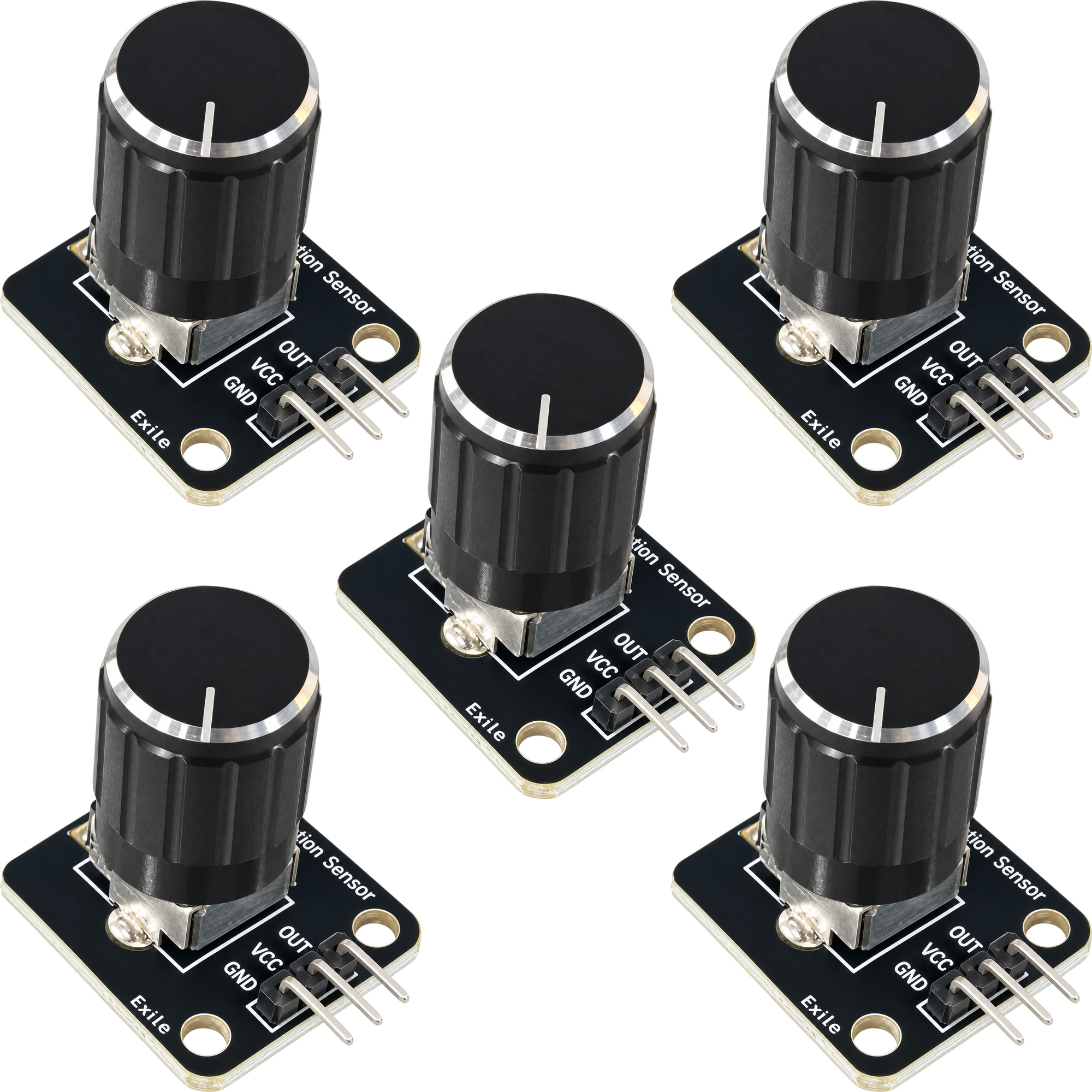
Ideal for volume control, LED brightness and motor speed adjustment, servo positioning, menu navigation, and beginner or classroom electronics projects. Five sets cover multi-control builds and spares.
Key Features
- 20K Ohm Potentiometer — Rotary potentiometer for smooth, precise analog position control
- Black Metal Knob — Durable metal knob for a solid, easy-to-grip feel
- Easy 3 Pin Module Wiring — Power, ground, and signal pins, no need to identify bare potentiometer legs
- Sensor Shield Compatible — Pin layout plugs directly into sensor expansion boards with a 3 wire cable
- 0 to 5V Analog Output — Signal voltage follows knob position, read through any ADC input
- Compact 22 x 24mm Board — Small, lightweight 4.4g module fits tight project spaces
- Wide Compatibility — Works with Arduino, ESP32, ESP8266, Raspberry Pi Pico, and other boards with analog inputs
- Tutorial Support — Step-by-step potentiometer tutorials for Arduino, ESP32, ESP8266, and Raspberry Pi
- 5 Sets Value Pack — Five modules with knobs for multi-control projects or classroom kits
- ...NOTE
- Raspberry Pi single board computers (Pi 3, 4, 5) do not have analog inputs. Use an external ADC module such as the ADS1115 or MCP3008 to read the potentiometer. On 3.3V boards such as ESP32, power the module from 3.3V so the output stays within the ADC input range.
- ...NOTE
SPECIFICATION
| Specification | Value |
|---|---|
| Product Type | Rotary Potentiometer Module with Knob |
| Resistance | 20K ohm |
| Knob | Black, metal |
| Interface | 3 pin (power, ground, analog signal) |
| Output | Analog 0 to 5V (requires ADC input) |
| Connector Compatibility | Sensor expansion shields (3 pin cable) |
| Board Size | 22mm x 24mm |
| Weight | 4.4g |
| Package Quantity | 5 sets |
| Compatibility | Arduino, ESP32, ESP8266, Raspberry Pi Pico, STM32 |
| Applications | Volume control, LED brightness, motor speed, servo position, menu navigation, STEM education |
PACKAGE
A package includes:
| Qty | Items |
|---|---|
| 5 | 20K Rotary Potentiometer Module with Black Metal Knob |
Tutorials
- Arduino - Potentiometer
- Arduino Uno R4 - Potentiometer
- Arduino Uno Q - Potentiometer
- Arduino Nano - Potentiometer
- Arduino Nano ESP32 - Potentiometer
- Arduino Nano 33 IoT - Potentiometer
- Arduino Mega - Potentiometer
- Arduino Giga R1 WiFi - Potentiometer
- Arduino MicroPython - Potentiometer
- ESP32 - Potentiometer
- ESP32-S3 - Potentiometer
- ESP32-S3 Uno - Potentiometer
- ESP32 MicroPython - Potentiometer
- ESP8266 - Potentiometer
- Raspberry Pi - Potentiometer
- Raspberry Pi Pico - Potentiometer
COMPATIBLE HARDWARE
- Arduino boards (UNO, Mega, Nano) — Direct analog input connection at 5V
- Arduino sensor expansion shields — Plug in with a 3 pin cable for solder-free wiring
- ESP32 and ESP8266 boards — Analog input, power the module from 3.3V
- Raspberry Pi Pico — ADC input at 3.3V
- Raspberry Pi (all models) — Requires an external ADC module such as ADS1115 or MCP3008
- Servo motors, LEDs, and DC motor drivers — Common loads controlled by knob position
- Any microcontroller with an analog to digital input