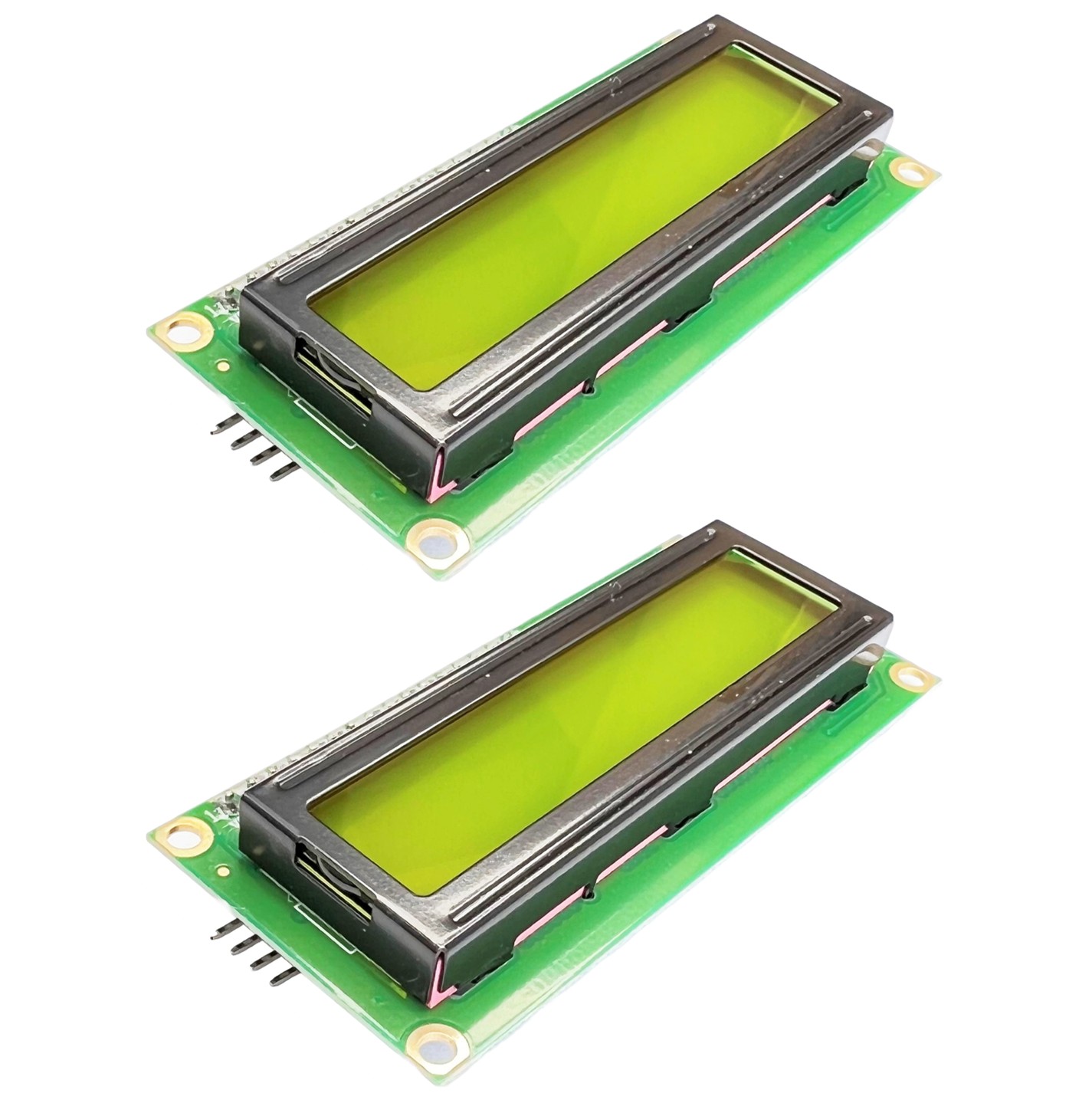
DIYables LCD I2C 1602 Green/Yellow Backlight for Arduino, ESP32, ESP8266, Raspberry Pi - Easy I2C Interface Display
 Click to zoom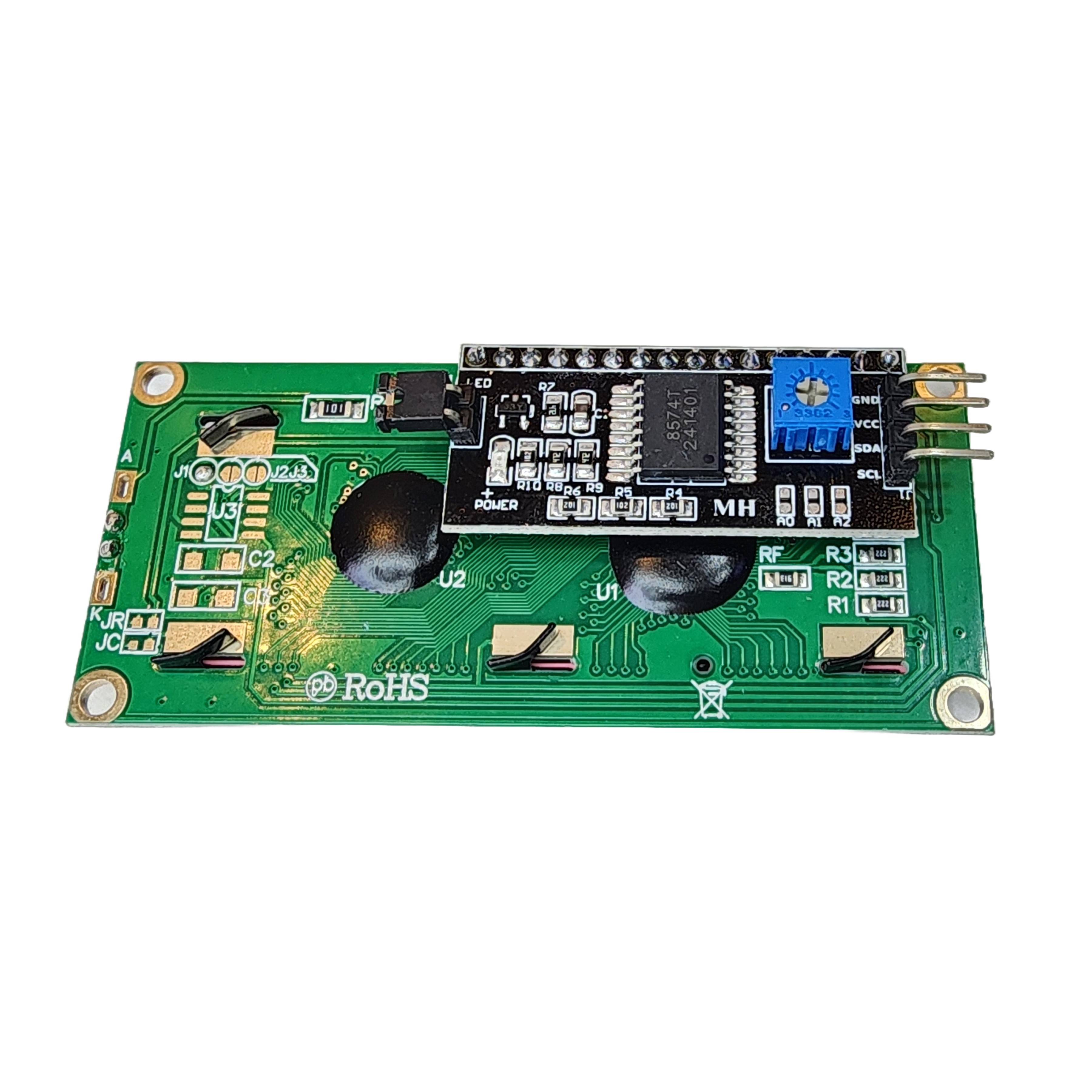
Quick Overview
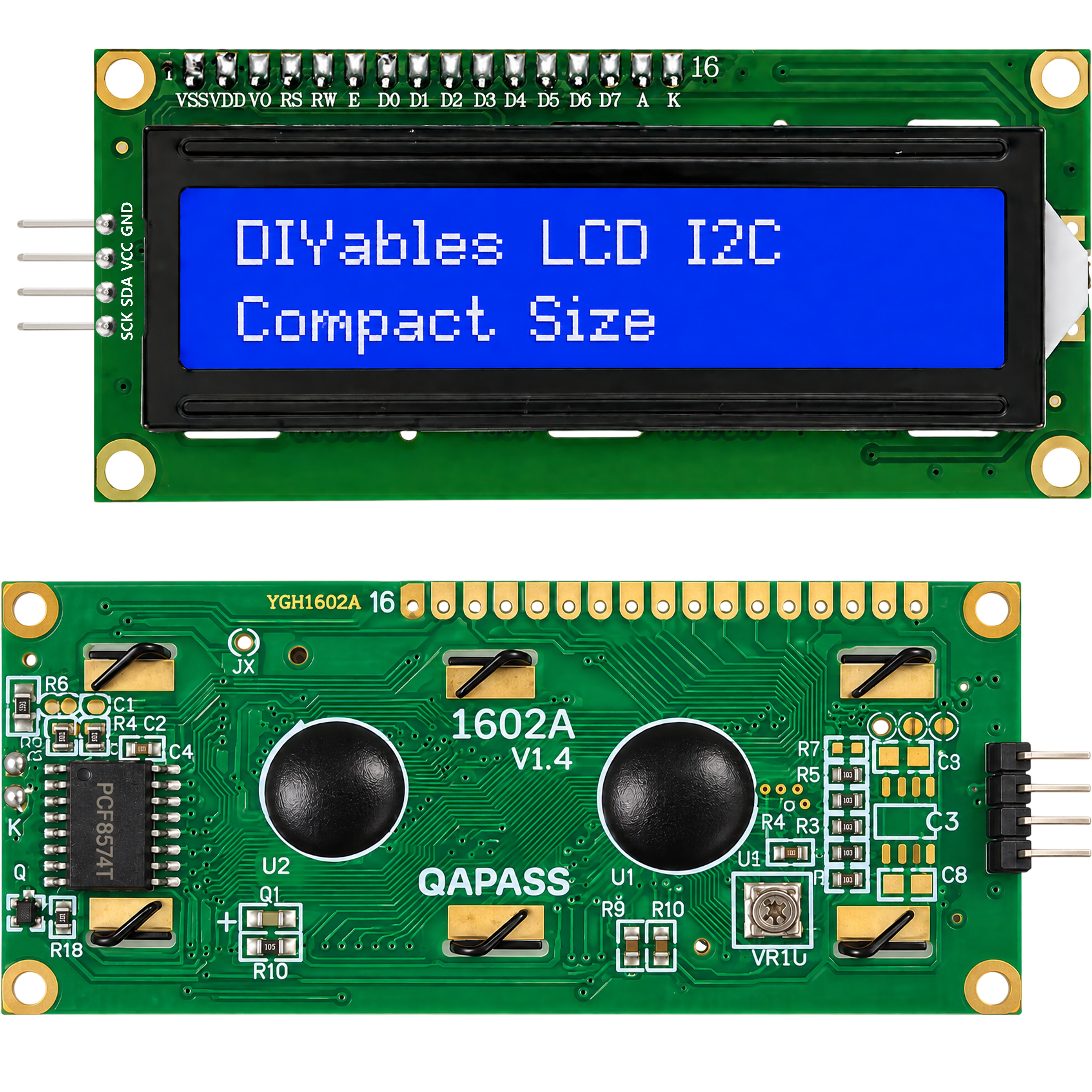
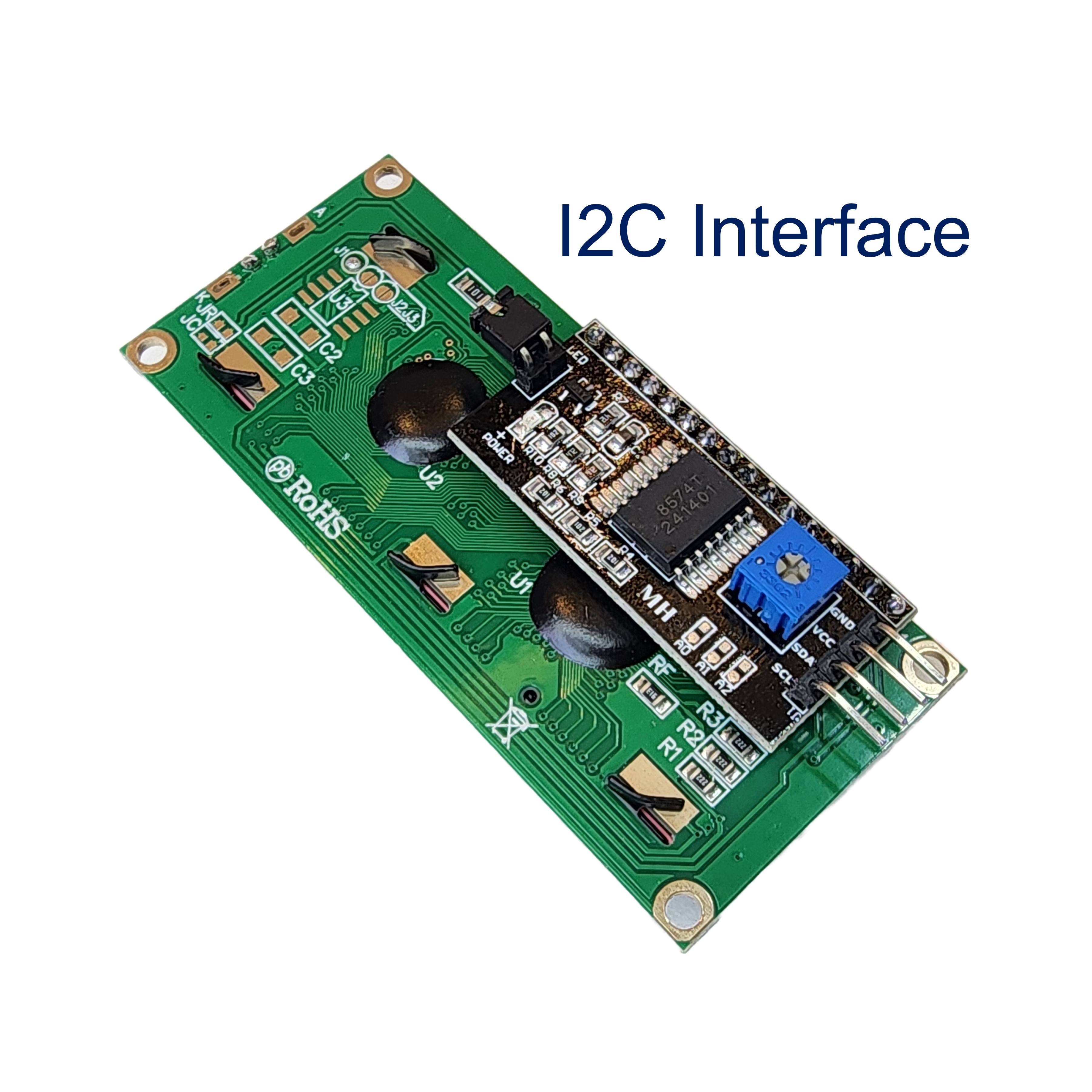
This 2-pack of 16x2 LCD displays features green/yellow backlight with I2C interface for minimal wiring. Each display shows 2 lines of 16 characters with integrated I2C module, making it perfect for portable, battery-powered IoT applications and DIY electronics projects.
The green/yellow backlight provides clear visibility while consuming low power. Beginner-friendly with easy-to-use libraries and minimal connections to Arduino, ESP32, ESP8266, and Raspberry Pi.
Key Features
- 2-Pack Value: Two LCD I2C 1602 displays included
- Green/Yellow Backlight: Clear, vibrant text visibility
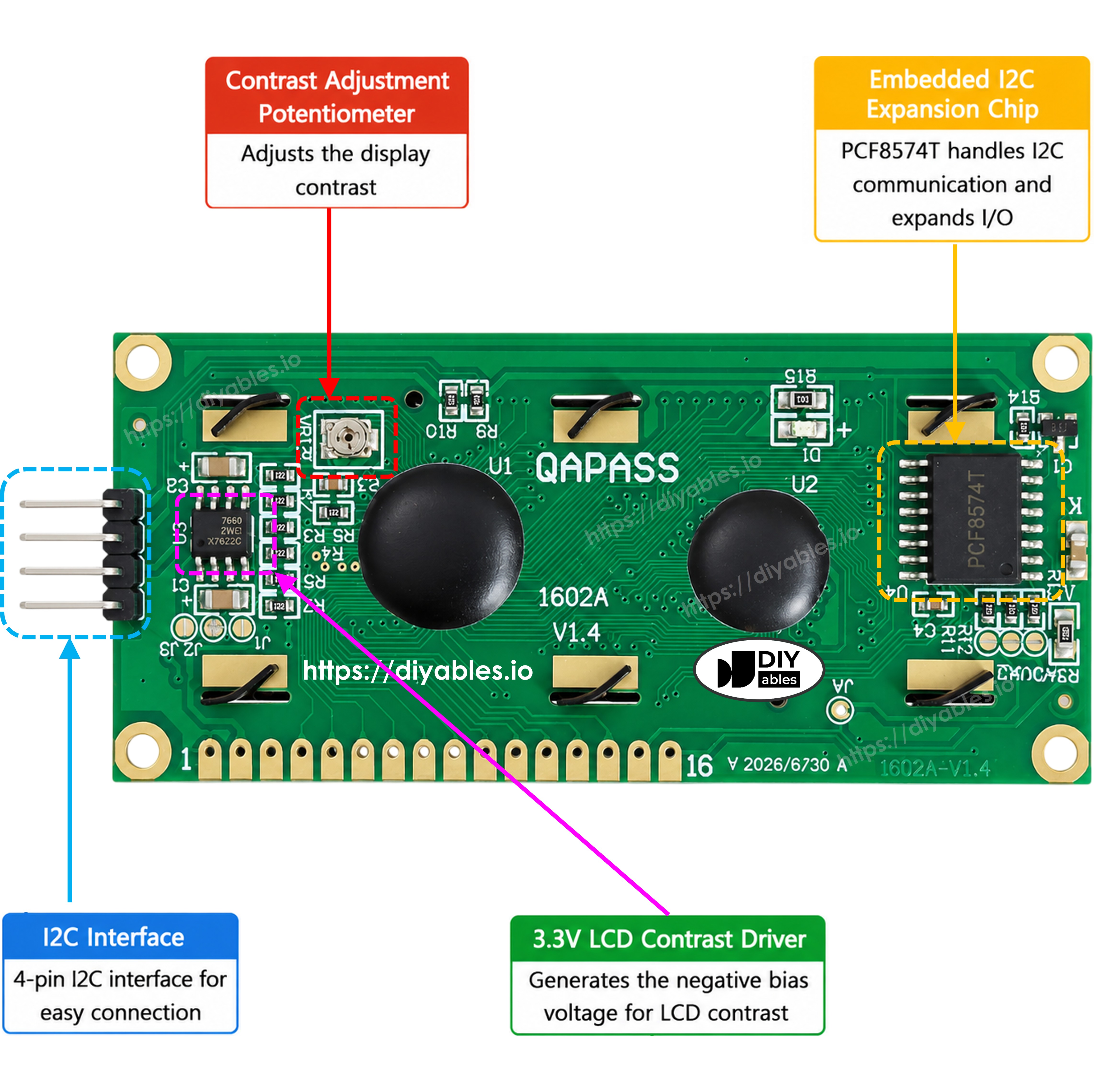
- Easy I2C Interface: Integrated I2C module, 4-wire connection
- 16x2 Display: 32 characters (16 columns × 2 rows)
- Low Power: Energy-efficient for battery-powered projects
- Beginner-Friendly: Simple wiring and libraries
- Wide Compatibility: Works with Arduino, ESP32, ESP8266, Raspberry Pi
SPECIFICATION
| Specification | Value |
|---|---|
| Product Type | LCD Character Display with I2C |
| Quantity | 2 pieces |
| Display Size | 16x2 (16 columns, 2 rows) |
| Backlight Color | Green/Yellow |
| Interface | I2C (4 wires) |
| Supply Voltage | +5V |
| Contrast Adjustment | Potentiometer |
| Backlight Control | Programmable ON/OFF |
Tutorials
- Arduino - LCD I2C tutorial
- Arduino Uno R4 - LCD I2C tutorial
- Arduino Uno Q - LCD I2C tutorial
- Arduino Nano - LCD I2C tutorial
- Arduino Nano ESP32 - LCD I2C tutorial
- Arduino Nano 33 IoT - LCD I2C tutorial
- Arduino Mega - LCD I2C tutorial
- Arduino MKR WiFi 1010 - LCD I2C tutorial
- Arduino Giga R1 WiFi - LCD I2C tutorial
- Arduino MicroPython - LCD I2C tutorial
- ESP32 - LCD I2C tutorial
- ESP32-C3 Super Mini - LCD I2C tutorial
- ESP32-S3 - LCD I2C tutorial
- ESP32 MicroPython - LCD I2C tutorial
- ESP8266 - LCD I2C tutorial
- Raspberry Pi - LCD I2C tutorial
- Raspberry Pi Pico - LCD I2C tutorial
COMPATIBLE HARDWARE
- Arduino boards (UNO, Mega, Nano, etc.)
- ESP32 development boards
- ESP8266 (NodeMCU, Wemos D1, etc.)
- Raspberry Pi (all models)
- Raspberry Pi Pico
- Any 5V or 3.3V microcontroller with I2C interface