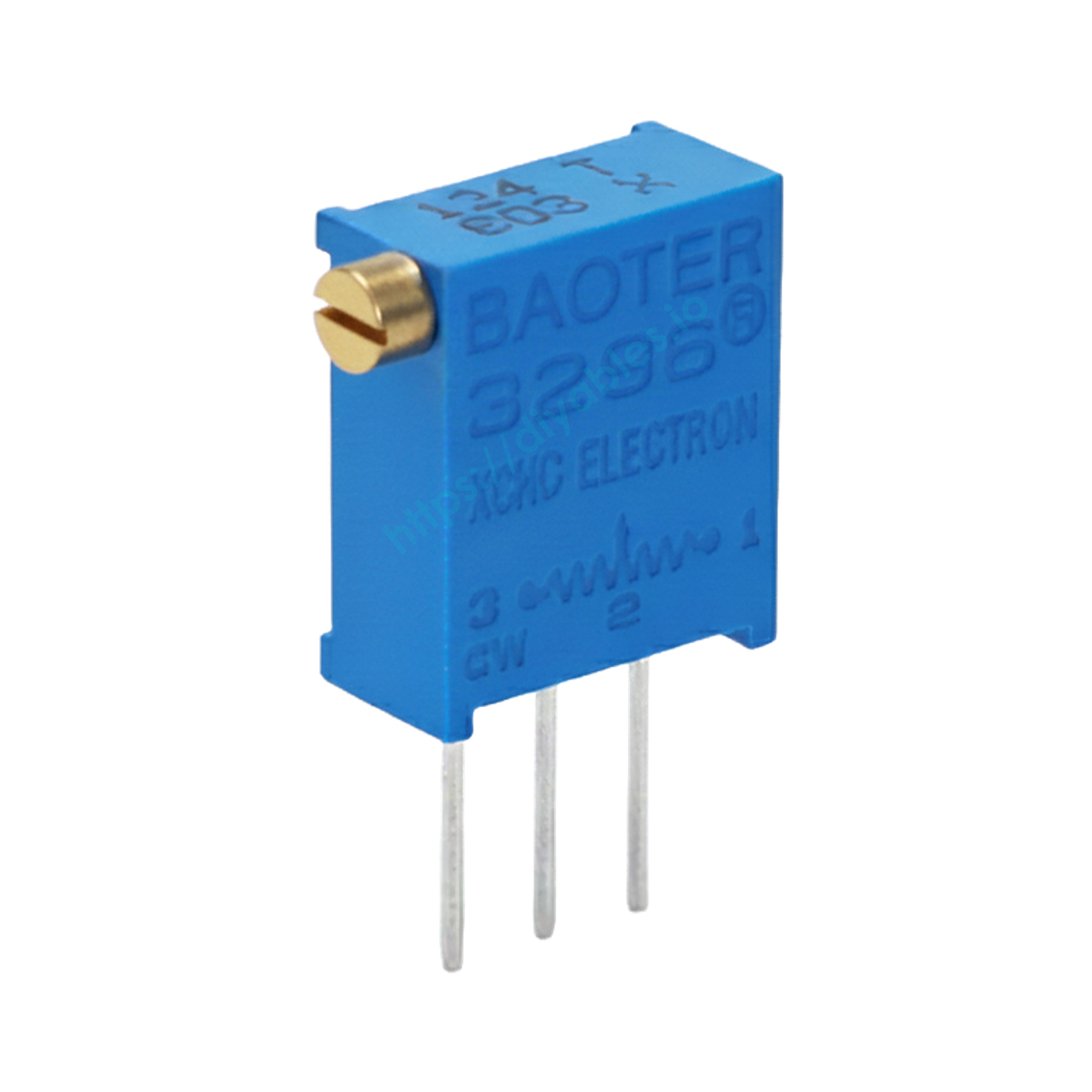
DIYables 10k Ohm Trimmer Potentiometer Side Adjust,10 Pieces
 Click to zoom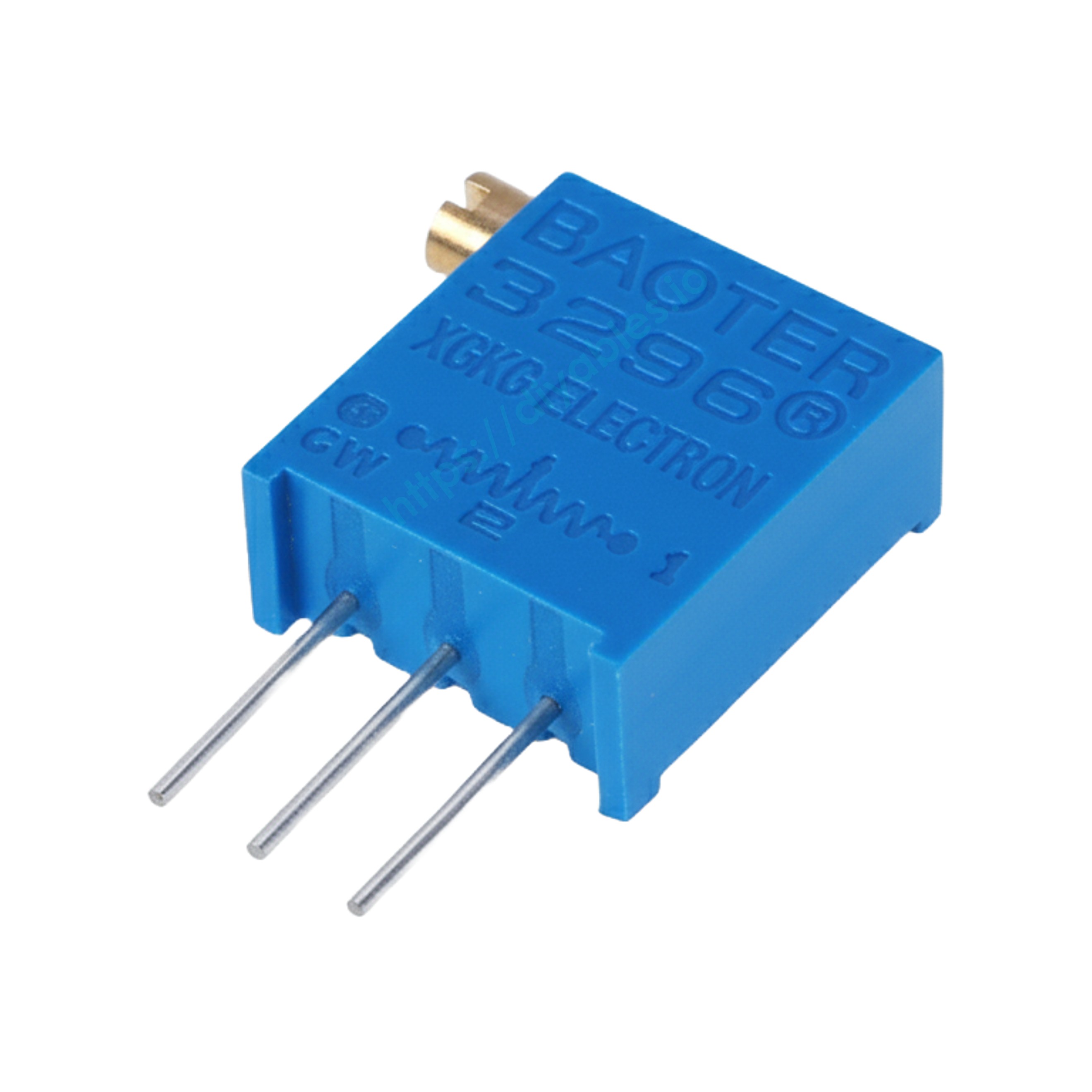
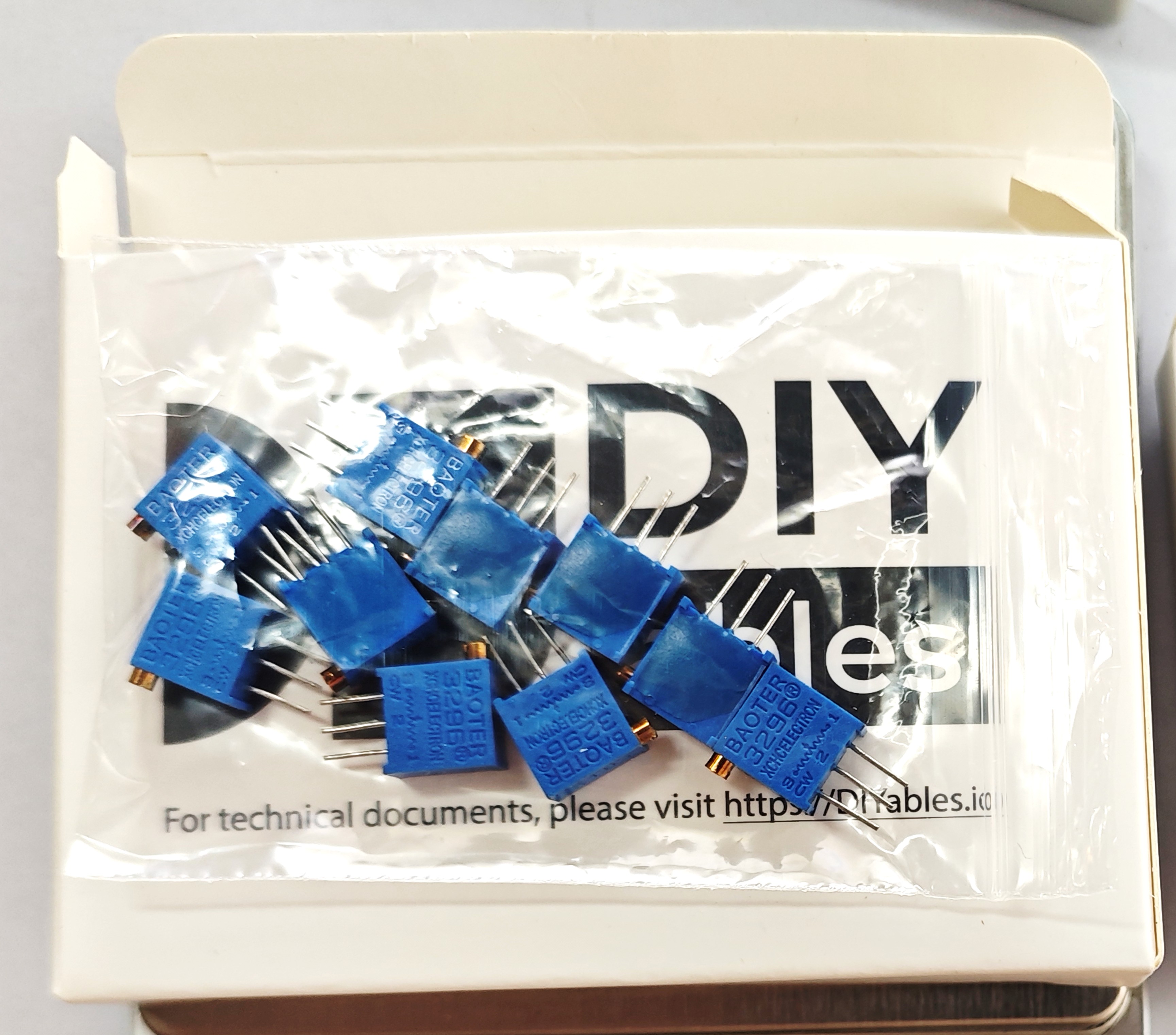
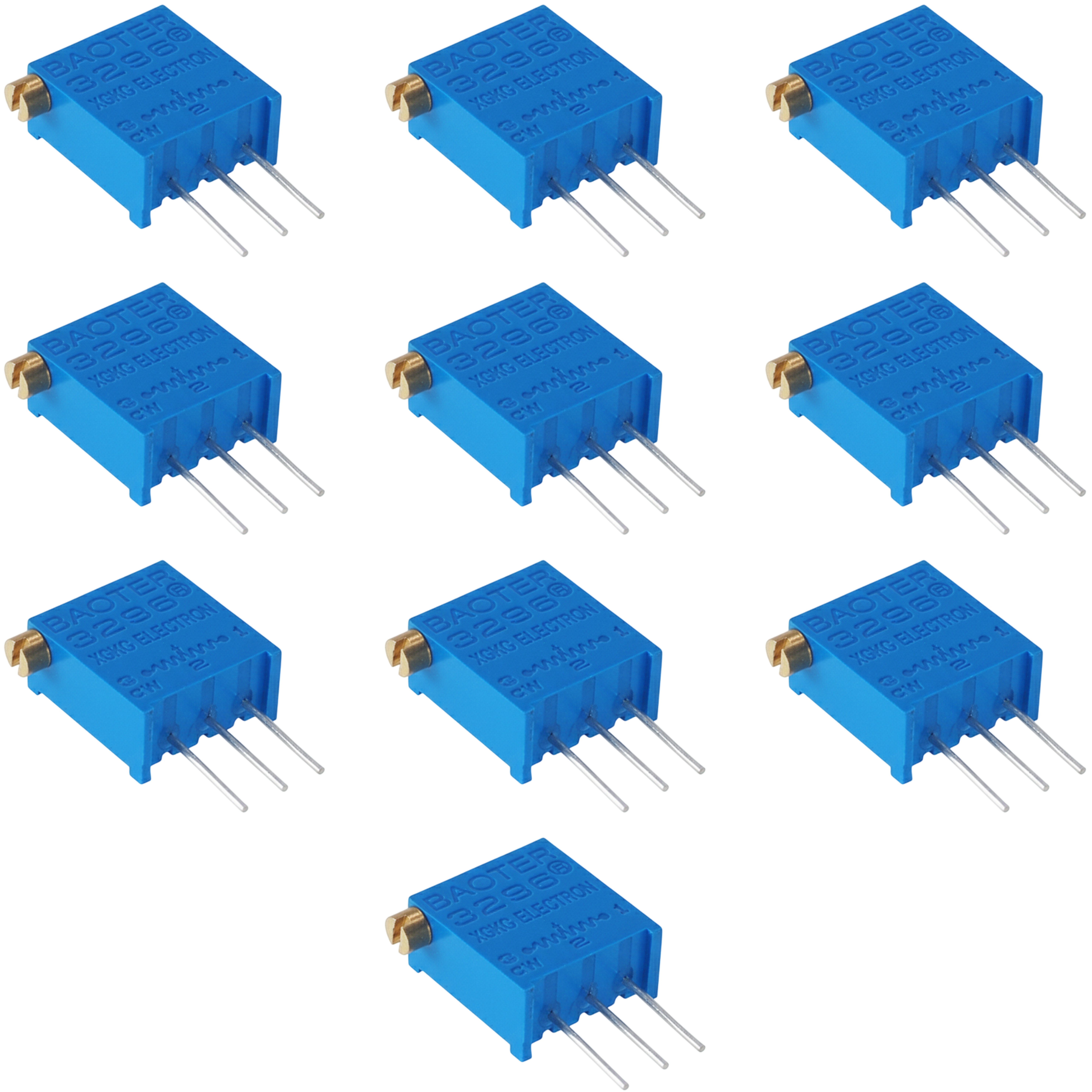
Quick Overview
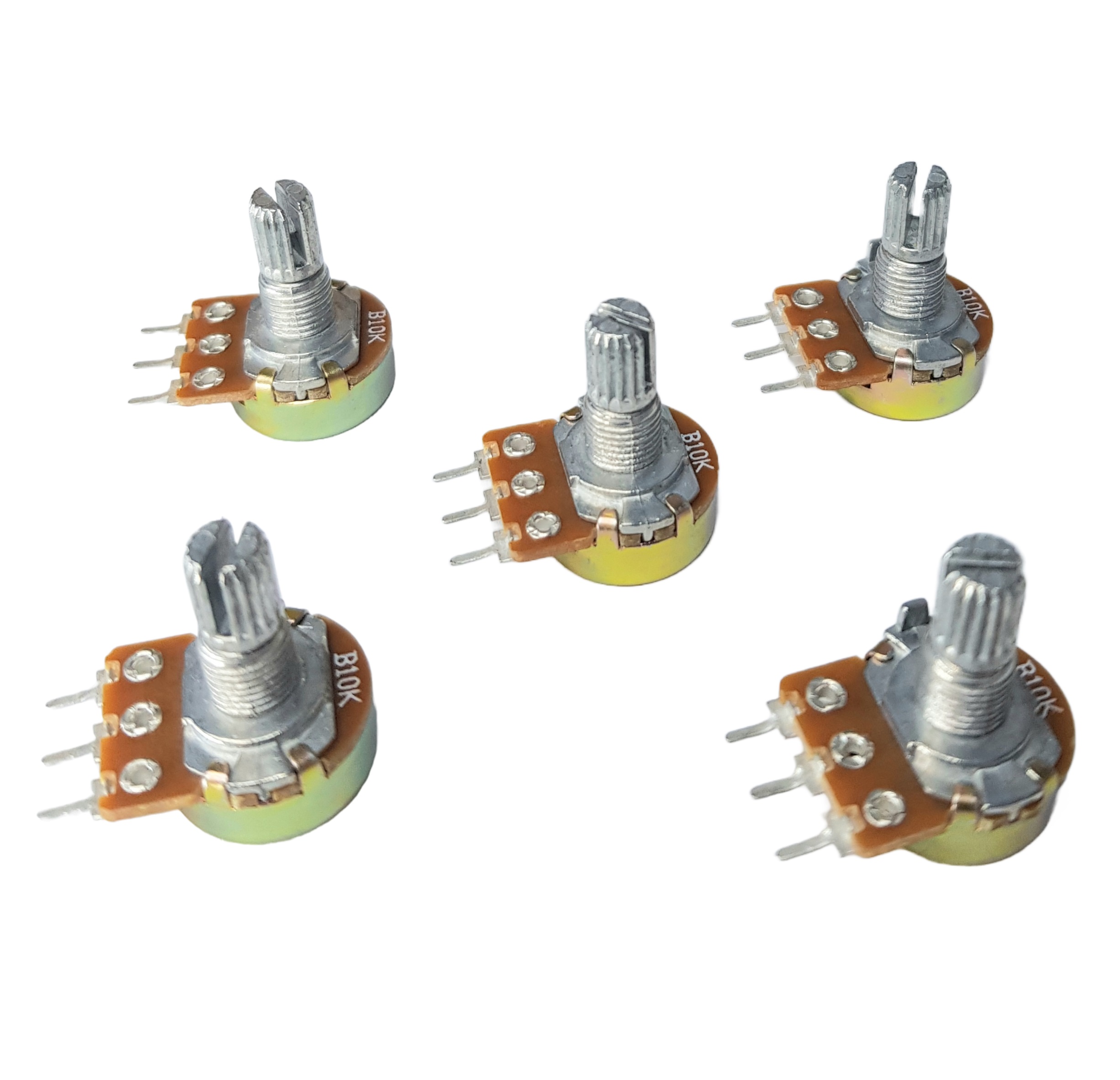
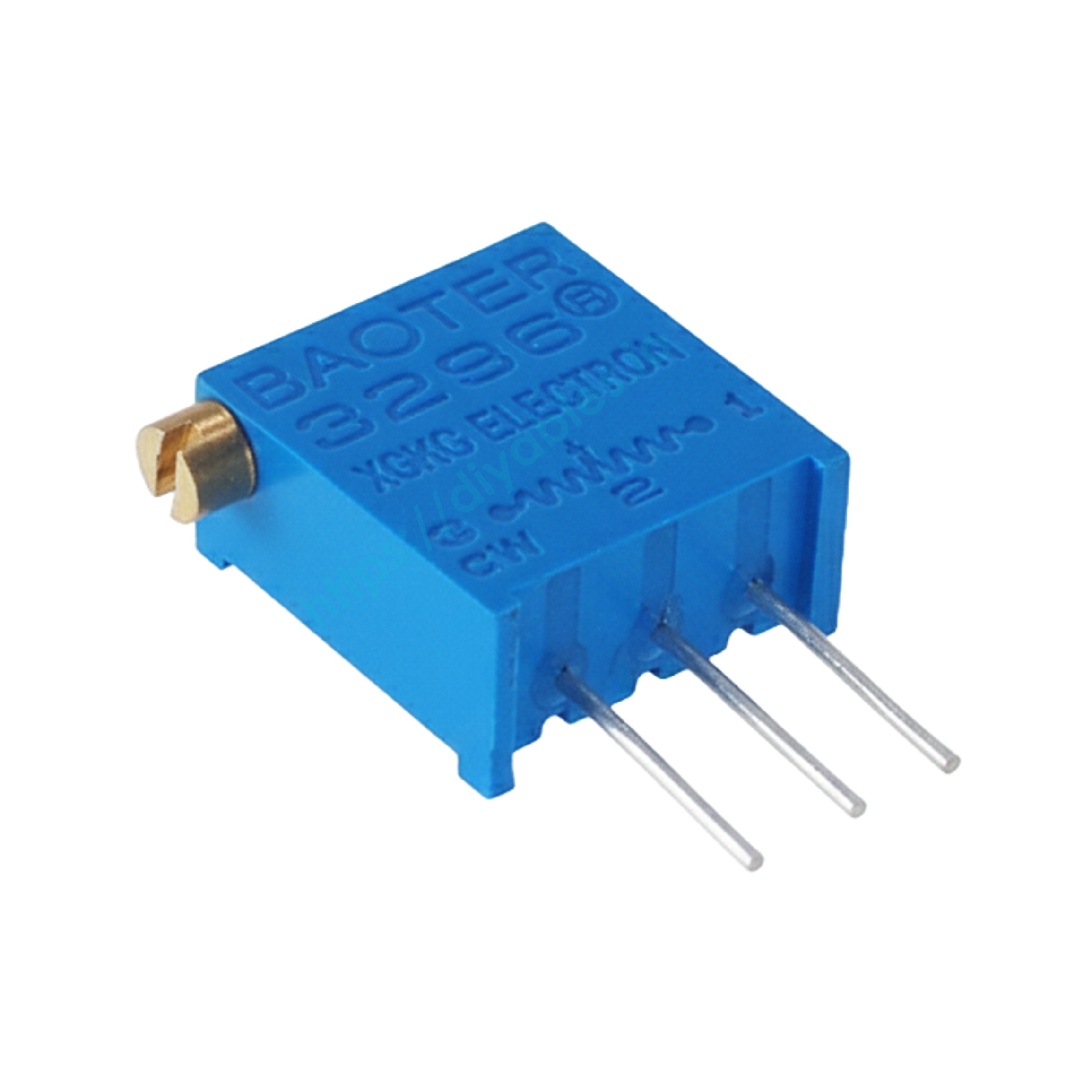
The DIYables 10k Ohm Trimmer Potentiometer is a 3296 style multiturn trim pot in the side adjust body. The adjustment screw sits on the side face rather than the top, which keeps the driver clear of anything mounted above the board and makes the pot easy to reach once the PCB is inside an enclosure. Multiturn construction means the full 0 to 10k range is spread across many turns of the screw, so small, repeatable adjustments are possible instead of the coarse single-turn sweep of a standard preset.
Each pot has three through-hole pins on a standard grid, wired as an ordinary potentiometer: the two outer pins are the ends of the resistive track and the centre pin is the wiper. Used as a voltage divider across 3.3V or 5V and ground, the wiper feeds an analog input directly, which is the usual way to add a calibration trim, a threshold set point, or a manual input to an Arduino, ESP32, ESP8266, or Raspberry Pi project. Used as a two-terminal rheostat, it sets bias or contrast in analog circuits.
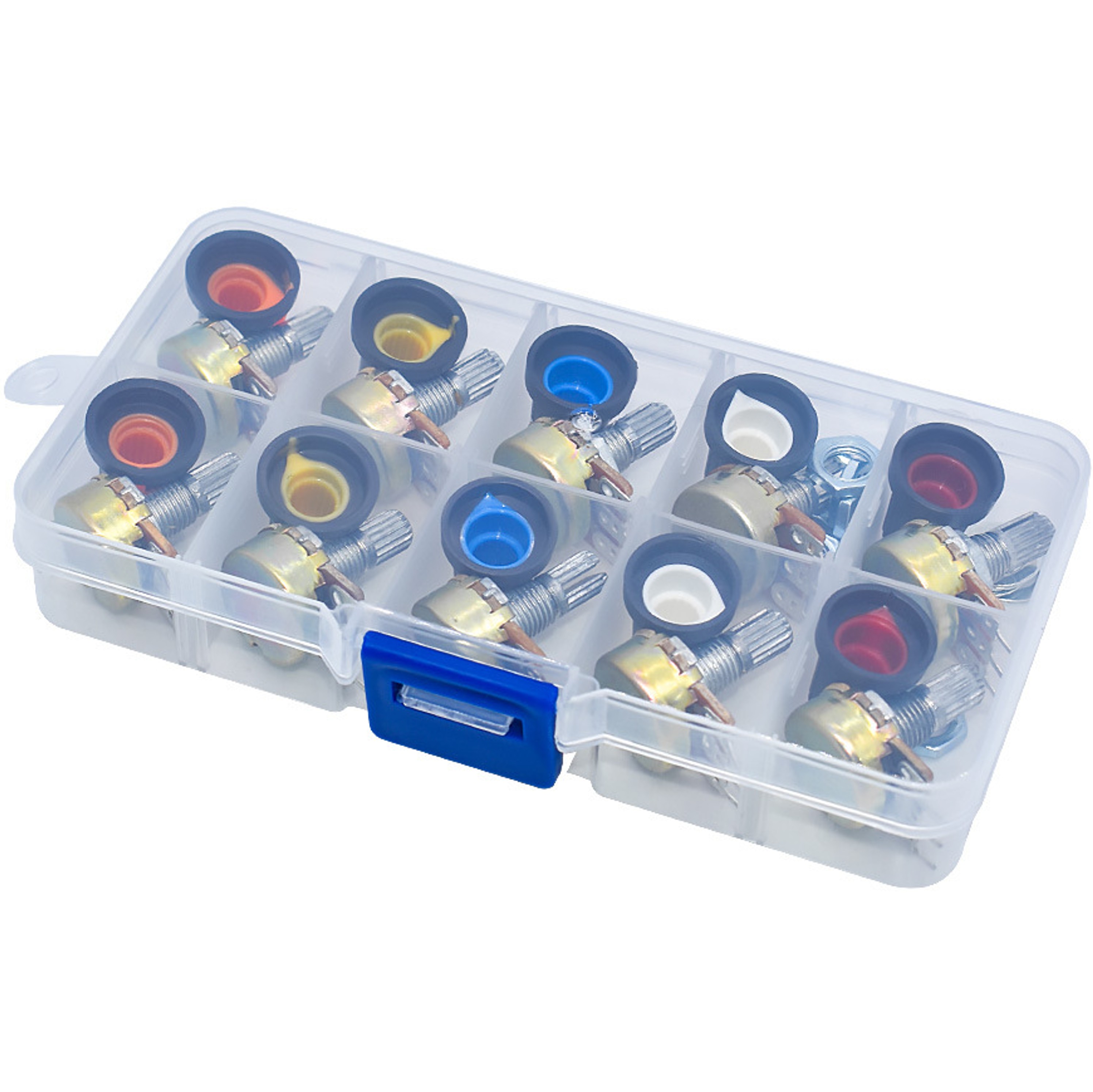
Ideal for contrast adjustment on character LCDs, reference and threshold trimming, sensor calibration, op-amp gain and offset setting, and any circuit that needs a value dialled in once and then left alone. This listing includes 10 pieces.
Key Features
- 10k Ohm Resistance — Common value suited to voltage dividers, analog inputs, and general calibration work
- Side Adjust Screw — The brass adjustment screw is on the side face, so it stays reachable when components sit above the board
- Multiturn Precision — The full range spans many turns for fine, repeatable settings rather than a coarse single sweep
- 3296 Style Body — Widely used industry footprint that drops into existing designs and breadboards
- Three Through-Hole Pins — Two track ends and a centre wiper on a standard pin grid for soldering or breadboard use
- Works as Divider or Rheostat — Use all three pins for a voltage divider or two pins to set resistance directly
- Sealed Moulded Housing — Enclosed body keeps dust and flux off the resistive track
- Direct Analog Input Drive — Wiper output connects straight to an ADC pin on 3.3V or 5V boards
- Wide Compatibility — Suits Arduino, ESP32, ESP8266, Raspberry Pi, and general analog circuits
- 10 Piece Pack — Enough for multiple builds, classroom sets, or spares
SPECIFICATION
| Specification | Value |
|---|---|
| Product Type | Trimmer Potentiometer (Trim Pot) |
| Resistance | 10k Ohm |
| Style | 3296, multiturn |
| Adjustment | Side adjust screw |
| Terminals | 3 pins (two track ends, one wiper) |
| Mounting | Through-hole, PCB and breadboard |
| Adjustment Tool | Small flat-blade screwdriver |
| Typical Use Voltage | 3.3V or 5V logic supplies |
| Package Quantity | 10 pieces |
| Compatibility | Arduino, ESP32, ESP8266, Raspberry Pi, general analog circuits |
| Applications | LCD contrast, sensor calibration, threshold setting, gain and offset trimming |
COMPATIBLE HARDWARE
- Arduino boards (UNO, Mega, Nano, etc.) — Wiper to any analog input pin, ends to 5V and GND
- Arduino Uno R4 WiFi and Minima — Wiper to an analog input at 5V
- ESP32 development boards — Wiper to an ADC pin, ends to 3.3V and GND
- ESP8266 boards (NodeMCU, Wemos D1, etc.) — Wiper to the A0 input within its input range
- Raspberry Pi Pico — Wiper to an ADC pin at 3.3V
- Raspberry Pi (all models) — Requires an external ADC such as ADS1115, no onboard analog input
- Character LCD modules (1602, 2004) — Contrast pin trimming via the wiper
- Op-amp and analog circuits — Gain, offset, and bias adjustment as a divider or rheostat
- Breadboards and PCBs — Through-hole pins on a standard grid
- Any microcontroller with an analog input — Supply the track ends from that board's logic rail