DIYables GPS Module NEO-6M with External Antenna for Arduino ESP32 ESP8266 Raspberry Pi, UART GPS Receiver Board
 Click to zoom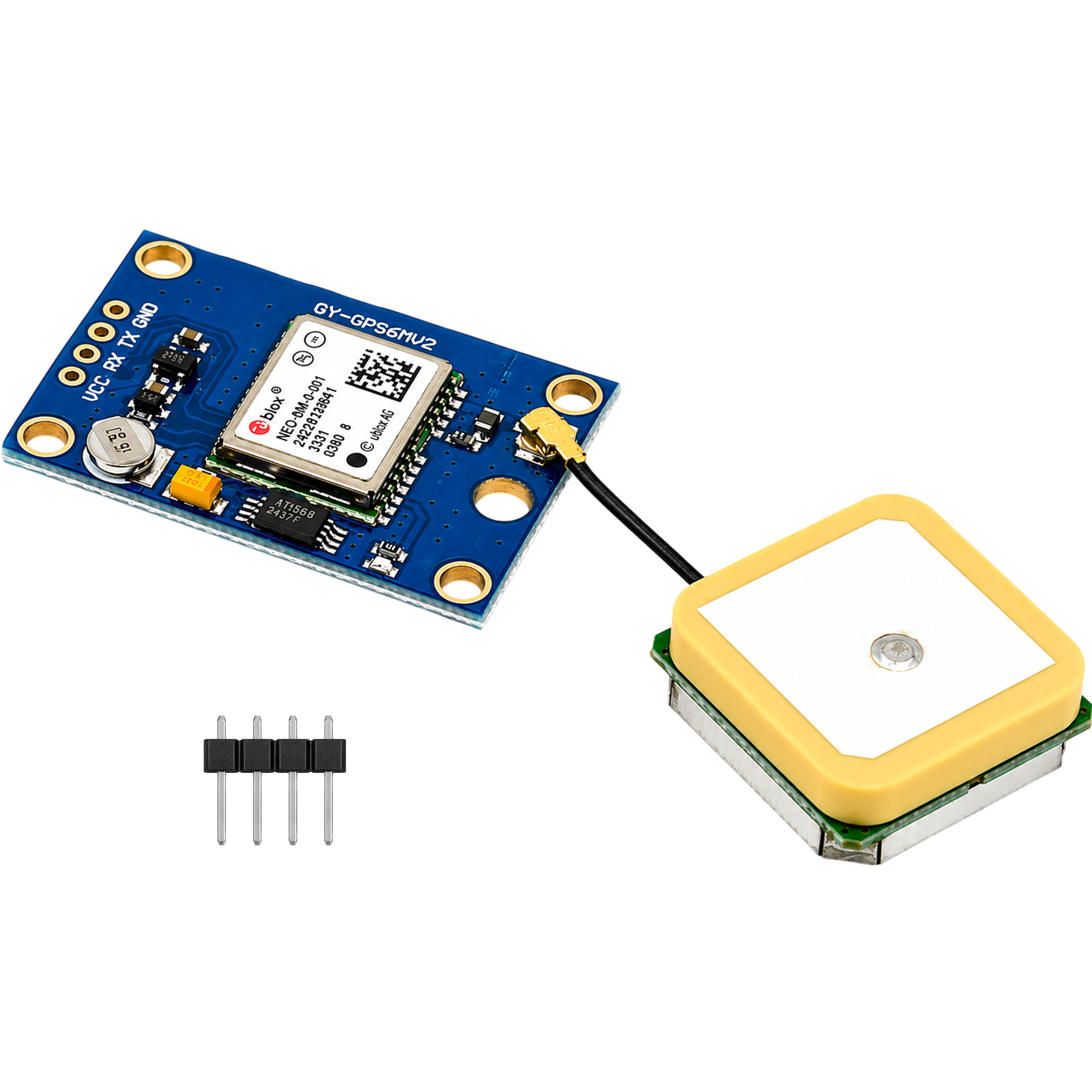
Quick Overview
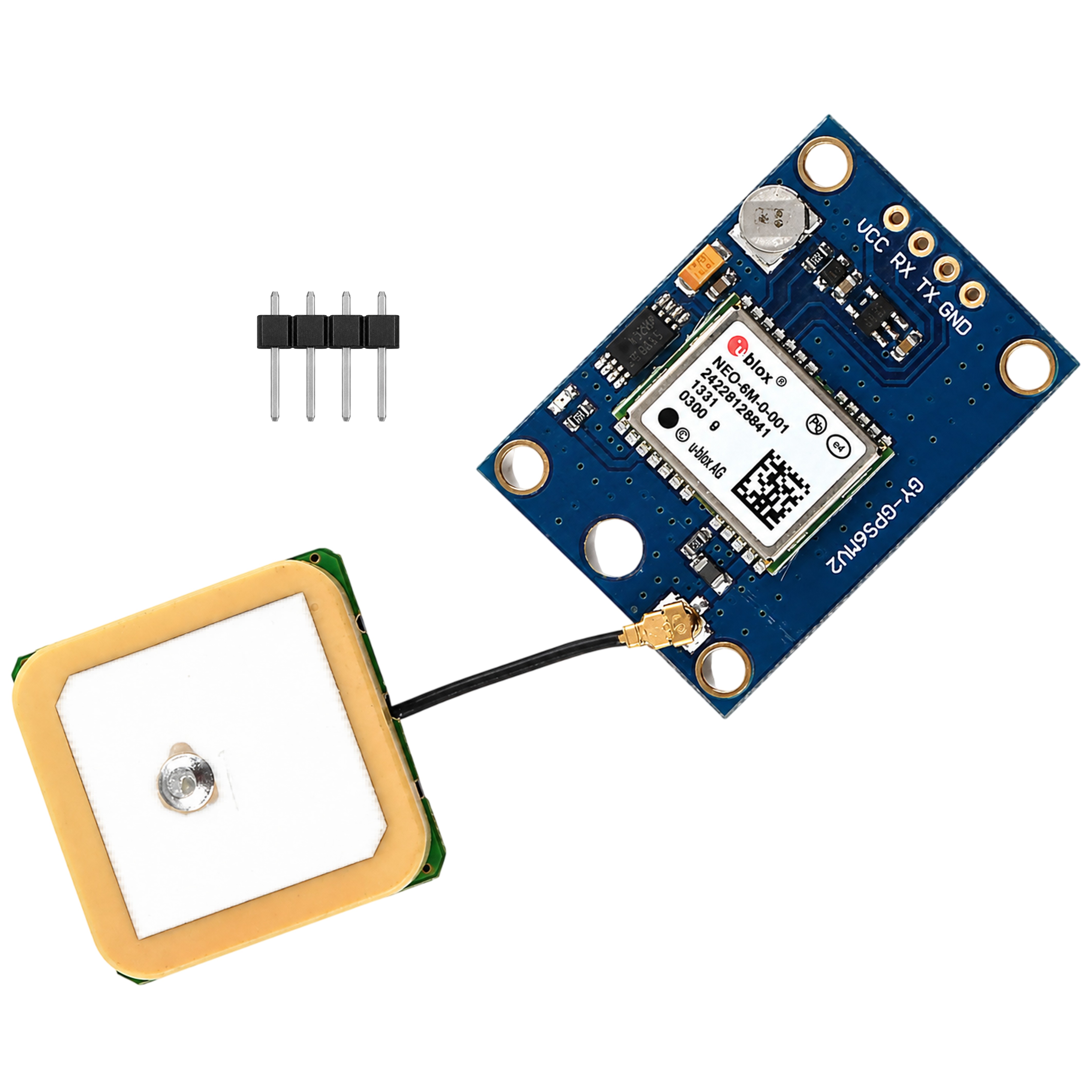
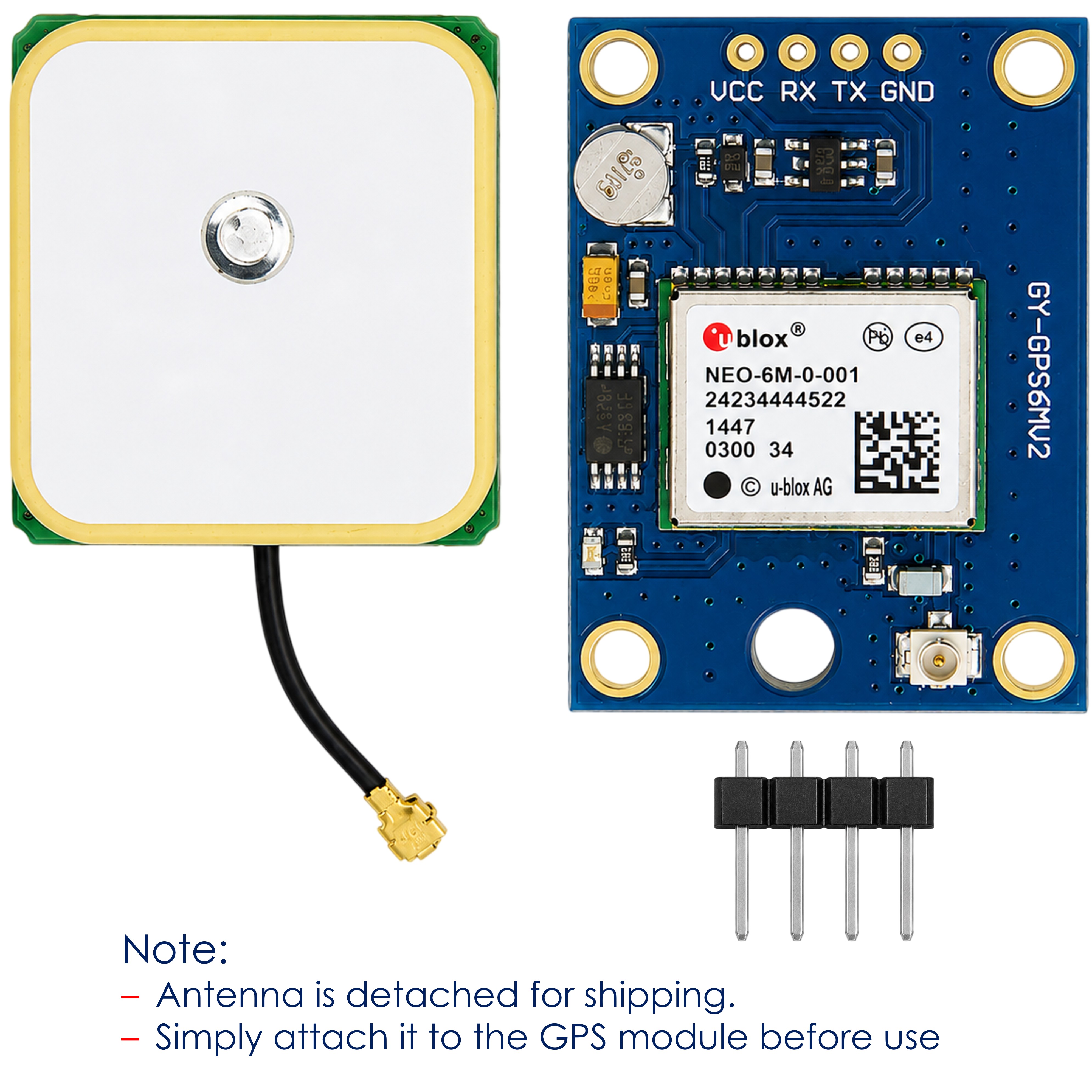
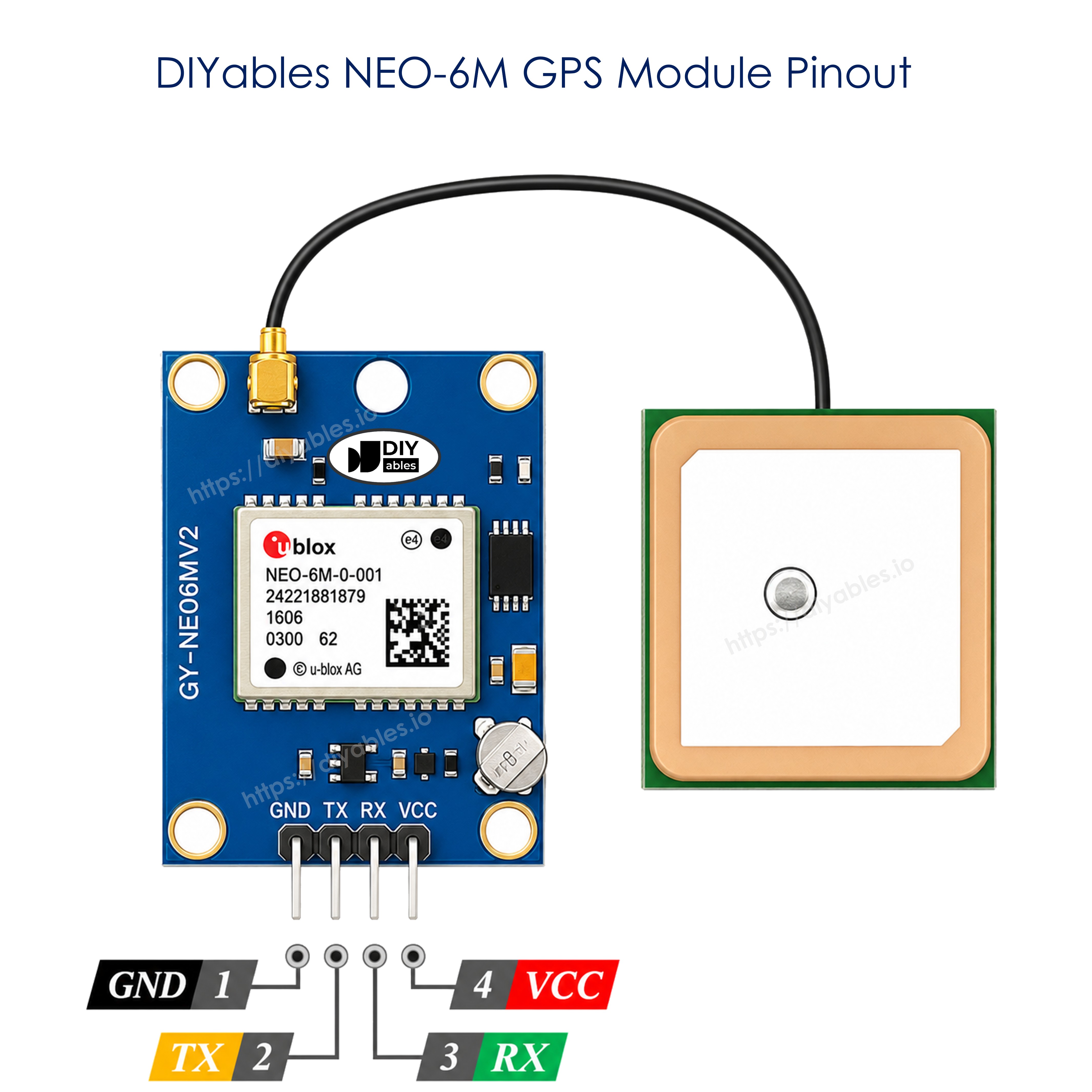
The DIYables GPS Module NEO-6M is a compact, high-performance GPS receiver board built on the u-blox NEO-6M chip. It features an integrated ceramic antenna for strong and stable satellite signal reception, plus an SMA connector for the included external antenna when enhanced coverage is needed. The module communicates over a UART TTL serial interface at a default baud rate of 9600, making it straightforward to connect to Arduino, ESP32, ESP8266, and Raspberry Pi.
An onboard data backup battery preserves GPS configuration parameters in EEPROM so the module can acquire satellites faster on subsequent power-ups. A built-in LED indicator provides instant visual feedback on GPS signal and satellite lock status during setup and operation. The board supports both ceramic and external antenna inputs, giving flexibility for indoor bench testing and outdoor deployment alike.
Perfect for GPS tracking, satellite navigation, and positioning projects. Ideal for flight control modules, vehicle tracking systems, robotics platforms, and IoT navigation applications running on Arduino, ESP32, ESP8266, or Raspberry Pi.
Key Features
- NEO-6M GPS Chip — u-blox NEO-6M receiver with 50-channel tracking on the GPS L1 band (1575.42 MHz) for precise satellite positioning
- Integrated Ceramic Antenna — onboard ceramic antenna provides strong signal reception and stable satellite positioning performance without additional hardware
- External SMA Antenna Connector — SMA port accepts the included external antenna for improved signal reception in obstructed or indoor environments
- Onboard Backup Battery — retains GPS configuration parameters in EEPROM so the module resumes satellite tracking faster after each power cycle
- UART TTL Interface at 9600 Baud — default 9600 bps RS232 TTL serial interface for straightforward connection to Arduino, ESP32, ESP8266, and Raspberry Pi
- LED Signal Indicator — built-in LED displays GPS signal and satellite lock status for quick visual monitoring during setup and field operation
- Wide Application Support — compatible with flight control modules, vehicle tracking systems, robotics platforms, and navigation projects
- Wide Compatibility — works with Arduino UNO, Mega, Nano, ESP32, ESP8266, Raspberry Pi, and any microcontroller with a UART serial interface
SPECIFICATION
| Specification | Value |
|---|---|
| Product Type | GPS Receiver Module |
| Model/Chip | u-blox NEO-6M |
| GPS Band | L1, 1575.42 MHz |
| Receiver Channels | 50 |
| Default Baud Rate | 9600 bps |
| Interface | UART (RS232 TTL) |
| Operating Voltage | 3.3V to 5V DC |
| Logic Level | 3.3V TTL |
| Antenna | Integrated ceramic antenna + external SMA connector |
| Position Accuracy | 2.5m CEP (open sky) |
| Tracking Sensitivity | -161 dBm |
| Update Rate | 1 Hz (default) |
| Backup Battery | Onboard data backup battery (EEPROM parameter retention) |
| LED Indicator | GPS signal status LED |
| Package Quantity | 1 set (module + external antenna) |
| Compatibility | Arduino, ESP32, ESP8266, Raspberry Pi |
| Applications | GPS tracking, satellite navigation, vehicle tracking, flight control, robotics, IoT |
PACKAGE
A package includes:
| Qty | Items |
|---|---|
| 1 | GPS Receiver Module (NEO-6M with integrated ceramic antenna and onboard backup battery) |
| 1 | External SMA GPS Antenna |
Tutorials
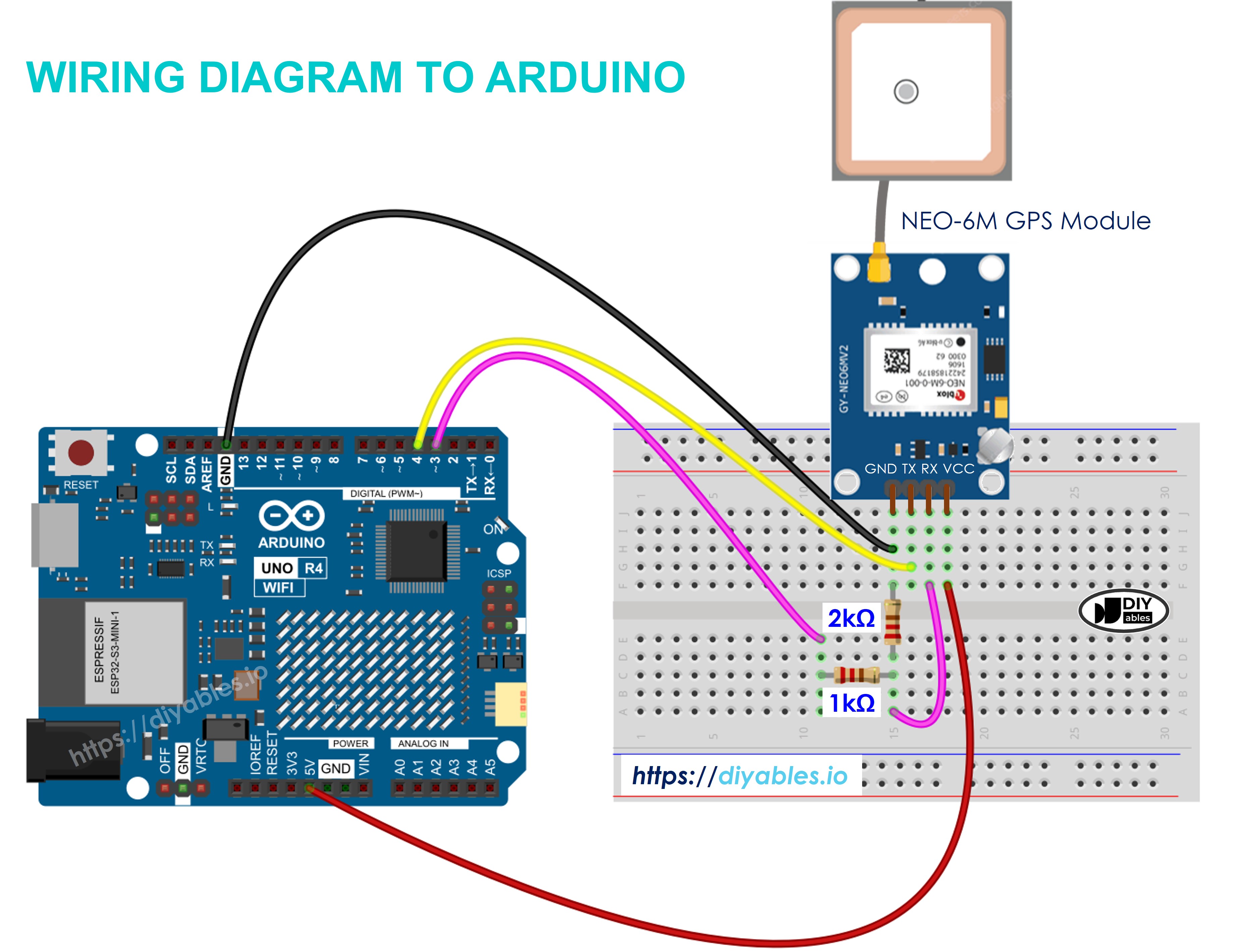
- Arduino - GPS module
- Arduino Uno R4 - GPS module
- Arduino Uno Q - GPS module
- Arduino Nano - GPS module
- Arduino Nano ESP32 - GPS module
- Arduino Nano 33 IoT - GPS module
- Arduino Mega - GPS module
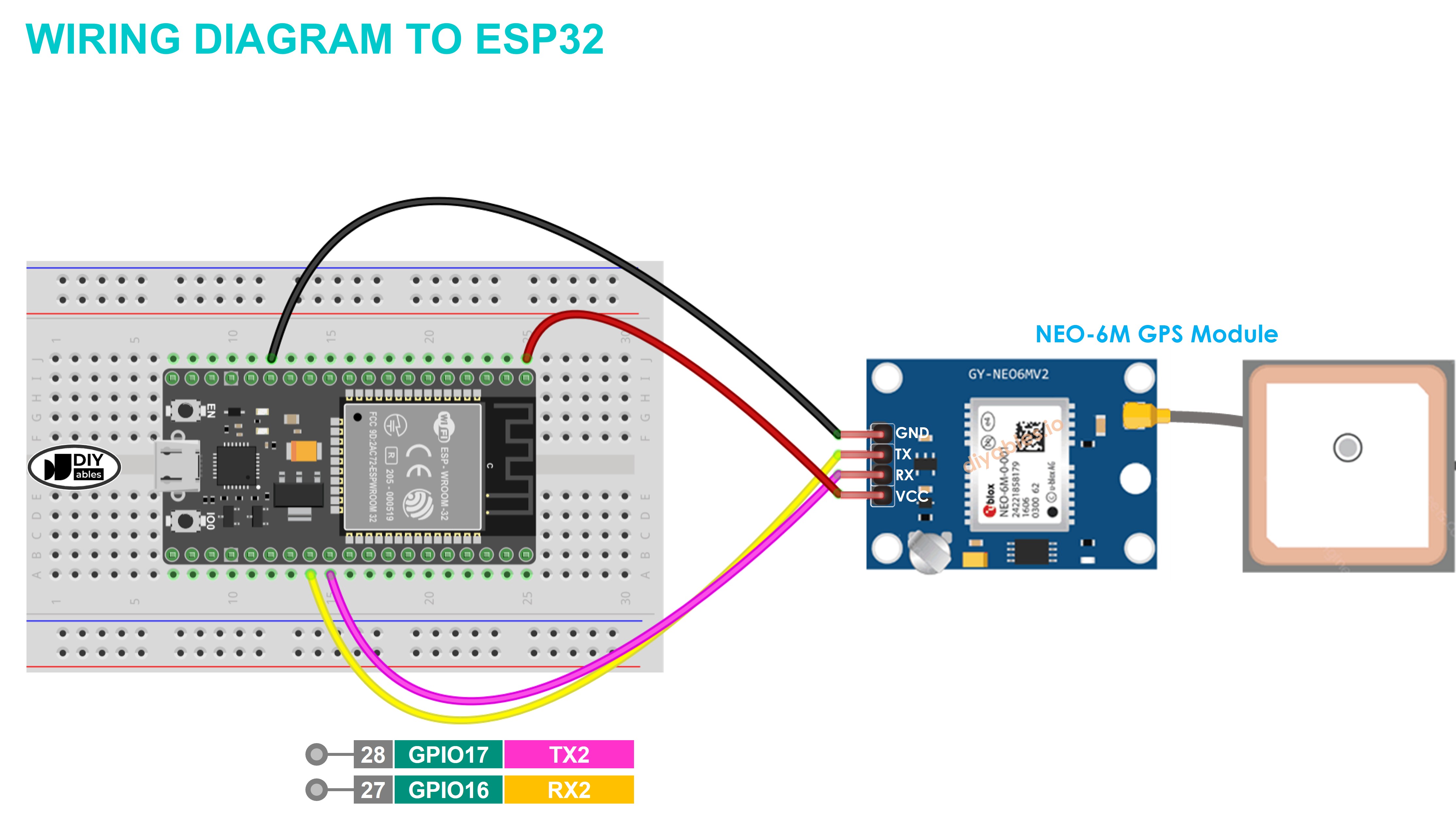
- ESP32 - GPS module
- ESP32-S3 - GPS module
- ESP32-S3 Uno - GPS module
- ESP32 MicroPython - GPS module
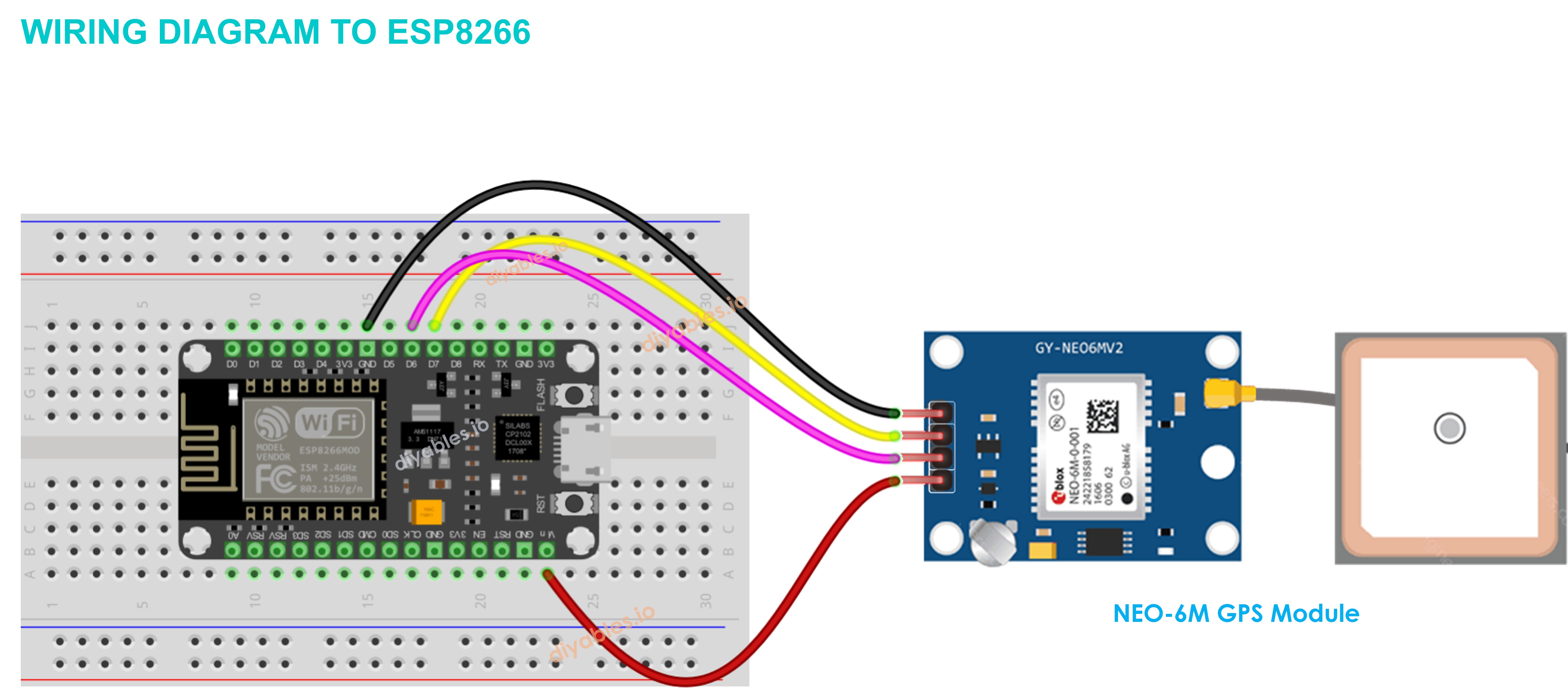
- ESP8266 - GPS module
- Raspberry Pi - GPS module
- Raspberry Pi Pico - GPS module
COMPATIBLE HARDWARE
- Arduino boards (UNO, Mega, Nano, etc.) — UART connection via TX/RX pins at 3.3V–5V logic
- Arduino Uno R4 WiFi/Minima — UART serial interface
- ESP32 development boards — UART connection at 3.3V logic
- ESP8266 boards (NodeMCU, Wemos D1, etc.) — UART connection at 3.3V logic
- Raspberry Pi (all models) — UART interface at 3.3V logic
- Raspberry Pi Pico — UART serial interface
- Arduino Nano ESP32 — UART connection at 3.3V logic
- Any microcontroller with UART interface — 3.3V–5V compatible
- Flight control modules — direct UART GPS data integration
- Vehicle tracking systems — GPS coordinates via UART serial