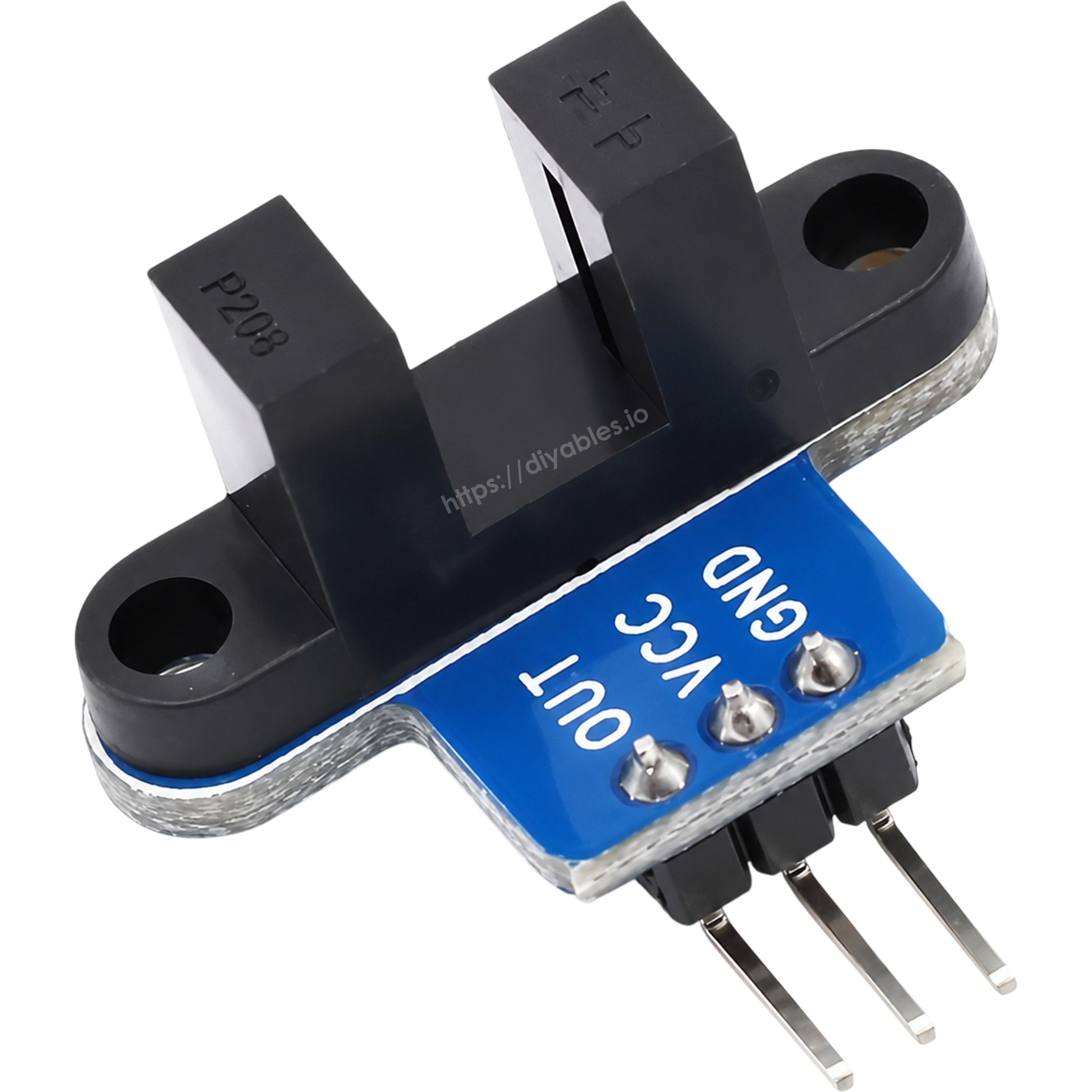
DIYables IR Slotted Optical Speed Sensor Module
 Click to zoom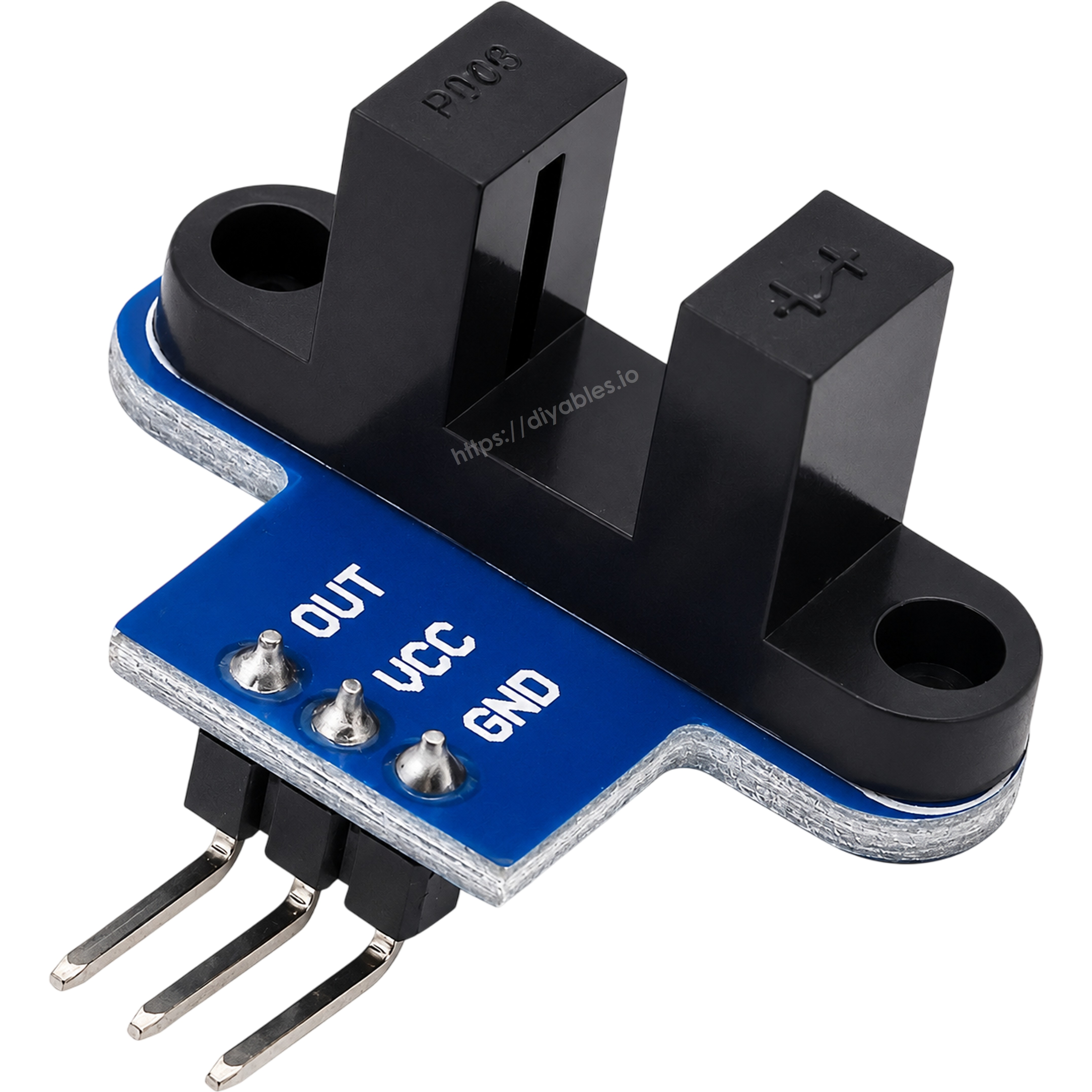
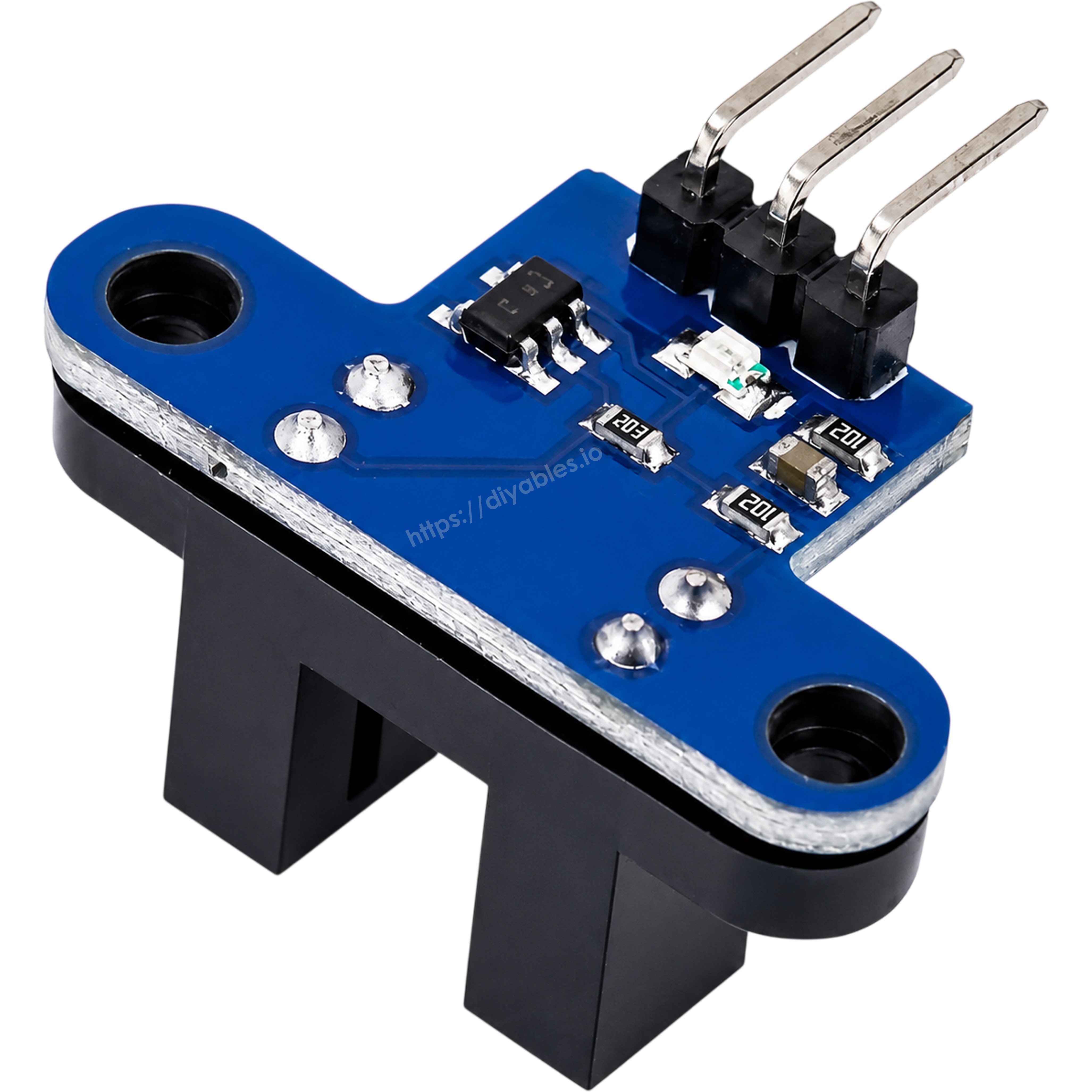
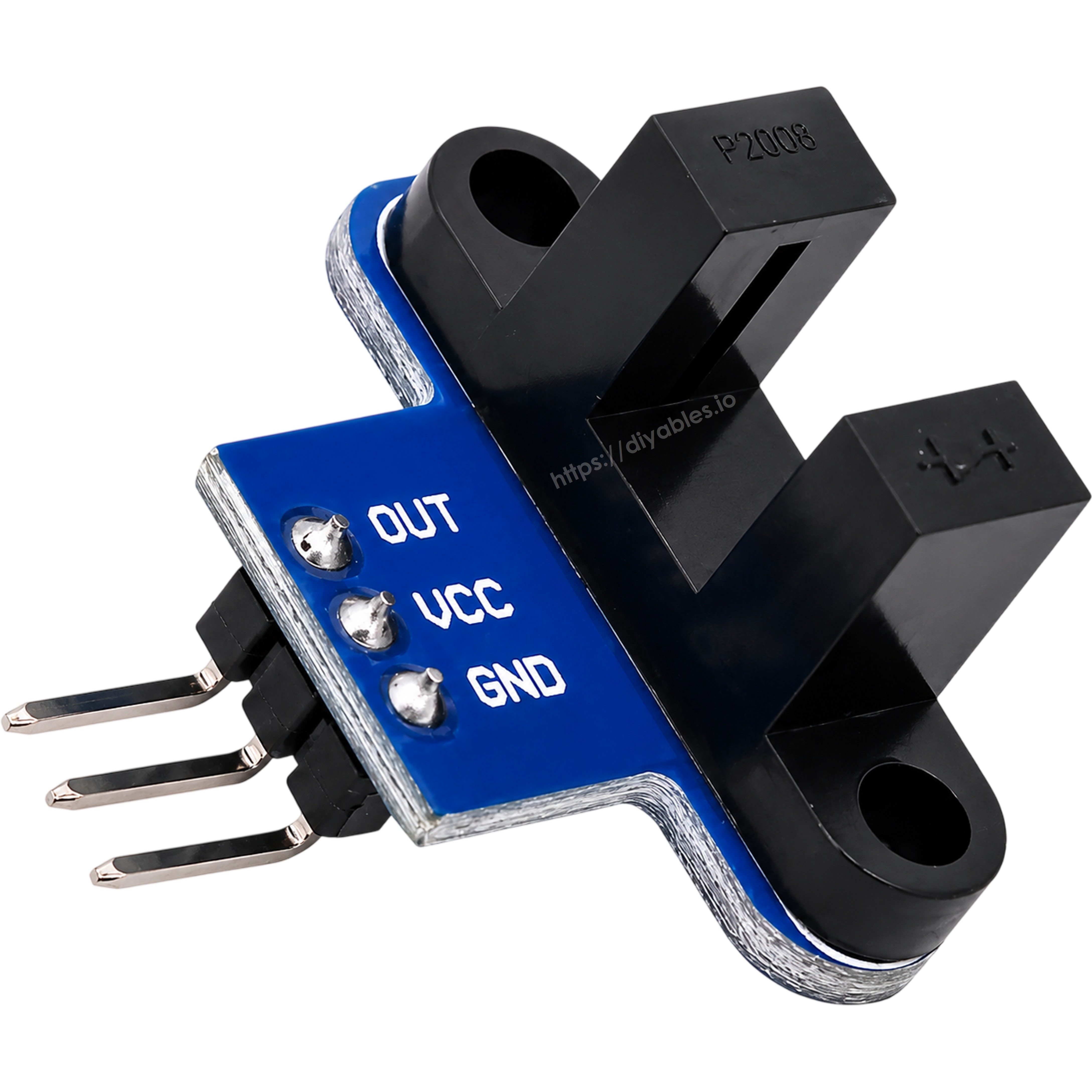
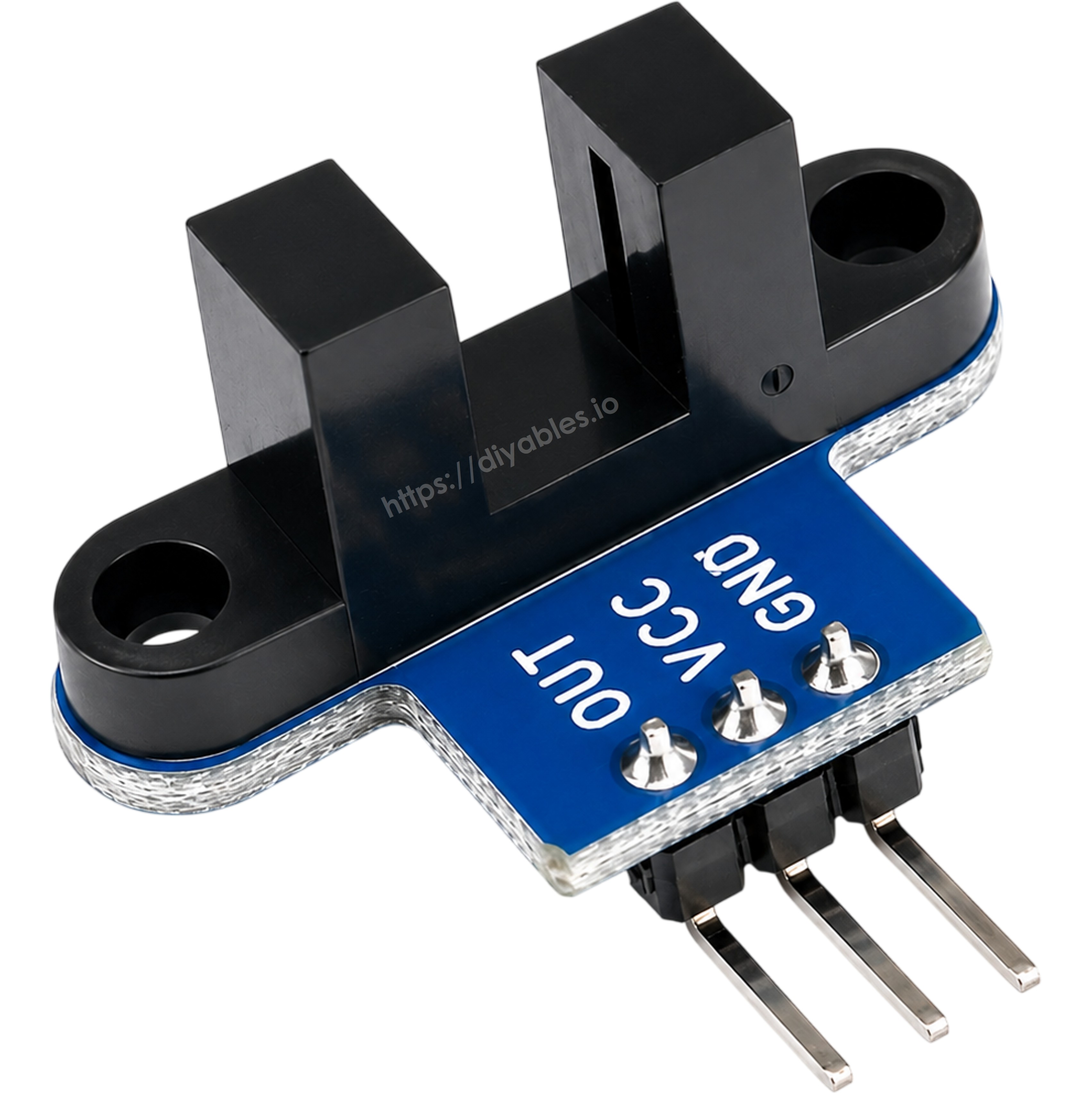
Quick Overview
The DIYables IR Slotted Optical Speed Sensor Module uses a slot-type photoelectric design combining an infrared LED and NPN phototransistor with a 5.9mm wide slot. When any non-transparent object — such as an encoder disc or code wheel — passes through the slot, it interrupts the IR beam and triggers a TTL low-level digital output. A built-in Schmitt trigger ensures the output is stable and jitter-free for reliable speed and distance measurements.
Operating on 3.3V to 5V, this module outputs a clean digital signal (0 and 1) compatible with all common microcontrollers. M3 screw mounting holes at both ends make installation straightforward on robot chassis, motor mounts, or custom brackets.
Ideal for motor speed detection, distance measurement, robot velocity feedback, tachometer circuits, and any application requiring precise optical interruption sensing with Arduino, ESP32, ESP8266, and Raspberry Pi.
Key Features
- 5.9mm Slot-Type Photoelectric Sensor — Infrared LED and NPN phototransistor paired in a 5.9mm wide slot for reliable detection of any non-transparent object passing through
- Schmitt Trigger Stable Output — Built-in Schmitt trigger eliminates signal jitter, producing a clean and stable TTL digital output for accurate speed and distance measurements
- TTL Digital Output — Outputs TTL low level when the slot is interrupted and high when clear, providing simple digital 0 and 1 signals for easy MCU interfacing
- 3.3V to 5V Wide Operating Voltage — Compatible with both 3.3V and 5V logic systems including Arduino, ESP32, ESP8266, Raspberry Pi, and AVR/ARM microcontrollers
- M3 Mounting Holes — M3 screw holes at both ends of the PCB for secure and easy mounting on robot chassis, motor holders, and DIY project enclosures
- Wide Compatibility — Works with Arduino, ESP32, ESP8266, Raspberry Pi, and any platform with a digital GPIO input pin

- 5 Pack Value — Includes 5 complete sensor modules for multi-motor robots, spares, or multiple installation points
- Versatile Applications — Suitable for motor speed detection, tachometer circuits, distance measurement, encoder disc reading, and robot velocity feedback
SPECIFICATION
| Specification | Value |
|---|---|
| Product Type | IR Slotted Optical Speed Sensor Module |
| Sensor Type | Slot-type photoelectric (IR LED + NPN phototransistor) |
| Slot Width | 5.9mm |
| Output Type | Digital switch output (TTL 0 and 1) |
| Trigger Output | TTL low level when slot is interrupted |
| Signal Conditioning | Schmitt trigger (jitter elimination) |
| Operating Voltage | 3.3V – 5V DC |
| Interface | Digital GPIO (OUT pin) |
| Mounting Holes | M3 screw holes at both ends |
| Package Quantity | 5 pieces |
| Compatibility | Arduino, ESP32, ESP8266, Raspberry Pi, AVR, ARM |
| Applications | Motor speed detection, distance measurement, tachometer, robot encoder, obstacle detection |
PACKAGE
A package includes:
| Qty | Items |
|---|---|
| 5 | IR Slotted Optical Speed Sensor Module |
Tutorials
- Arduino - IR Speed Sensor
- Arduino UNO R4 - IR Speed Sensor
- Arduino Nano - IR Speed Sensor
- Arduino Nano ESP32 - IR Speed Sensor
- Arduino Nano 33 IoT - IR Speed Sensor
- Arduino Mega - IR Speed Sensor
- Arduino MKR WiFi 1010 - IR Speed Sensor
- Arduino Giga R1 WiFi - IR Speed Sensor
- ESP32 - IR Speed Sensor
- ESP32-S3 - IR Speed Sensor
- ESP32-S3 Uno - IR Speed Sensor
- ESP32-C3 Super Mini - IR Speed Sensor
- ESP32 MicroPython - IR Speed Sensor
- ESP8266 - IR Speed Sensor
- Raspberry Pi - IR Speed Sensor
- Raspberry Pi Pico - IR Speed Sensor
COMPATIBLE HARDWARE
- Arduino boards (UNO, Mega, Nano, etc.) — 3.3V/5V digital GPIO input
- Arduino Uno R4 WiFi/Minima — digital GPIO input
- Arduino Nano ESP32 — digital GPIO input
- ESP32 development boards — 3.3V digital GPIO input
- ESP32 C3 Super Mini — 3.3V digital GPIO input
- ESP8266 boards (NodeMCU, Wemos D1, etc.) — 3.3V digital GPIO input
- Raspberry Pi (all models) — 3.3V digital GPIO input
- Raspberry Pi Pico — 3.3V digital GPIO input
- Any microcontroller with a digital GPIO input pin — 3.3V or 5V logic compatible
FRITZING PART
- Download DIYables IR Slotted Optical Speed Sensor Module Fritzing Part (.fzpz) — Import into Fritzing to draw wiring diagrams and breadboard layouts with this board