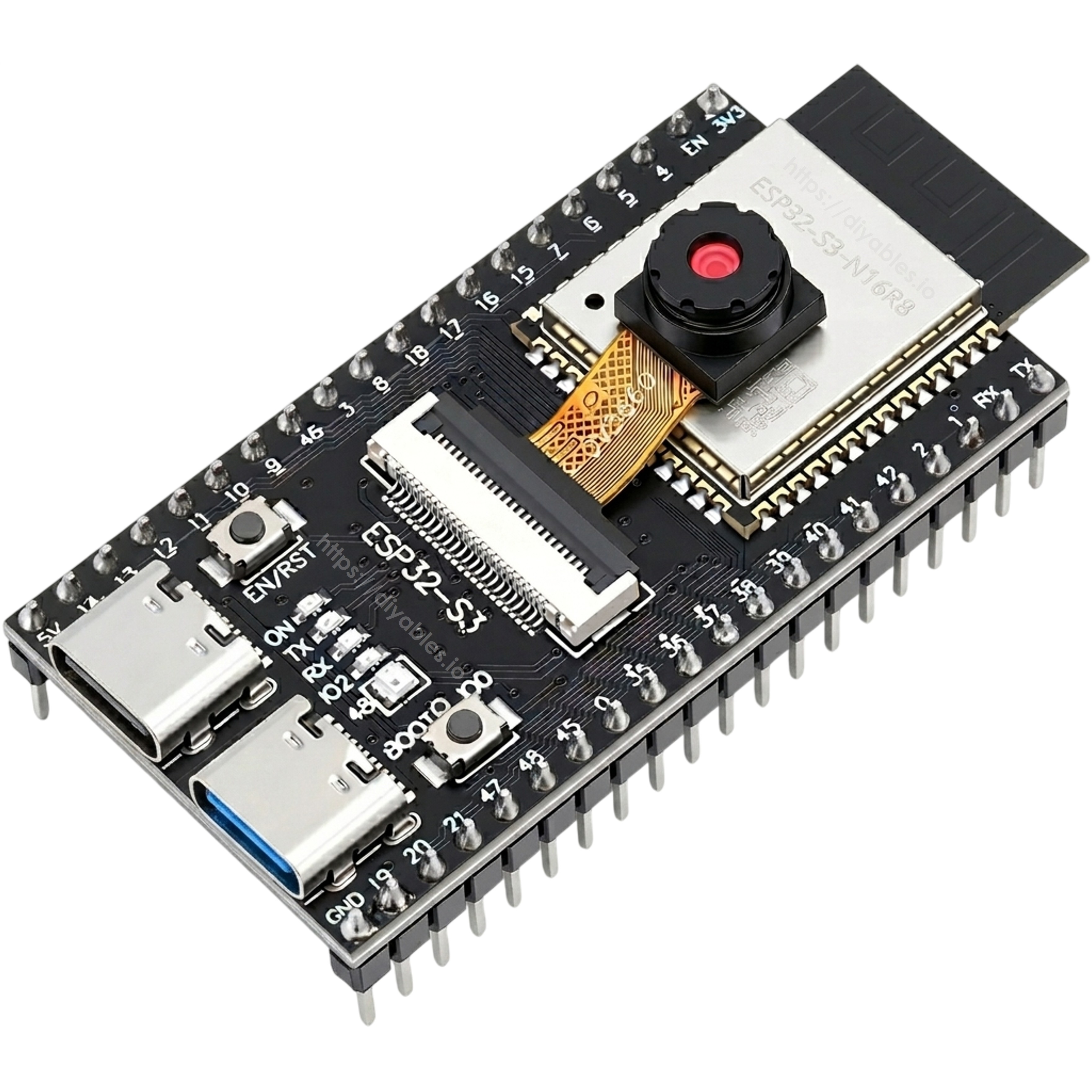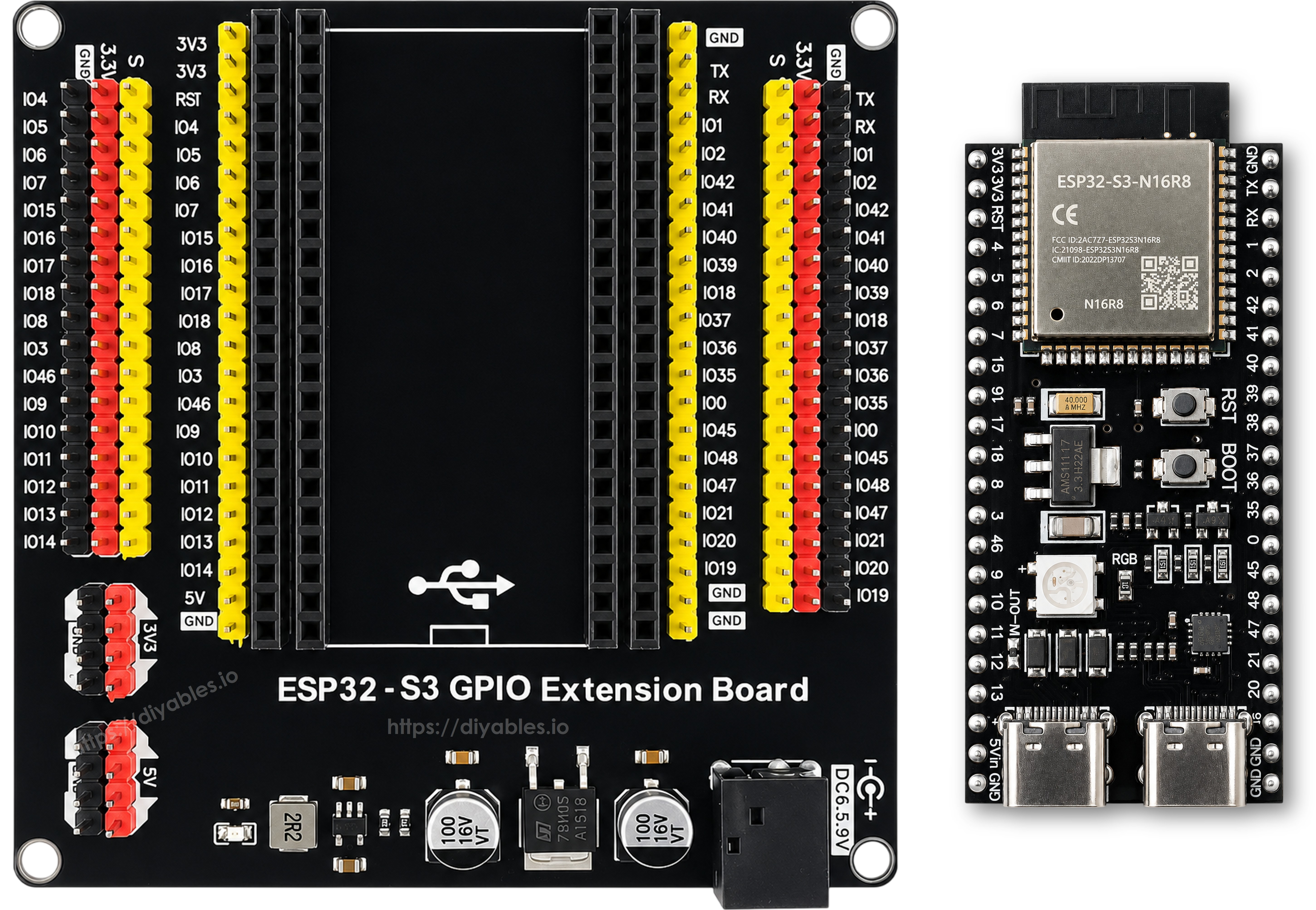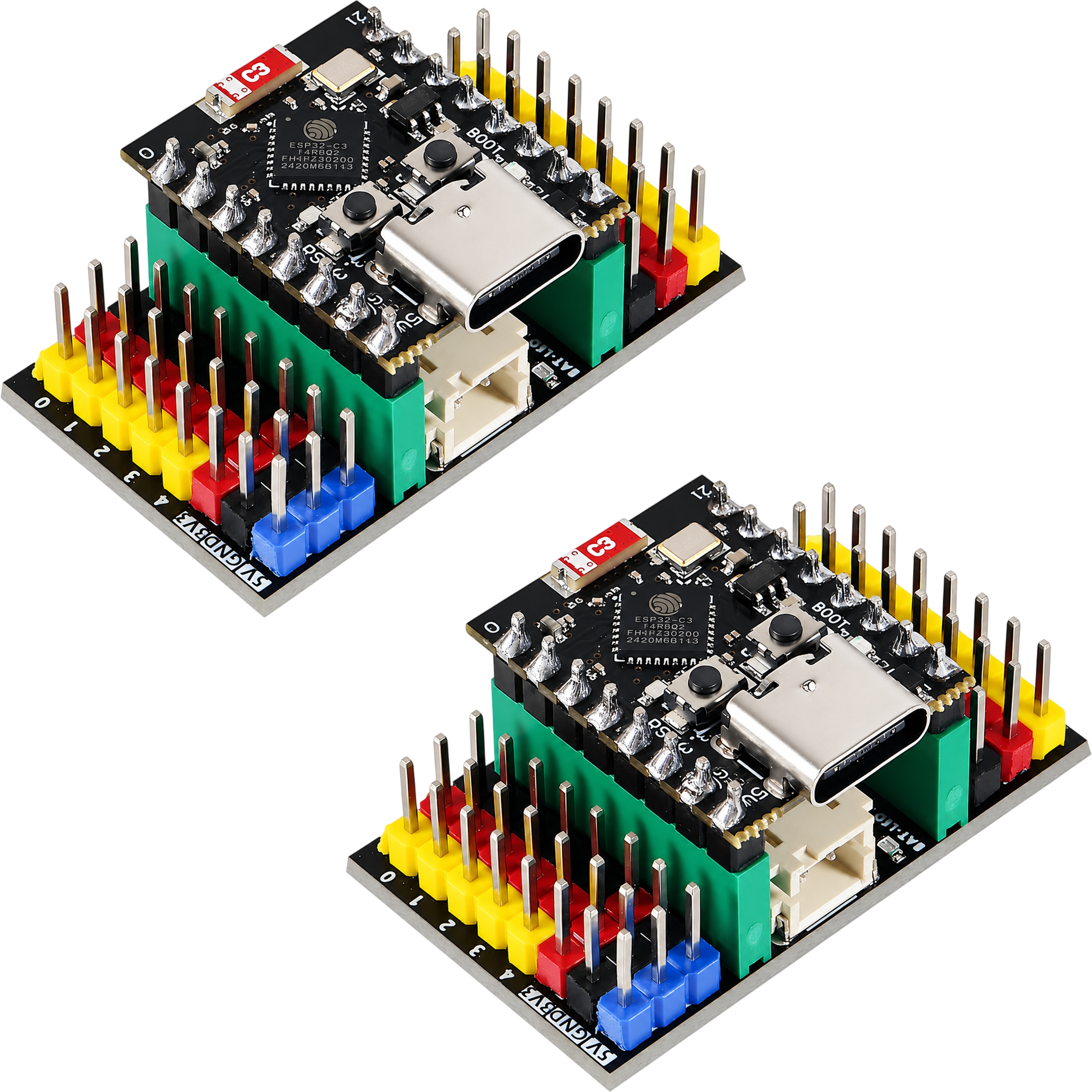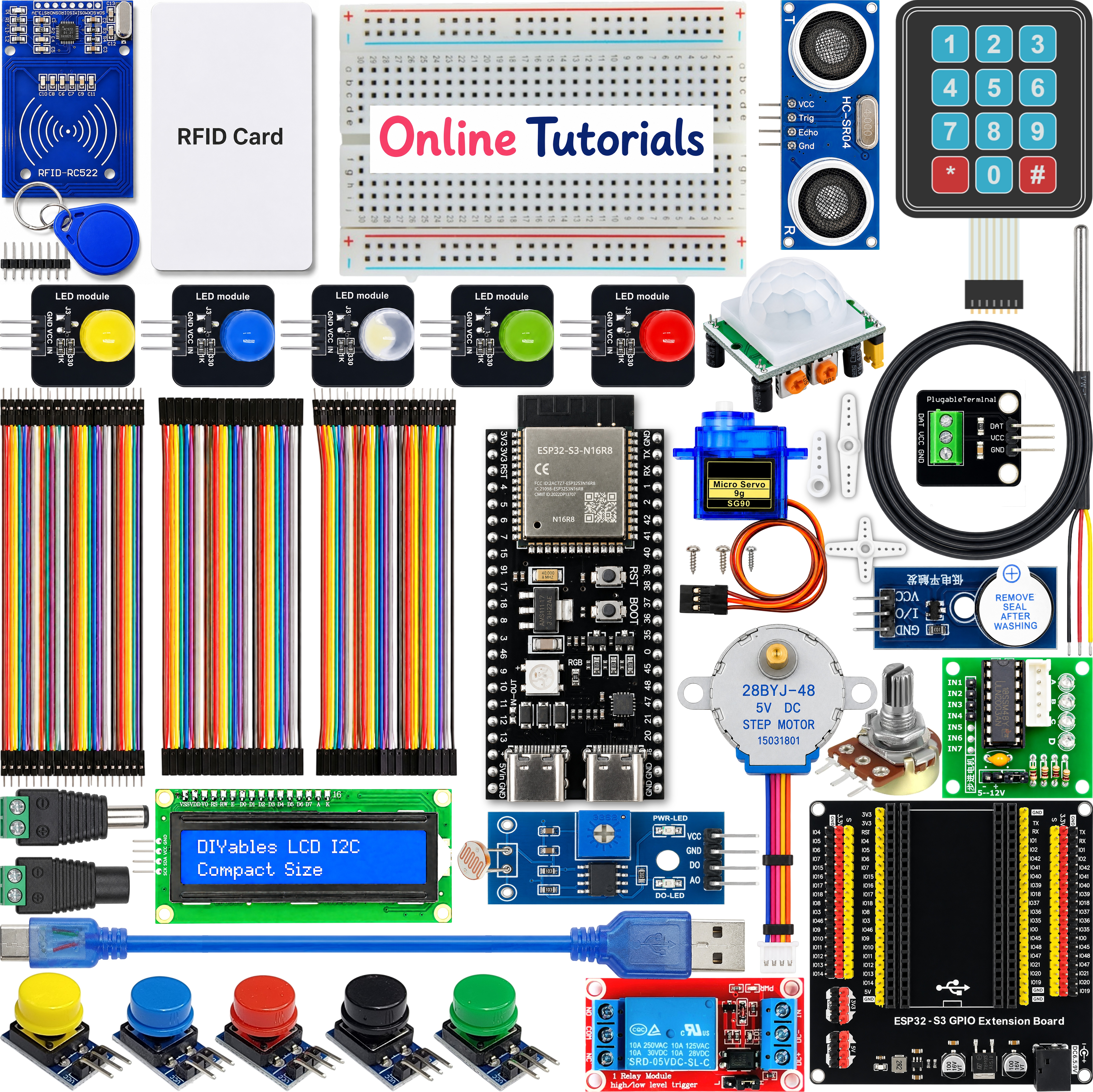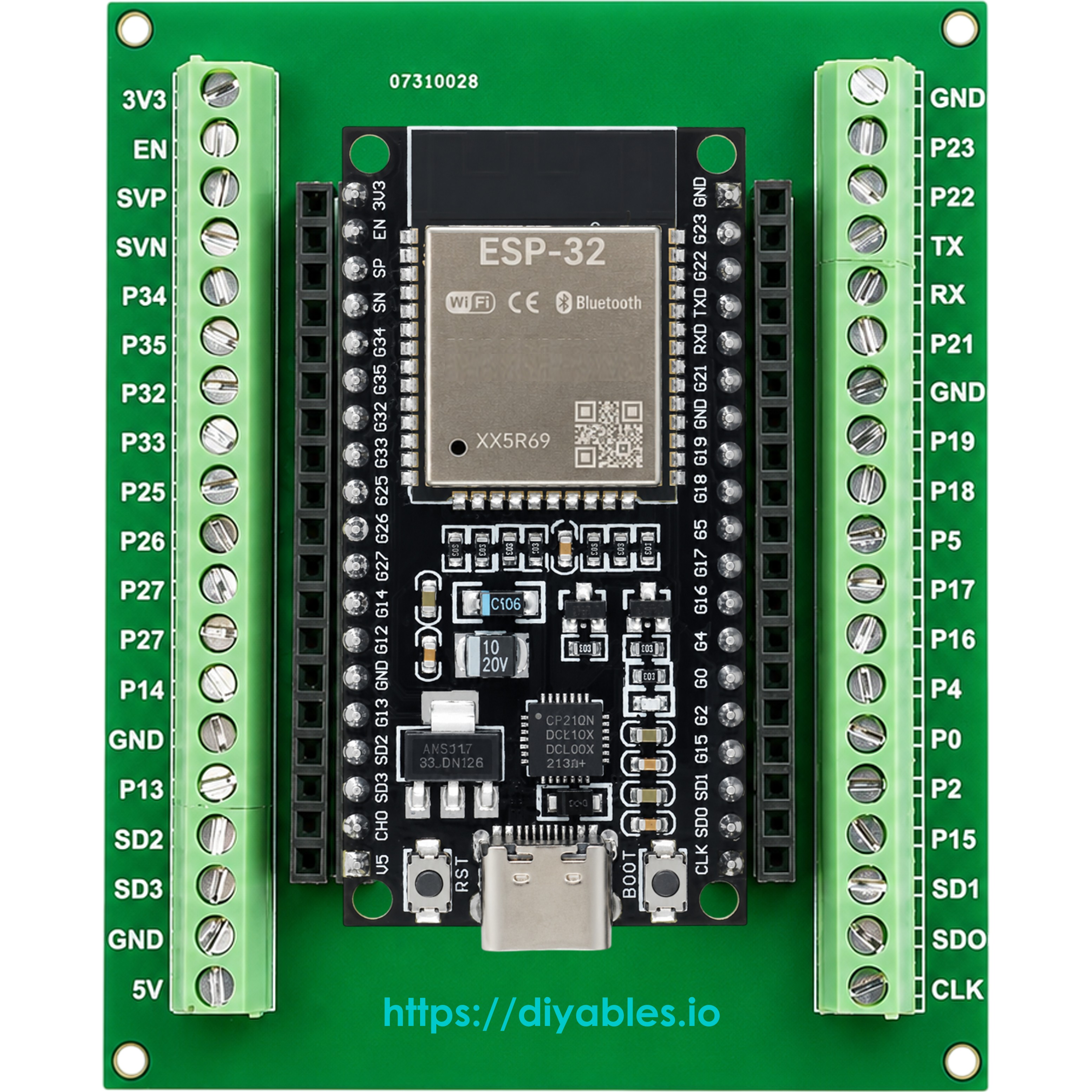
DIYables ESP32 Development Board 30 Pin WiFi Bluetooth CH340 USB Type-C Microcontroller for Arduino IDE MicroPython IoT Projects, Presoldered
 Click to zoom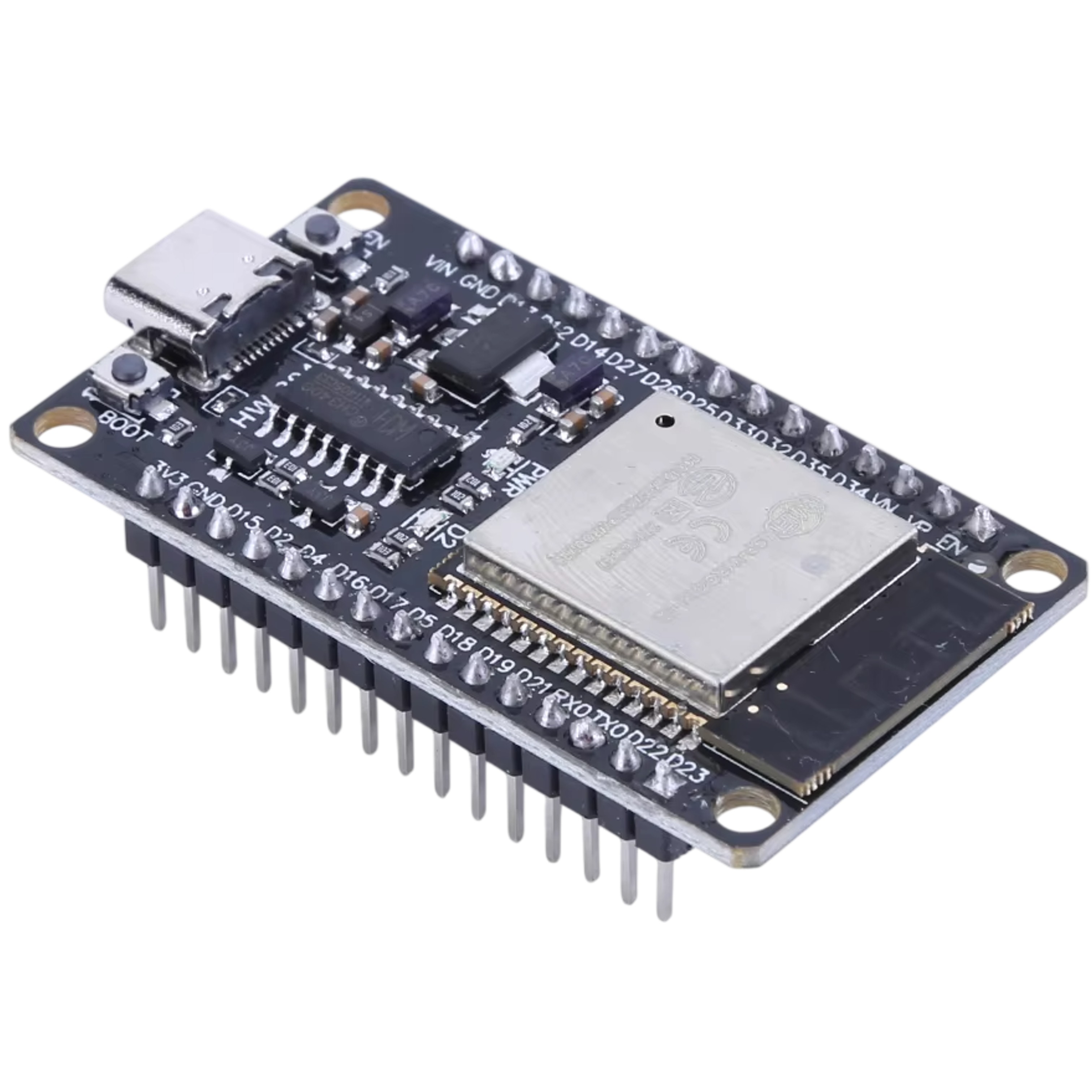
Quick Overview
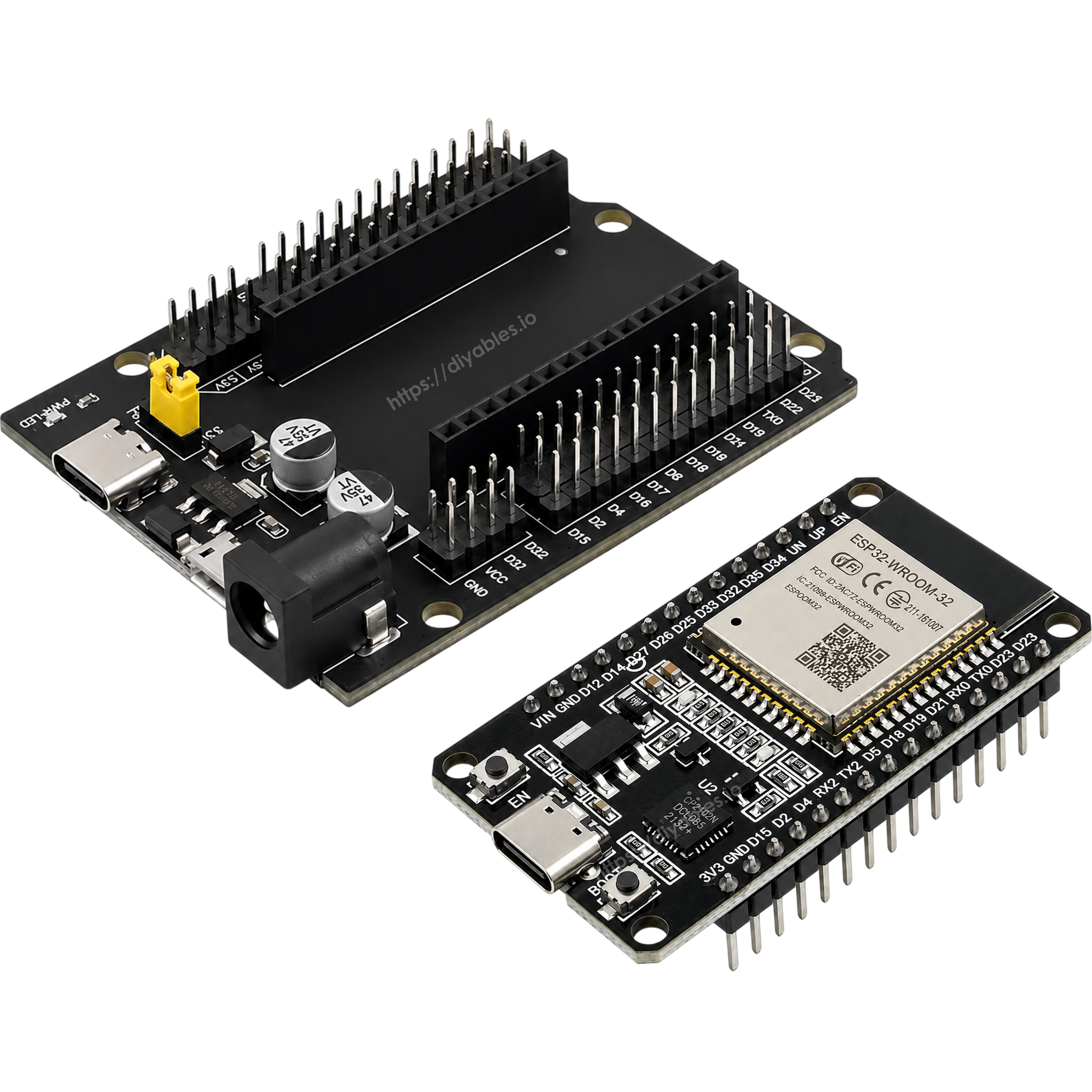
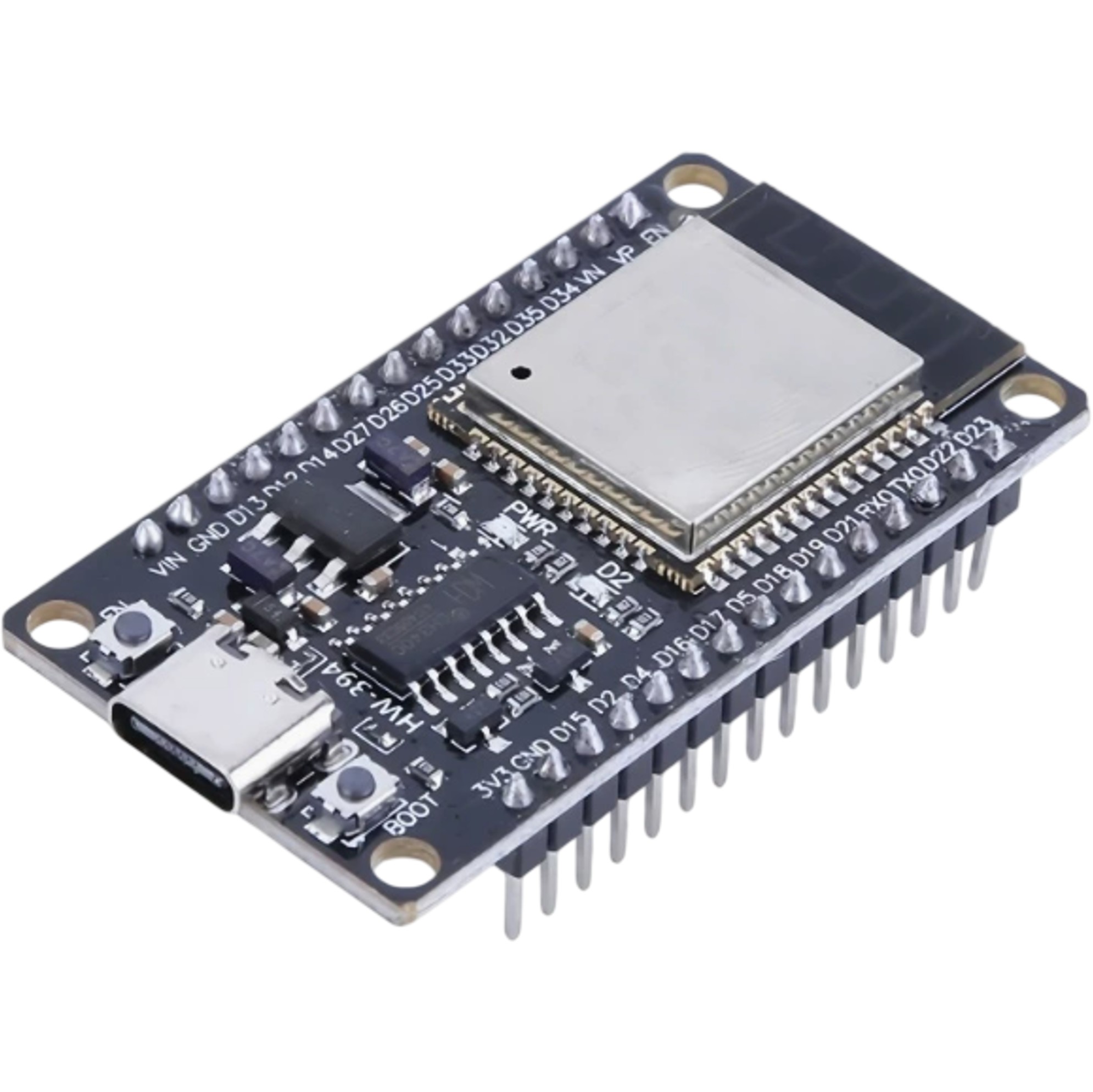
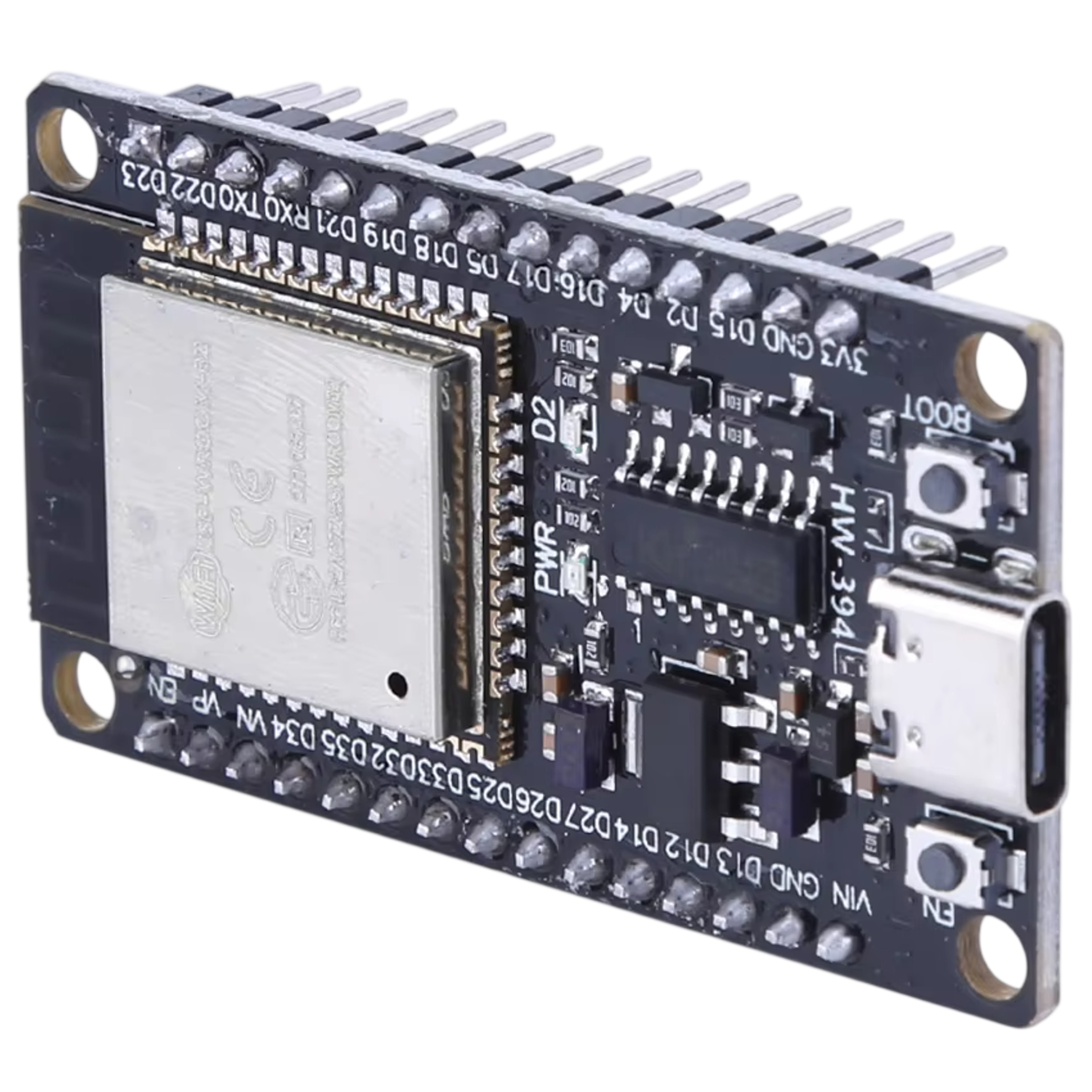
The DIYables ESP32 Development Board is a compact 30-pin microcontroller board powered by the Espressif ESP32 chip with integrated 2.4 GHz WiFi and Bluetooth dual-mode wireless connectivity. It features a CH340 USB-to-serial chip paired with a USB Type-C connector for reliable, reversible programming and power delivery. The board comes with presoldered header pins, so it is breadboard-ready straight out of the box with no soldering required.
The board includes an onboard antenna, RF components, and power management circuitry for efficient operation in a compact form factor. It exposes 30 pins covering GPIO, ADC, DAC, I2C, SPI, UART, and PWM, giving access to the full range of ESP32 peripherals. The USB Type-C interface works with the CH340 driver to provide stable serial communication at standard baud rates.
Ideal for IoT projects, wireless sensor nodes, home automation, robotics, and prototyping. Compatible with Arduino IDE (C/C++) and MicroPython, with tutorials available to help developers get started quickly on ESP32-based projects.
Key Features
- ESP32 WiFi and Bluetooth Chip — Espressif ESP32 dual-core processor with integrated 2.4 GHz WiFi (802.11 b/g/n) and Bluetooth 4.2 (Classic + BLE) for reliable wireless IoT communication
- CH340 USB Type-C Interface — CH340 USB-to-serial chip with USB Type-C connector provides stable programming, serial monitoring, and power supply from any modern computer or charger
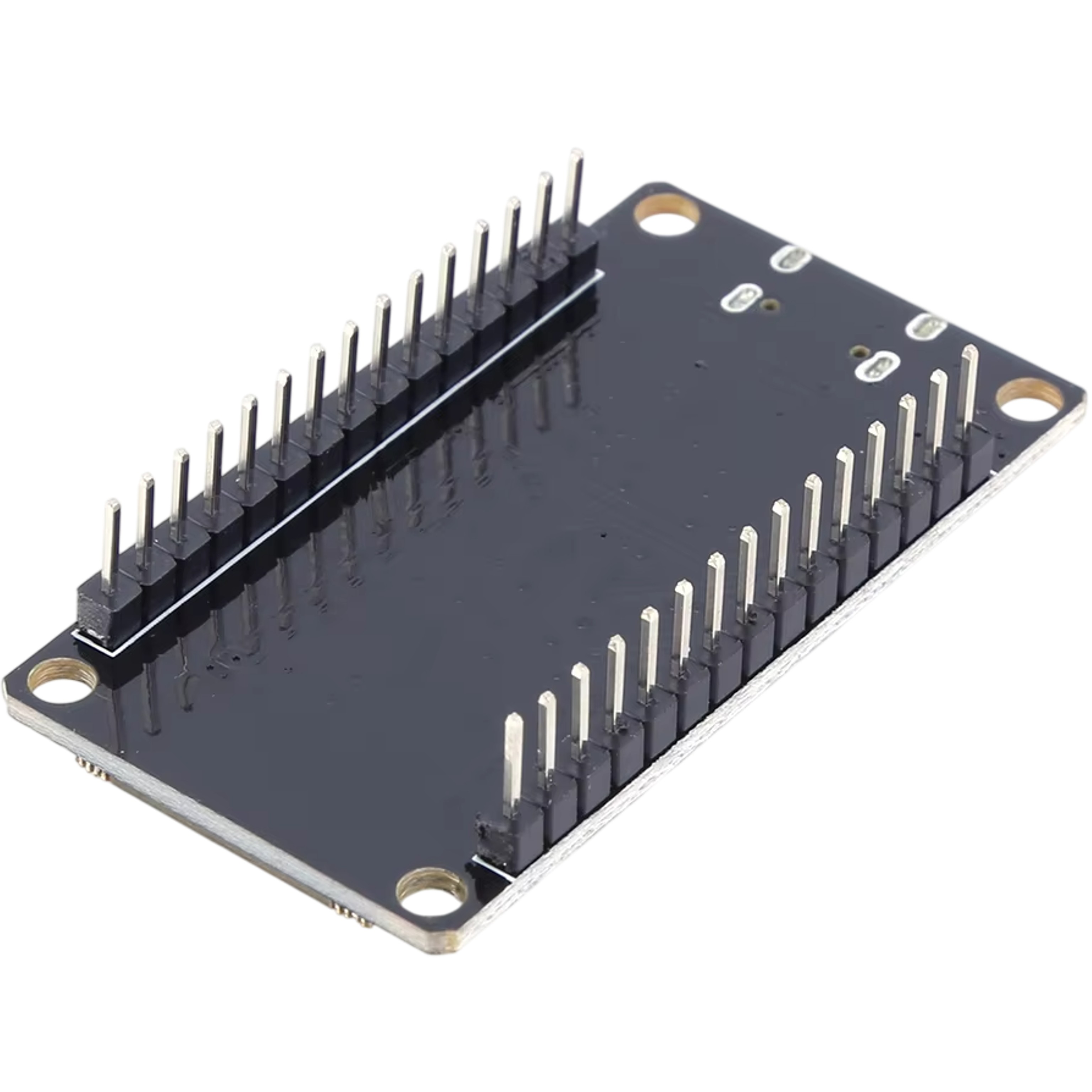
- Presoldered Header Pins — all 30 pins come presoldered for immediate connection to breadboards, jumper wires, and external modules without any soldering
- 30-Pin GPIO Breakout — exposes GPIO, ADC, DAC, I2C, SPI, UART, PWM, and touch-capable pins for interfacing sensors, actuators, and communication modules
- Onboard Antenna and RF Components — integrated PCB antenna and RF front-end components deliver reliable wireless range without requiring an external antenna
- Onboard Power Management — built-in voltage regulator and power management circuitry support 5V USB input and 3.3V logic for peripherals
- Arduino IDE and MicroPython Support — fully compatible with Arduino IDE using C/C++ and with MicroPython for rapid prototyping and scripting workflows
- Compact Form Factor — small 30-pin board footprint fits standard breadboards and tight enclosures for embedded and portable project designs
- Wide Application Support — suitable for IoT sensor nodes, home automation, wireless data logging, robotics, and connected prototyping projects
SPECIFICATION
| Specification | Value |
|---|---|
| Product Type | ESP32 Development Board |
| Chip | Espressif ESP32 (dual-core Xtensa LX6, up to 240 MHz) |
| WiFi | 2.4 GHz 802.11 b/g/n |
| Bluetooth | Bluetooth 4.2 Classic + BLE |
| USB Interface | USB Type-C (via CH340 USB-to-serial chip) |
| USB-to-Serial Chip | CH340 |
| Flash Memory | 4 MB |
| SRAM | 520 KB |
| Operating Voltage | 5V DC (USB) / 3.3V logic |
| GPIO Pins | 30 pins (GPIO, ADC, DAC, I2C, SPI, UART, PWM, touch) |
| Antenna | Onboard PCB antenna |
| Presoldered | Yes |
| Programming Environment | Arduino IDE (C/C++), MicroPython |
| Package Quantity | 1 piece |
| Compatibility | Arduino IDE, MicroPython, ESP-IDF |
| Applications | IoT, home automation, wireless sensor nodes, robotics, prototyping |
COMPATIBLE HARDWARE
- Breadboards (full-size and half-size) — presoldered pins fit directly into standard 2.54 mm pitch rails
- Arduino IDE (Windows, macOS, Linux) — program via USB Type-C with CH340 driver installed
- MicroPython firmware — flash MicroPython and program over USB Type-C serial
- Sensors and modules with I2C interface — connect to SDA/SCL pins at 3.3V logic
- Sensors and modules with SPI interface — connect to MOSI/MISO/SCK/CS pins at 3.3V logic
- UART peripherals (GPS, Bluetooth modules, serial displays) — connect to TX/RX pins at 3.3V logic
- Servo motors and PWM devices — connect to any PWM-capable GPIO pin
- Relay modules, LEDs, and digital actuators — connect to GPIO pins with appropriate current limiting
- Any 3.3V compatible peripheral — direct connection; use logic level shifter for 5V peripherals
FRITZING PART
- Download DIYables ESP32 30 Pin Development Board (ESP-WROOM-32, USB-C) Fritzing Part (.fzpz) — Import into Fritzing to draw wiring diagrams and breadboard layouts with this board