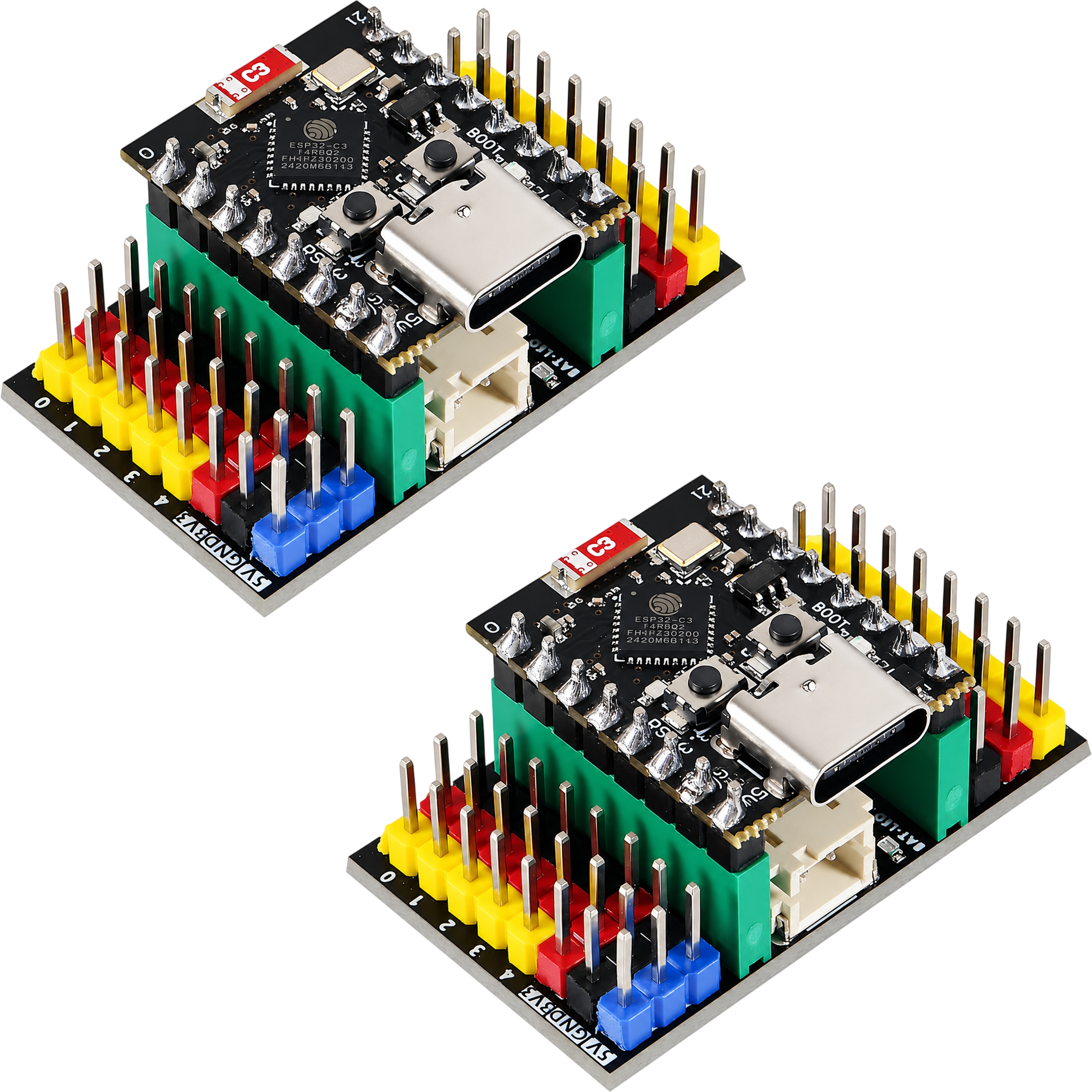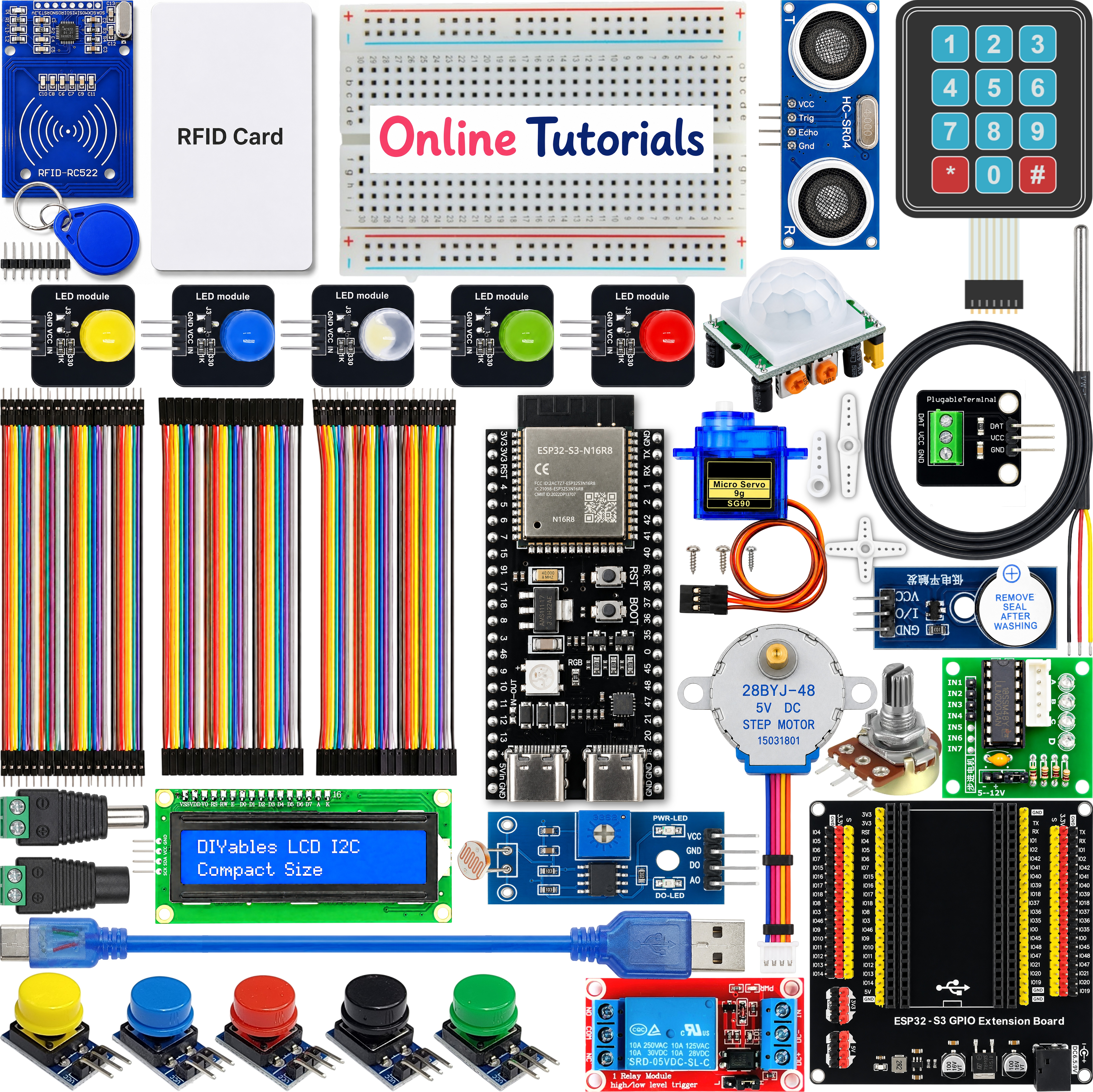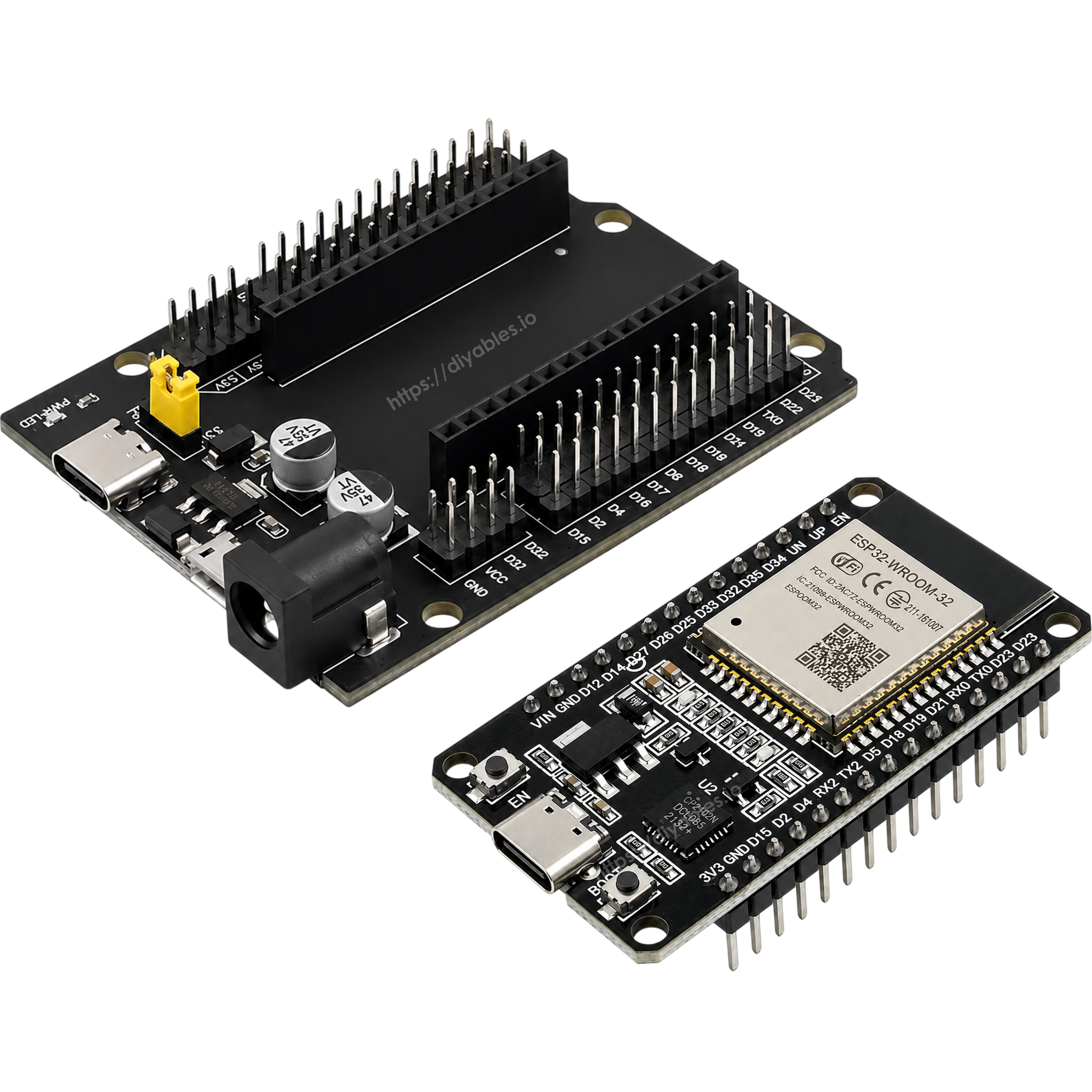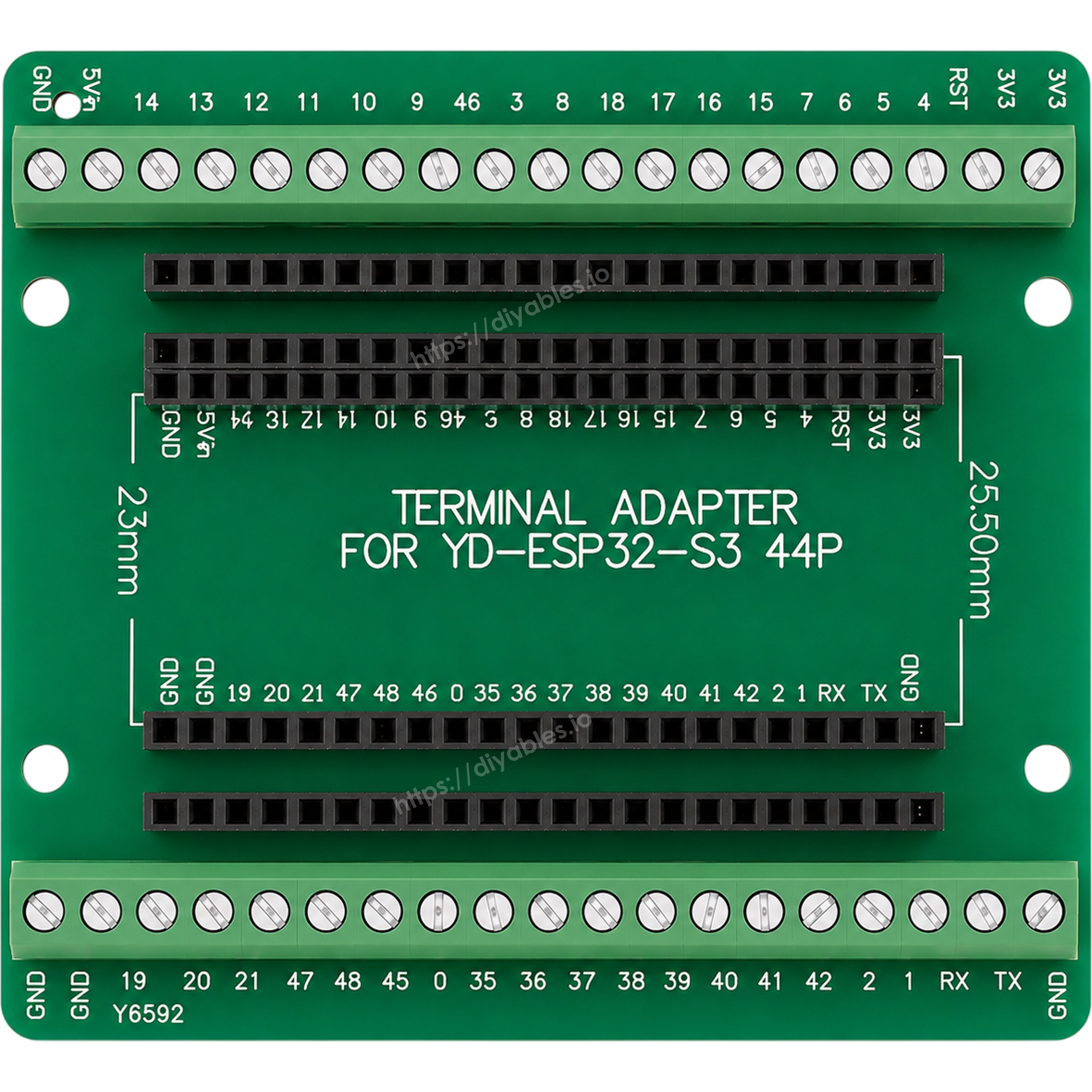
DIYables GPIO Expansion Breakout Board for ESP32-S3 44 Pin, Solder Free, Prototying
 Click to zoom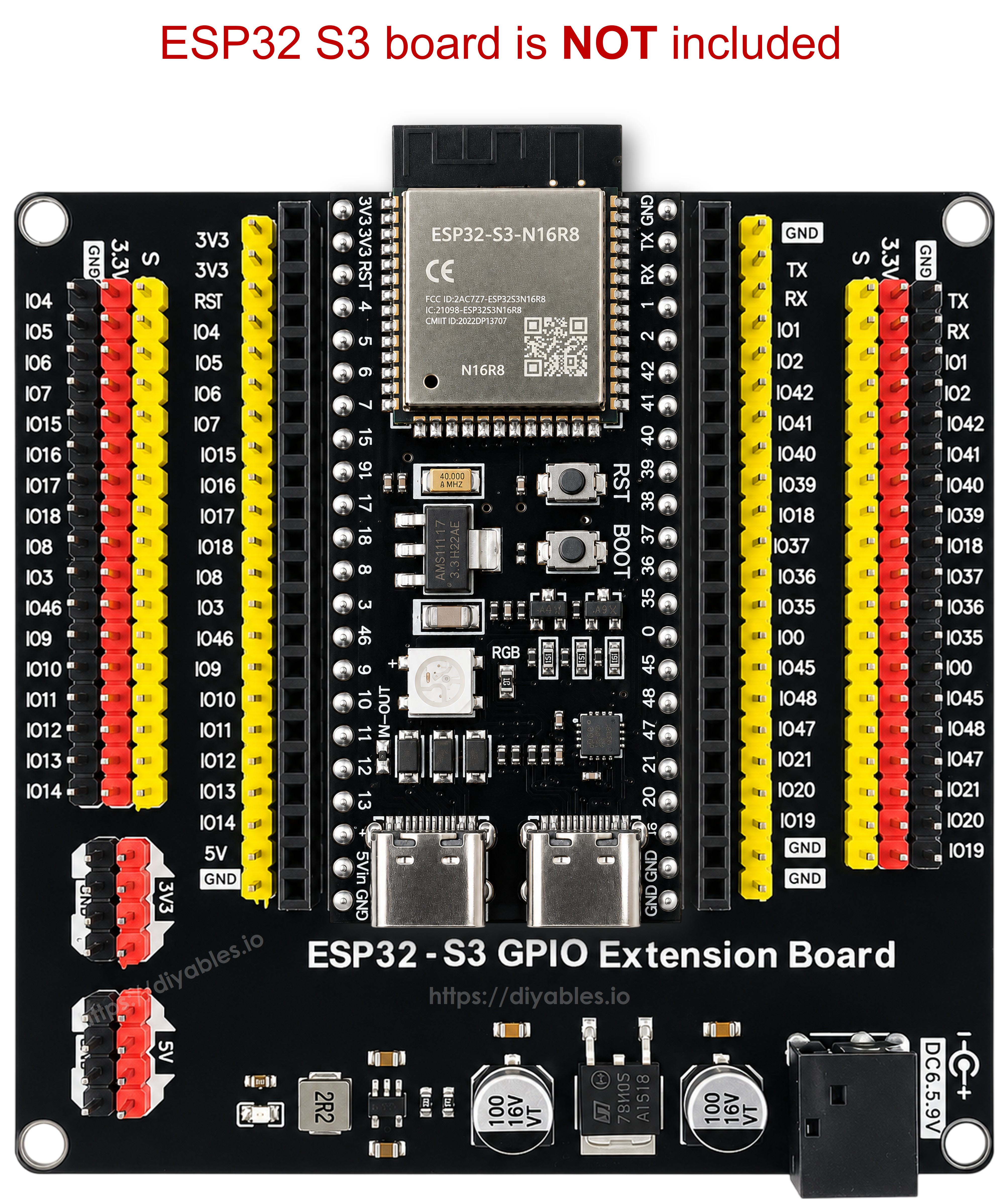
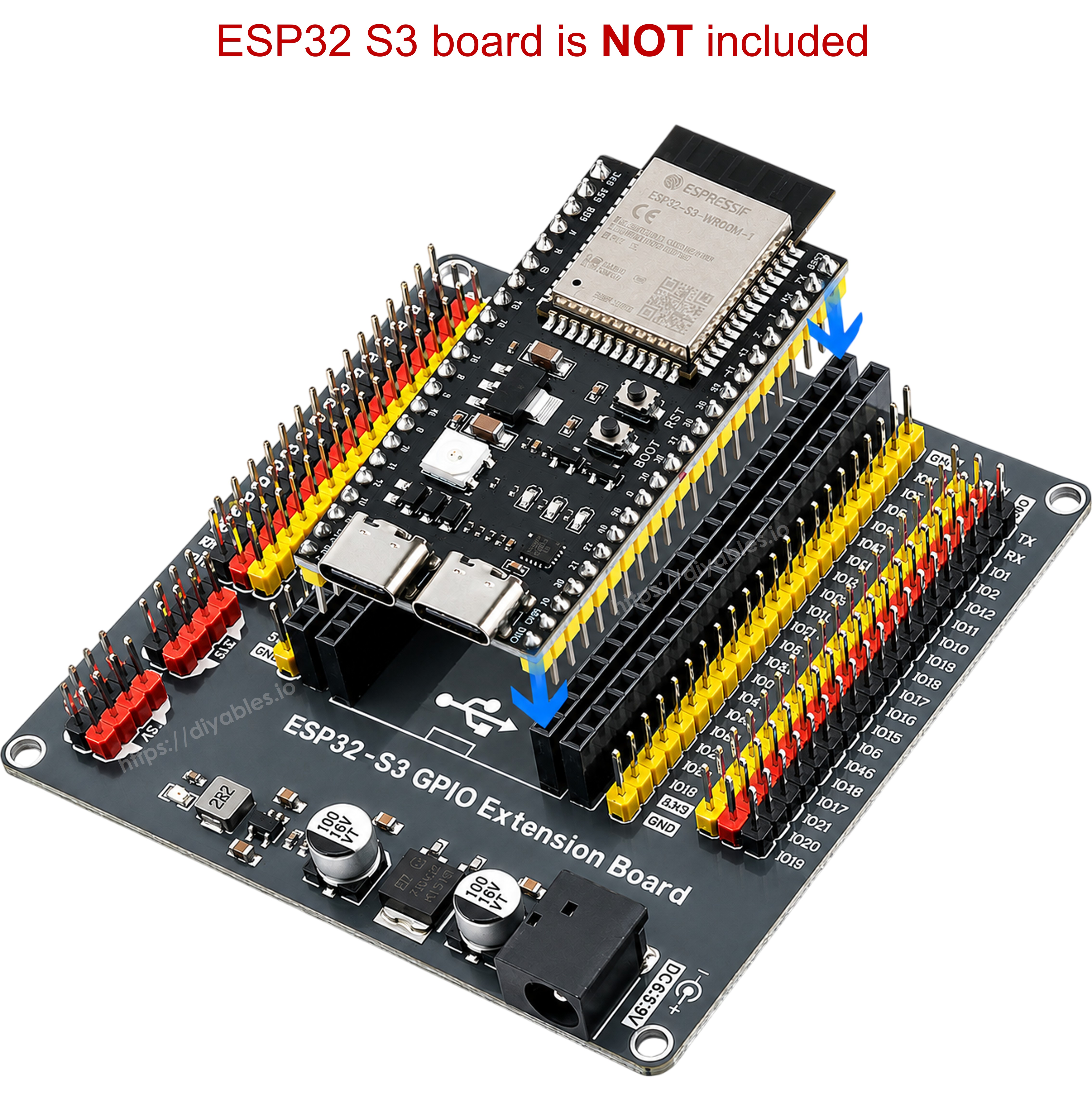
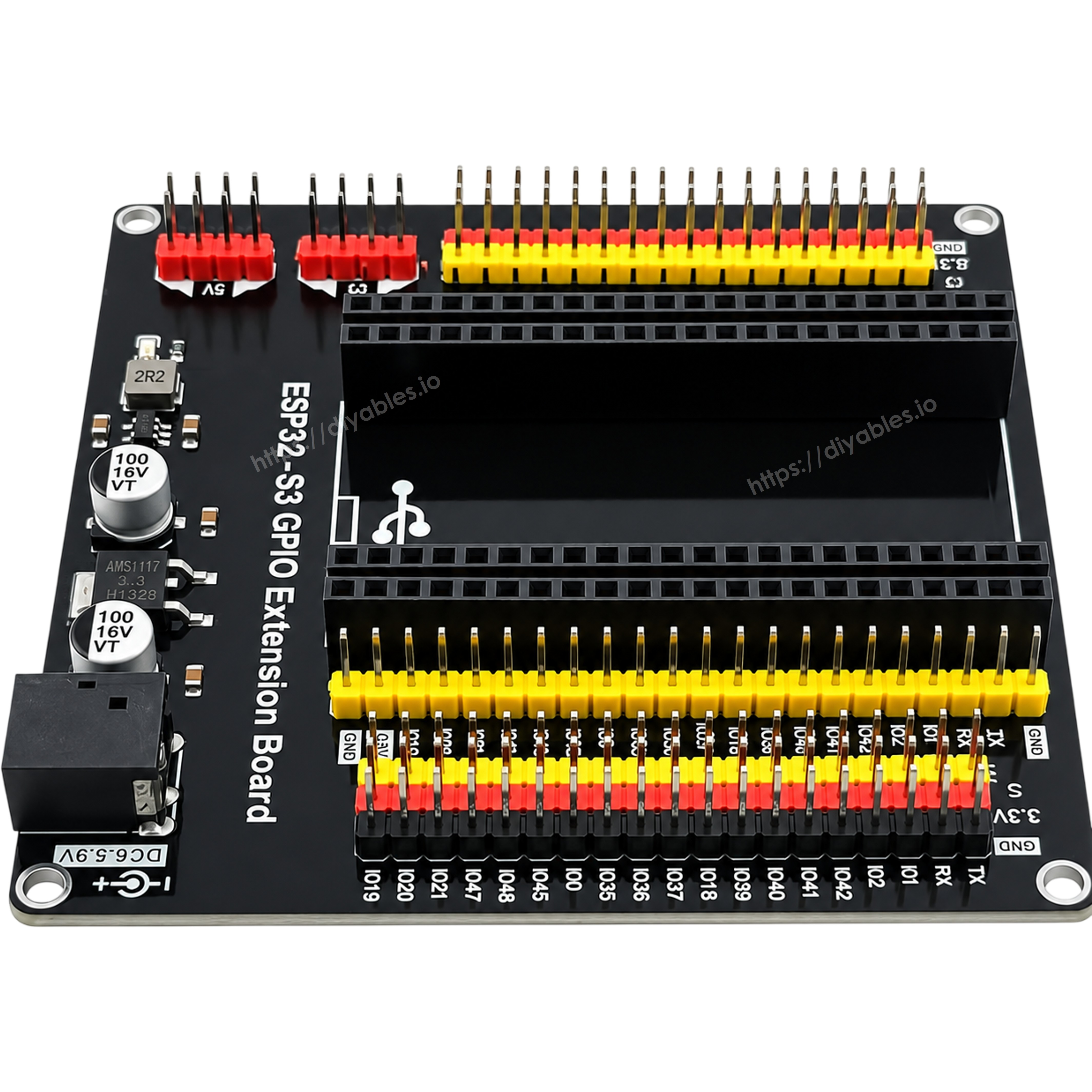
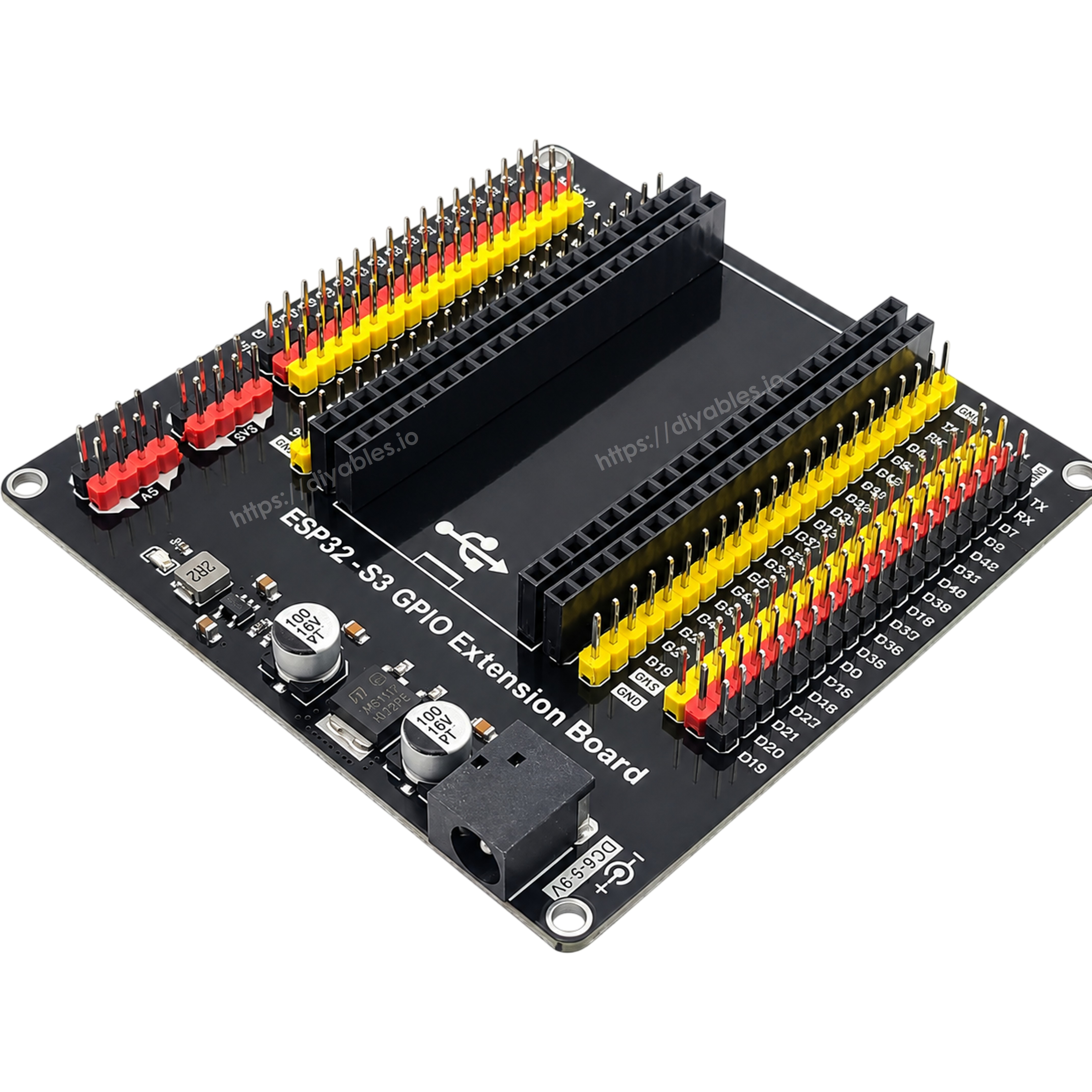
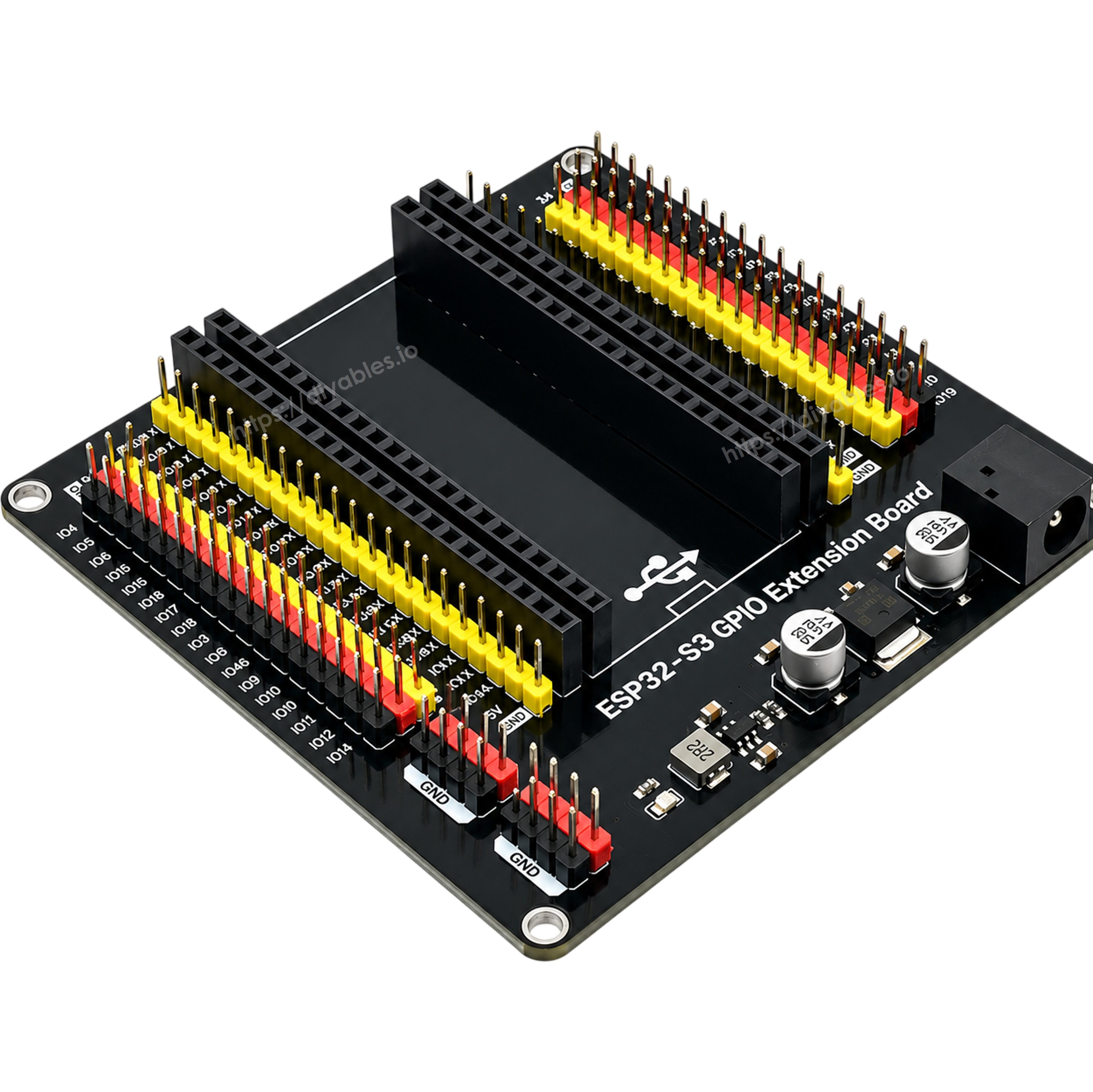
Quick Overview
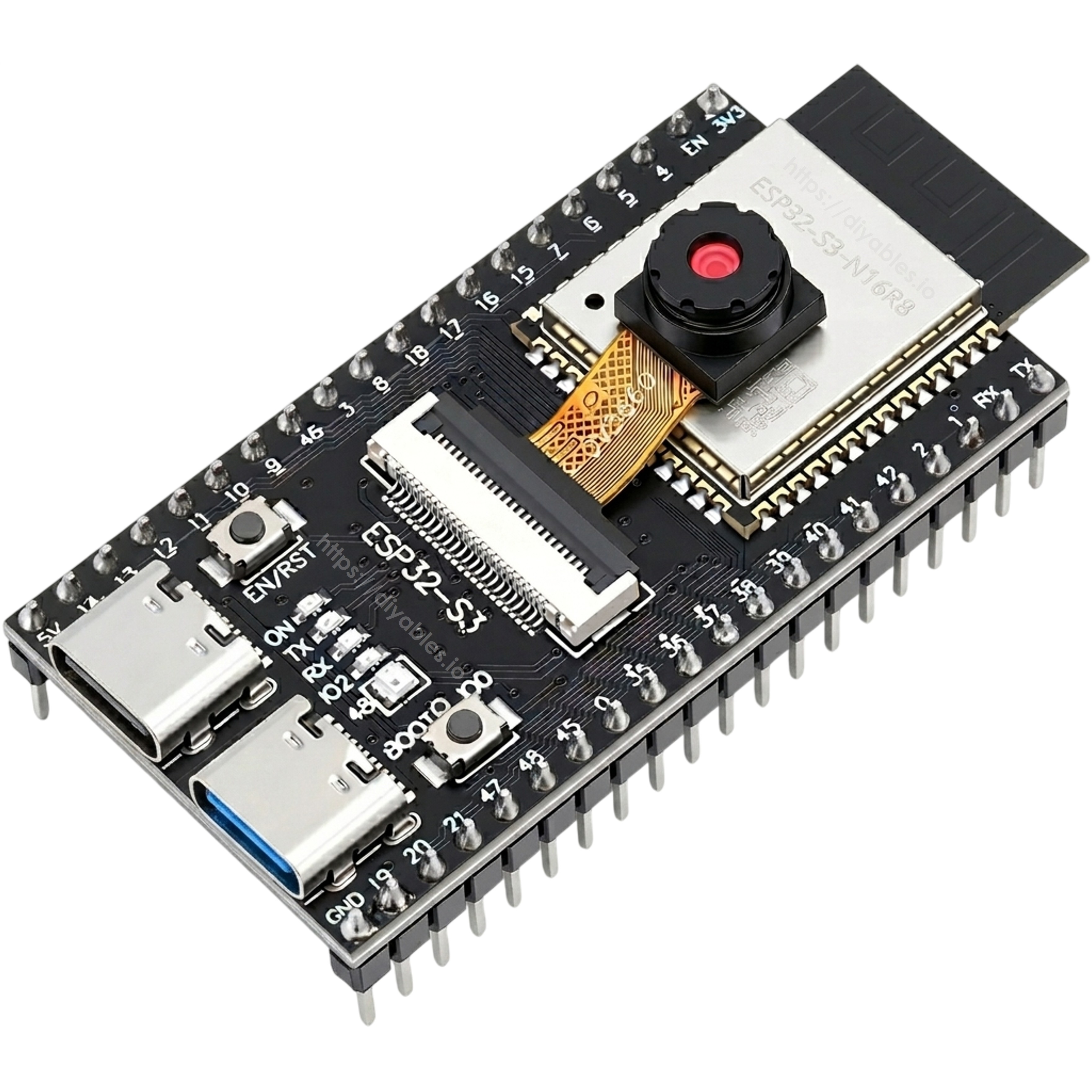
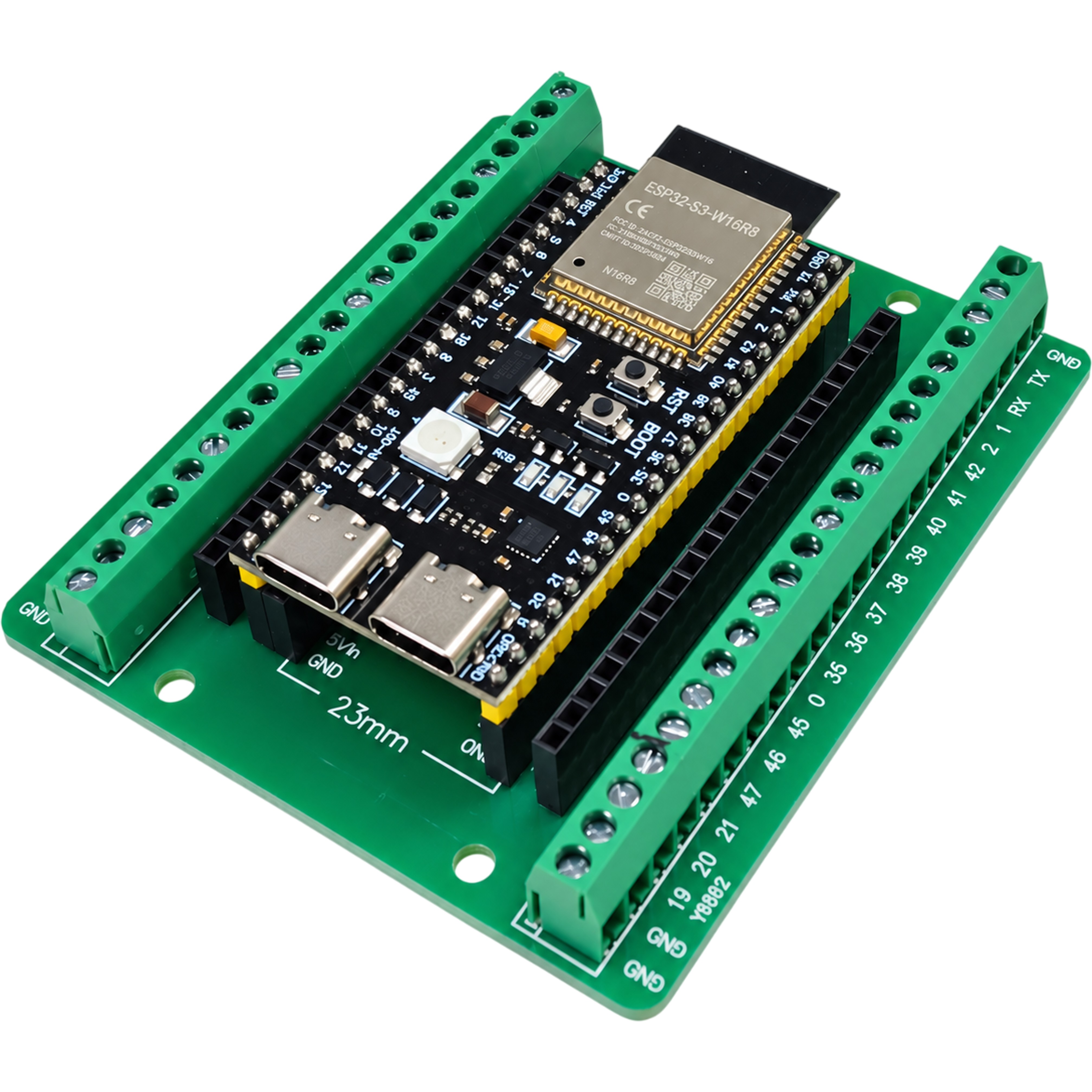
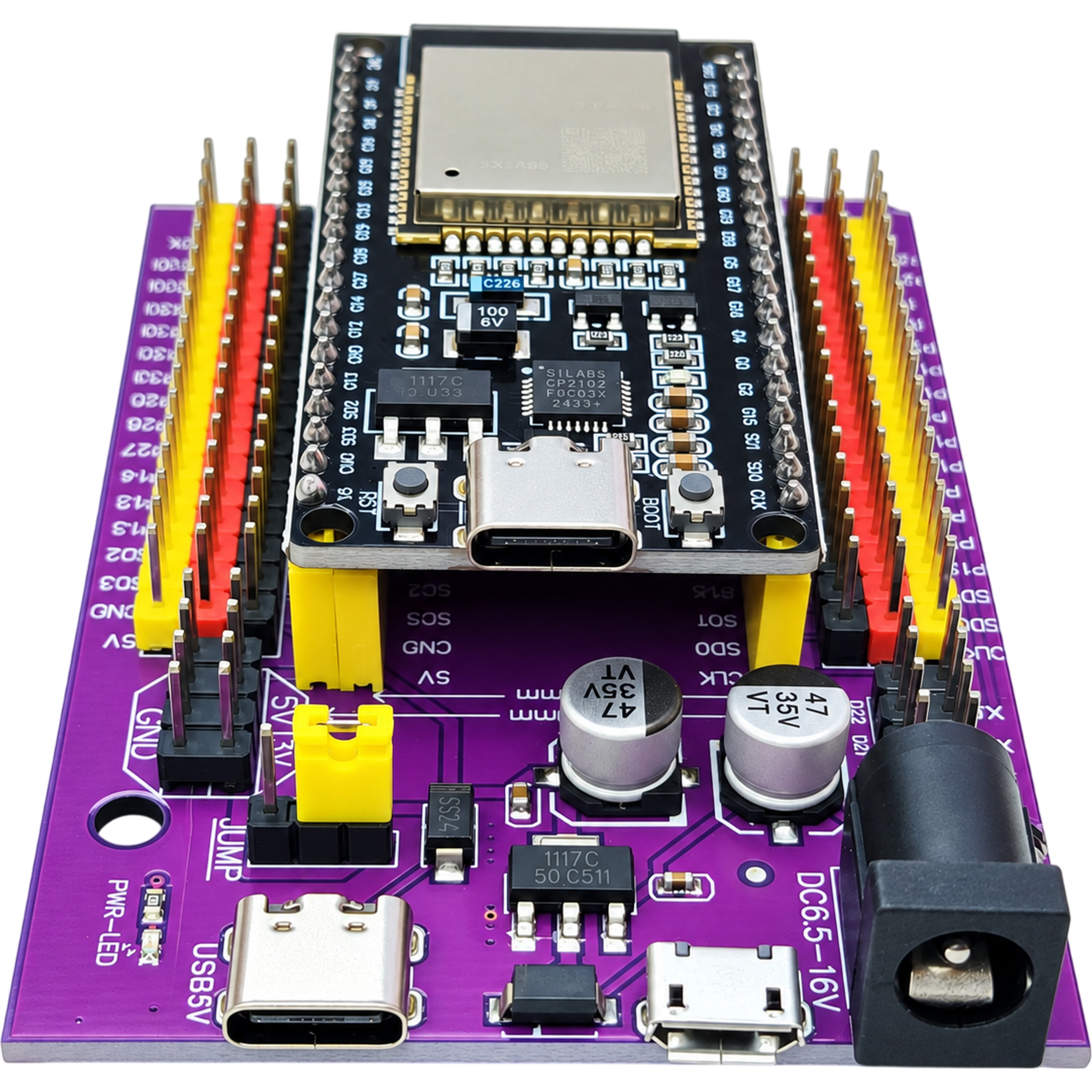
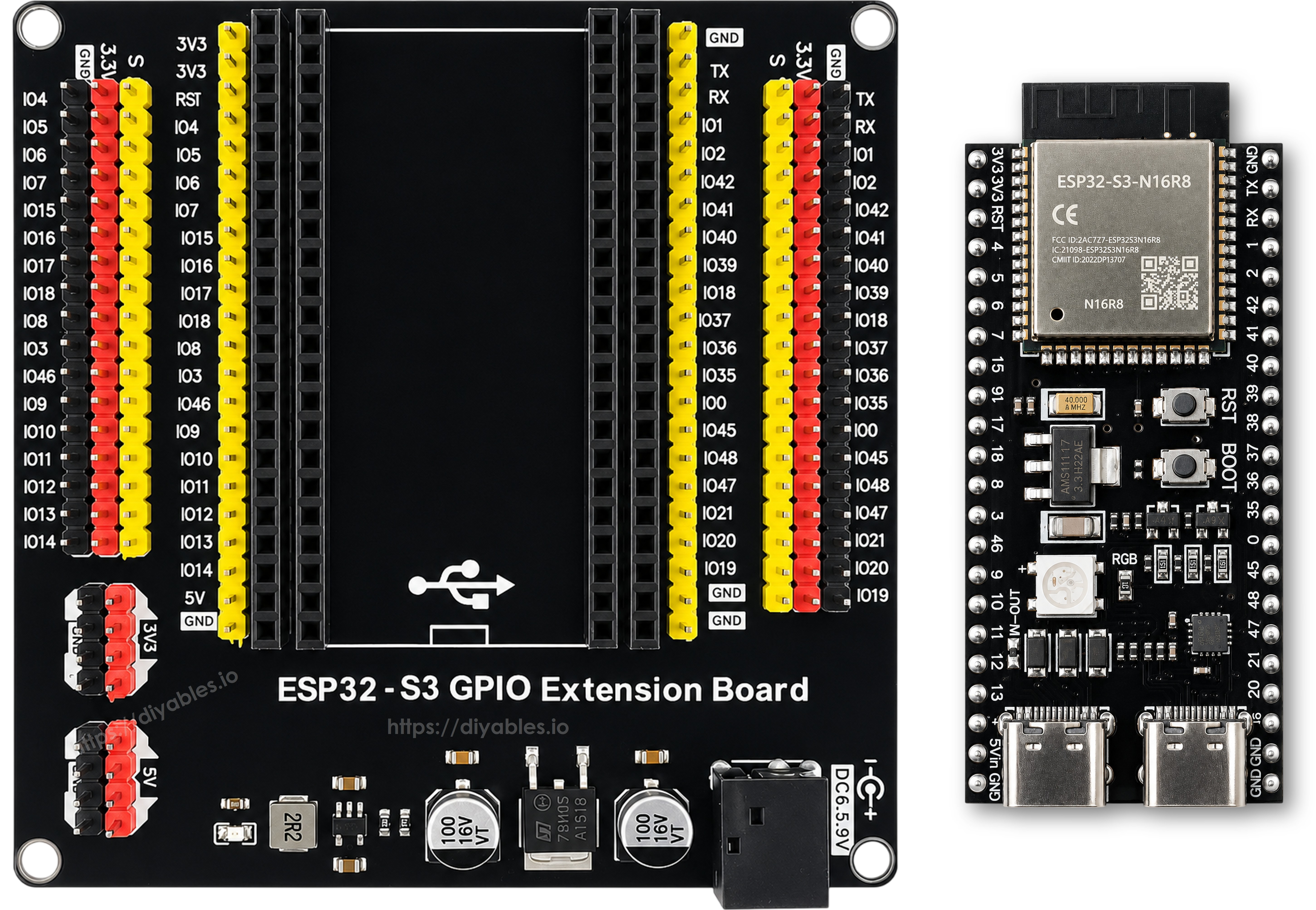
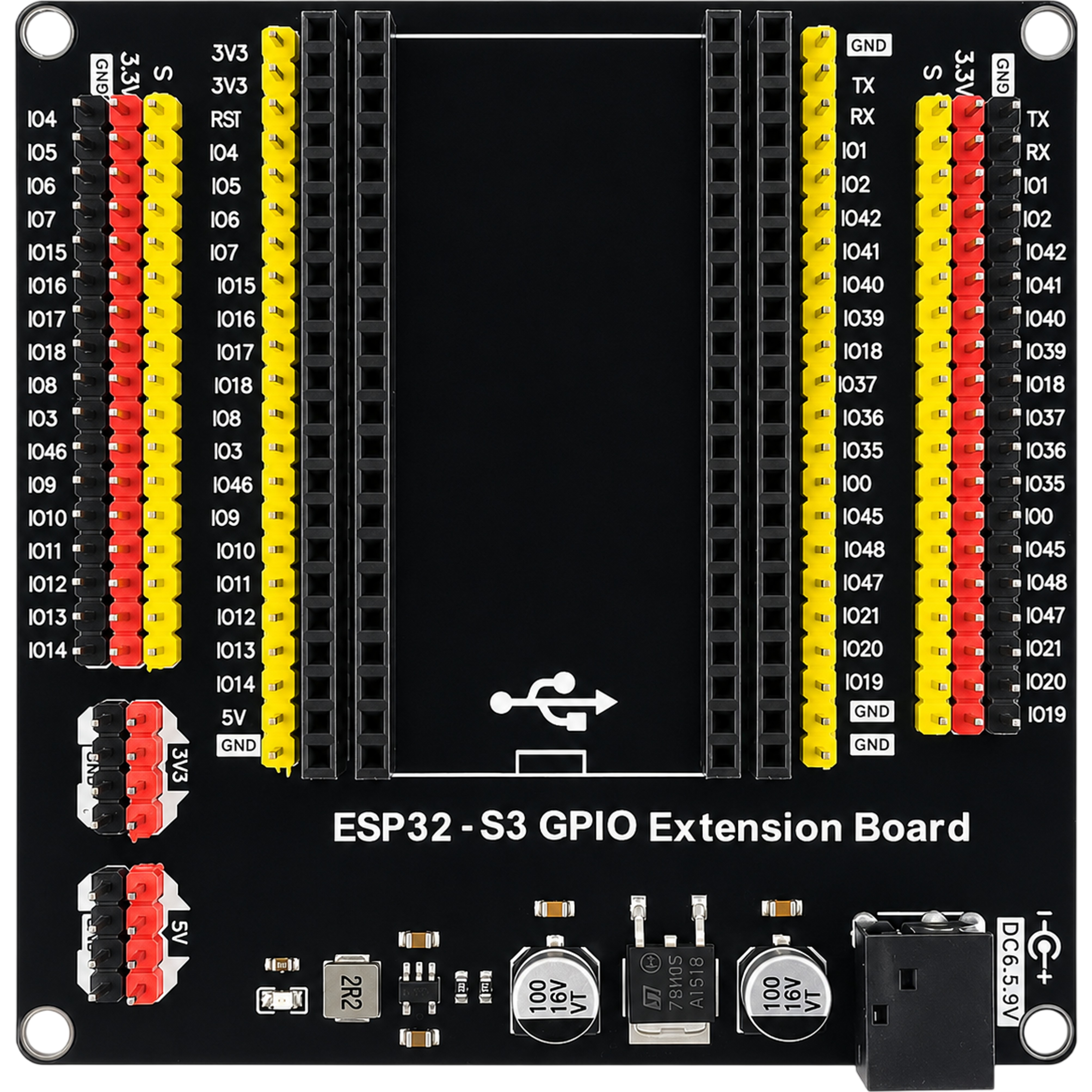
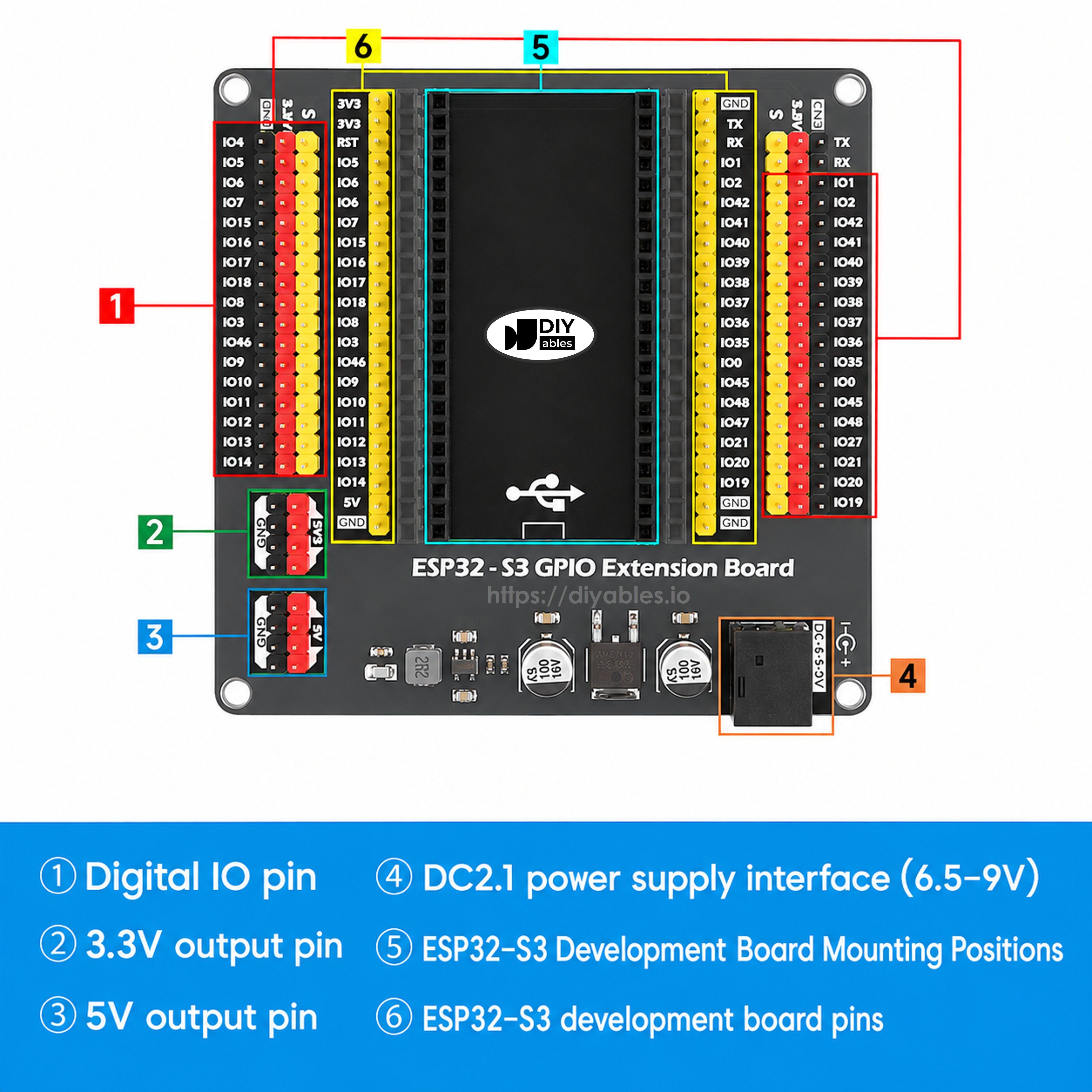
The DIYables GPIO Expansion Board is a solder-free breakout board designed for 44 pin ESP32-S3 development boards. It provides convenient access to all GPIO pins with a well-aligned double-sided breakout layout, making it perfect for rapid prototyping, testing, and educational purposes. The double-layer PCB design ensures stable and reliable signal transmission, while the socket-style design lets you simply insert your ESP32-S3 board without any soldering required.
The double-sided pin breakout provides easy access for connecting sensors, displays, motors, and other peripherals with jumper wires or breadboards. Standard pitch pin headers are breadboard friendly, and the robust PCB construction ensures solid connectivity for both temporary prototyping and more permanent project setups. Compatible with Arduino IDE and MicroPython development environments.
Ideal for DIY electronics, IoT development, and embedded systems programming. Perfect for makers who need a convenient way to access all ESP32-S3 pins without soldering, educators teaching embedded systems, and developers prototyping IoT products. The solder-free design makes it easy to swap ESP32-S3 boards for testing or reuse the expansion board across multiple projects.
Key Features
- Solder-Free Design — Simply insert the ESP32-S3 44 pin board into the socket without any soldering required
- 44-Pin Double-Sided Breakout — All GPIO pins broken out on both sides of the board for easy access and wiring
- Double-Layer PCB — Stable and reliable signal transmission with professional PCB construction
- Breadboard Friendly Headers — Standard pitch pin headers plug directly into breadboards and jumper wires
- Easy Prototyping — Quick setup for testing, development, and educational projects
- Solid Connectivity — Well-aligned pin headers ensure stable connections with jumper wires
- Reusable Design — Swap ESP32-S3 boards easily without desoldering for multiple projects
- Arduino IDE Compatible — Works with Arduino IDE and MicroPython programming environments
- Versatile Applications — Perfect for IoT development, DIY electronics, and embedded systems prototyping
SPECIFICATION
| Specification | Value |
|---|---|
| Product Type | ESP32-S3 GPIO Expansion Breakout Board |
| Pin Configuration | 44-pin socket with double-sided breakout |
| PCB Design | Double-layer PCB for stable signal transmission |
| Connection Type | Solder-free socket design |
| Pin Headers | Standard pitch, compatible with breadboards and jumper wires |
| Breakout Layout | All 44 GPIO pins accessible on both sides |
| Package Quantity | 1 piece (ESP32-S3 board not included) |
| Compatibility | Arduino IDE, MicroPython |
| Applications | IoT development, prototyping, DIY electronics, embedded systems, educational projects |
※ NOTE THAT:
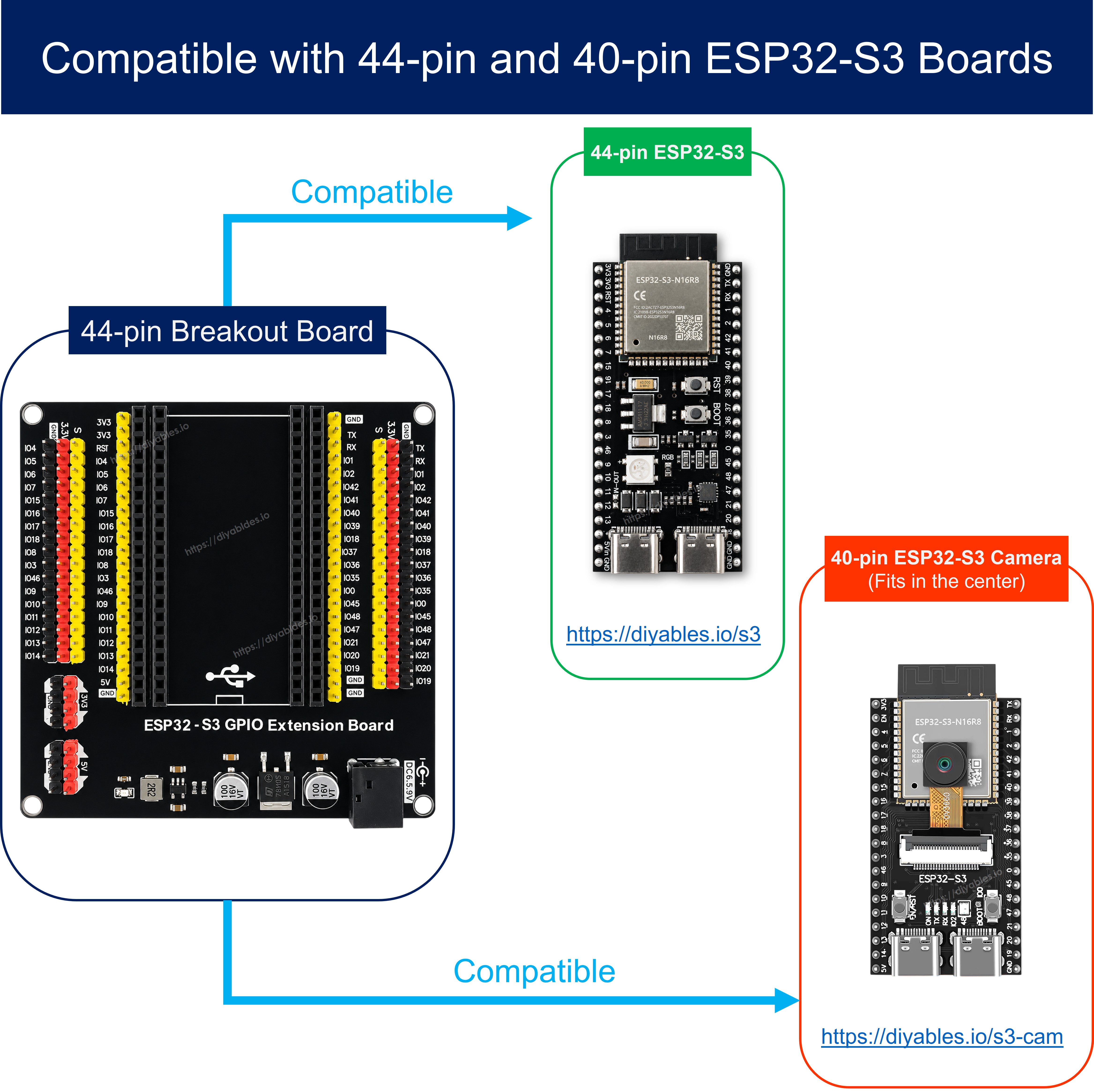
Please pay attention to this before making a purchase. There are many variations of ESP32-S3 boards on the market, and there is no standard ESP32-S3 board. This expansion board does not work for all ESP32-S3 boards.
It works with ESP32-S3 boards that have exactly 44 pins matching this board's socket layout.
It does NOT work with ESP32-S3 boards that do not have exactly 44 pins or that use a different pin layout.
COMPATIBLE HARDWARE
- ESP32-S3 development boards with 44 pins — direct socket insertion, no soldering
- Temperature and humidity sensors — digital or I2C interface via breakout pins
- OLED and LCD displays — I2C and SPI displays for visual feedback
- Motion sensors (PIR, ultrasonic) — digital GPIO interface for detection applications
- Relay modules — GPIO control for high-power device switching
- Servo motors — PWM control for precise positioning
- Breadboards and jumper wires — for prototyping and sensor connections
FRITZING PART
- Download DIYables GPIO Expansion Breakout Board for ESP32-S3 44 Pin Fritzing Part (.fzpz) — Import into Fritzing to draw wiring diagrams and breadboard layouts with this board