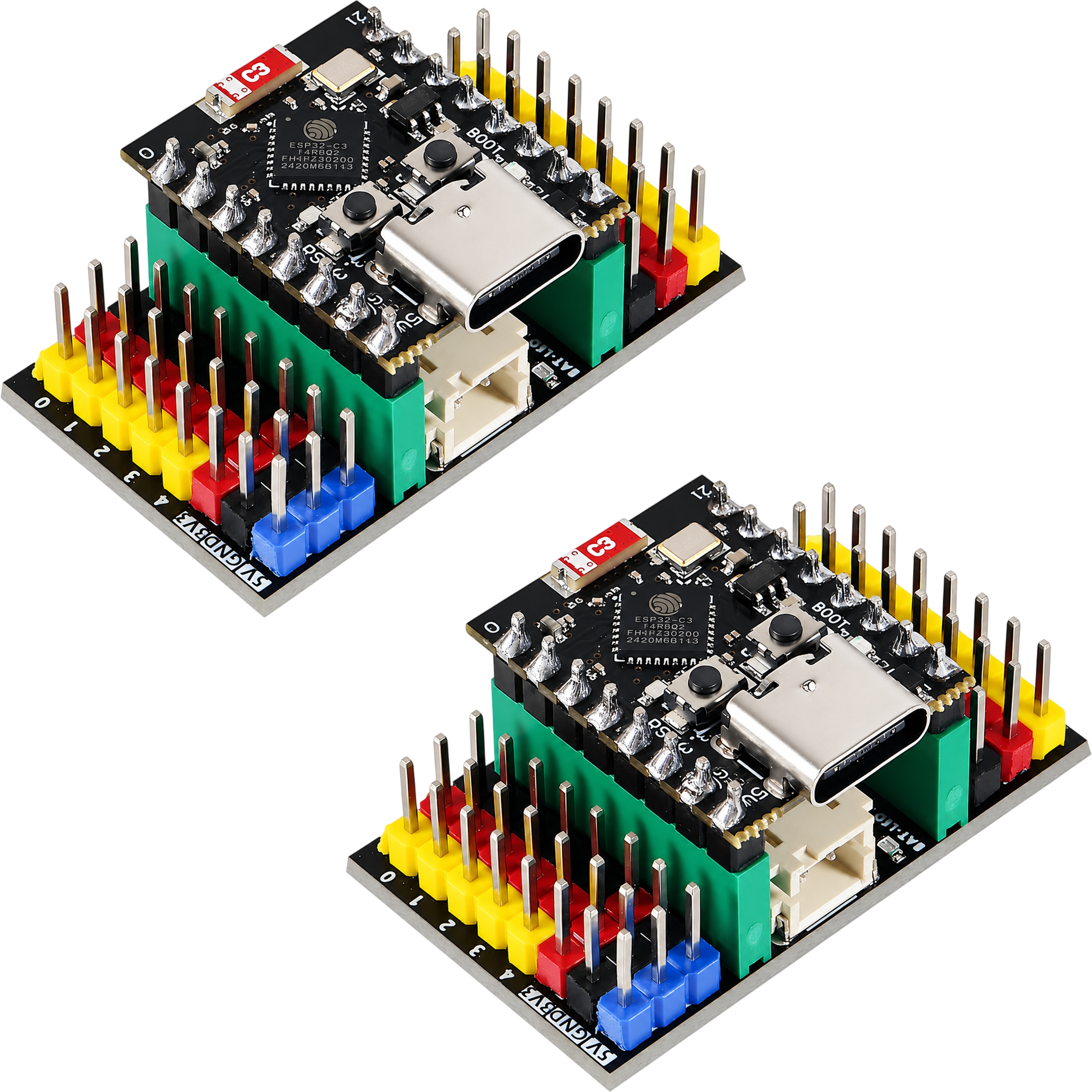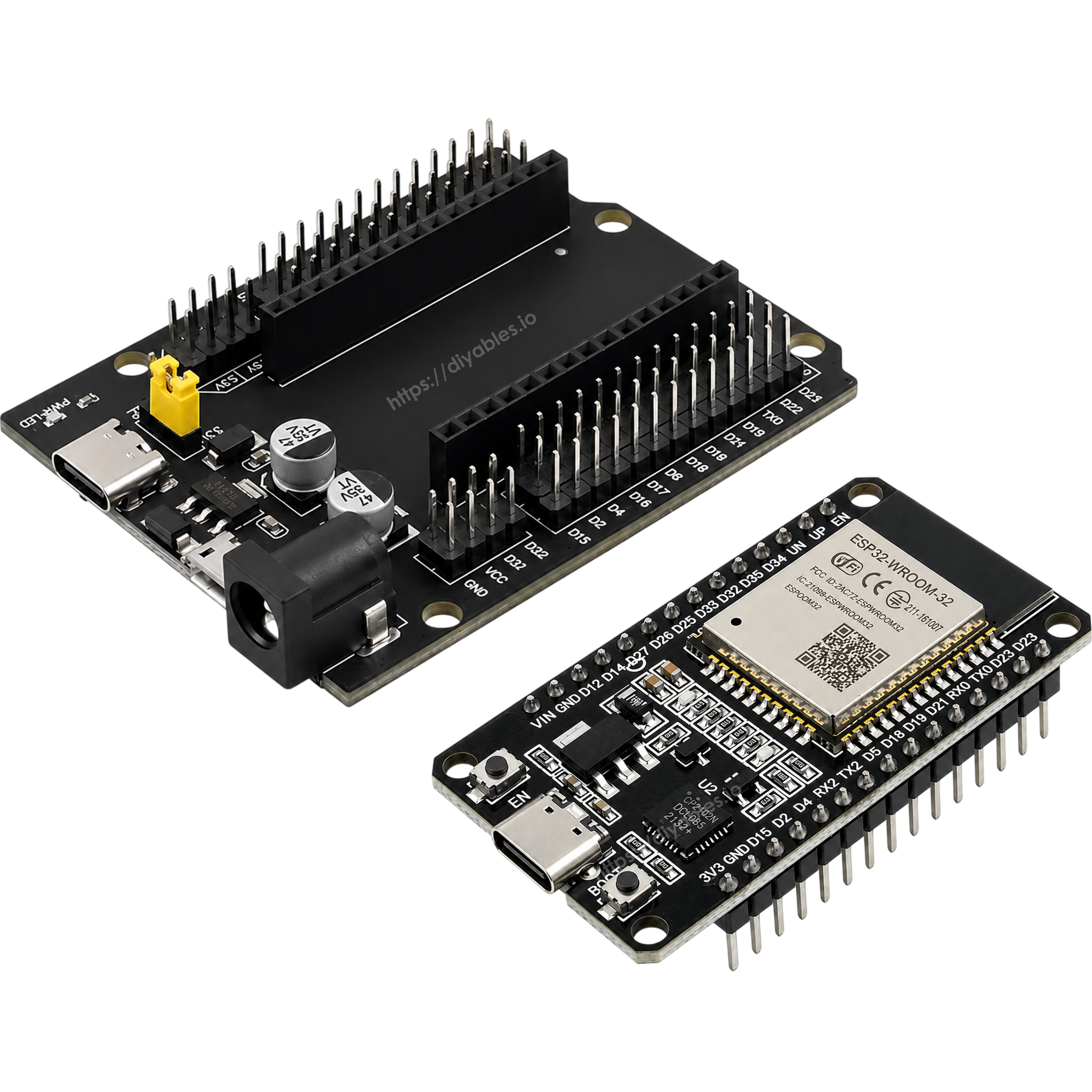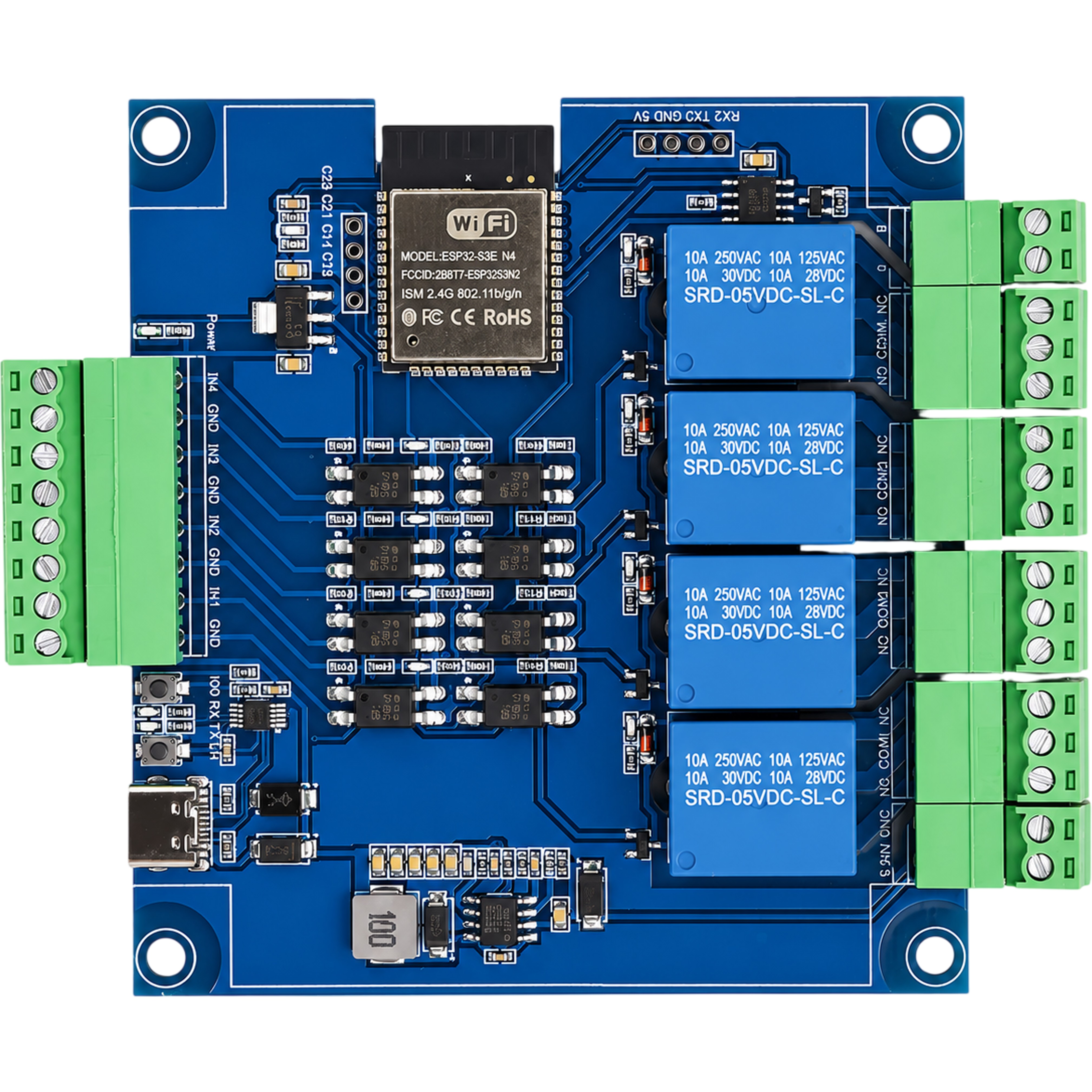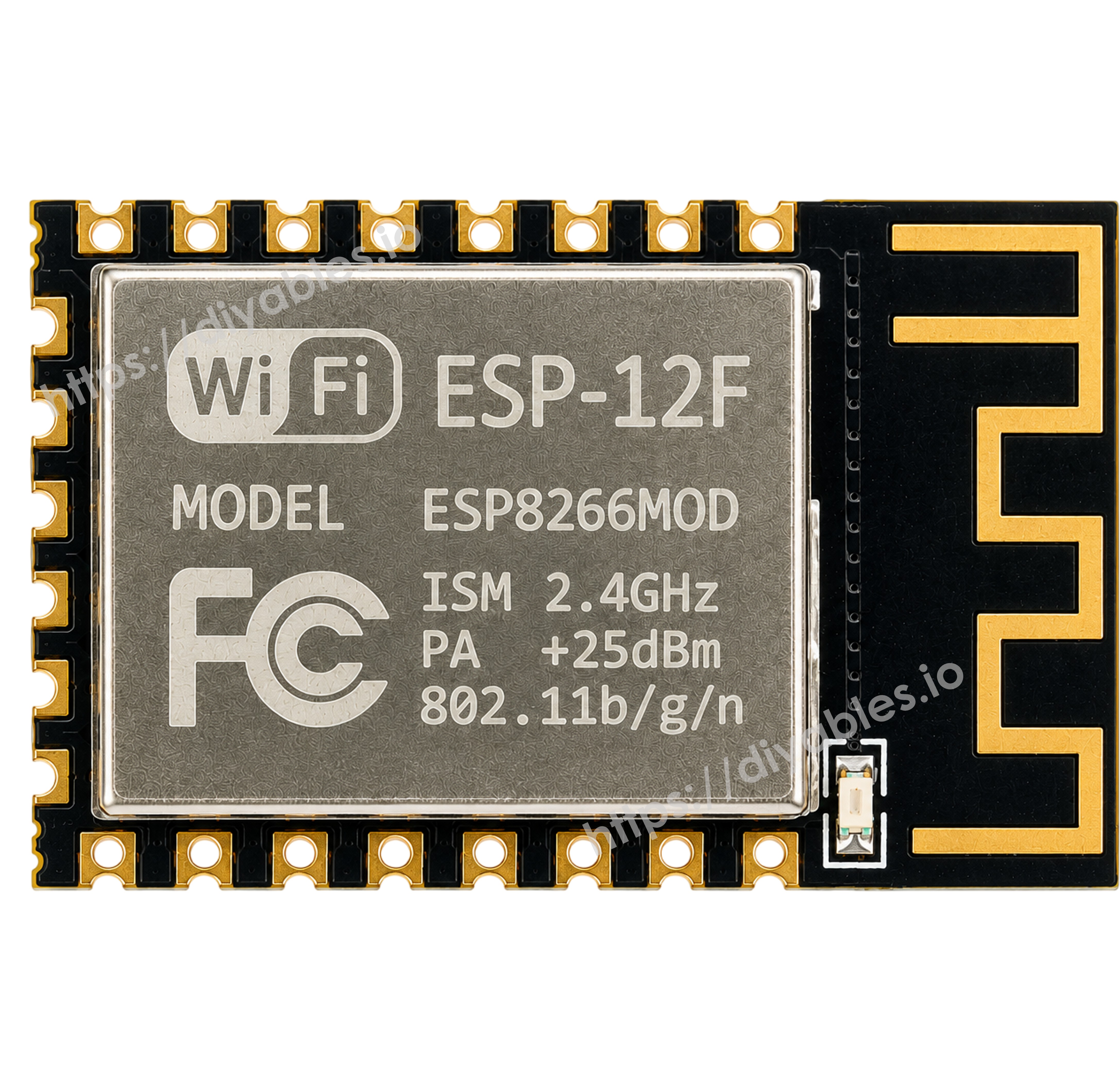
DIYables ESP8266 ESP-12F NodeMCU Development Board WiFi Module with CP2102 for Arduino IDE MicroPython Lua, 2 Pack, Tutorial Provided
 Click to zoom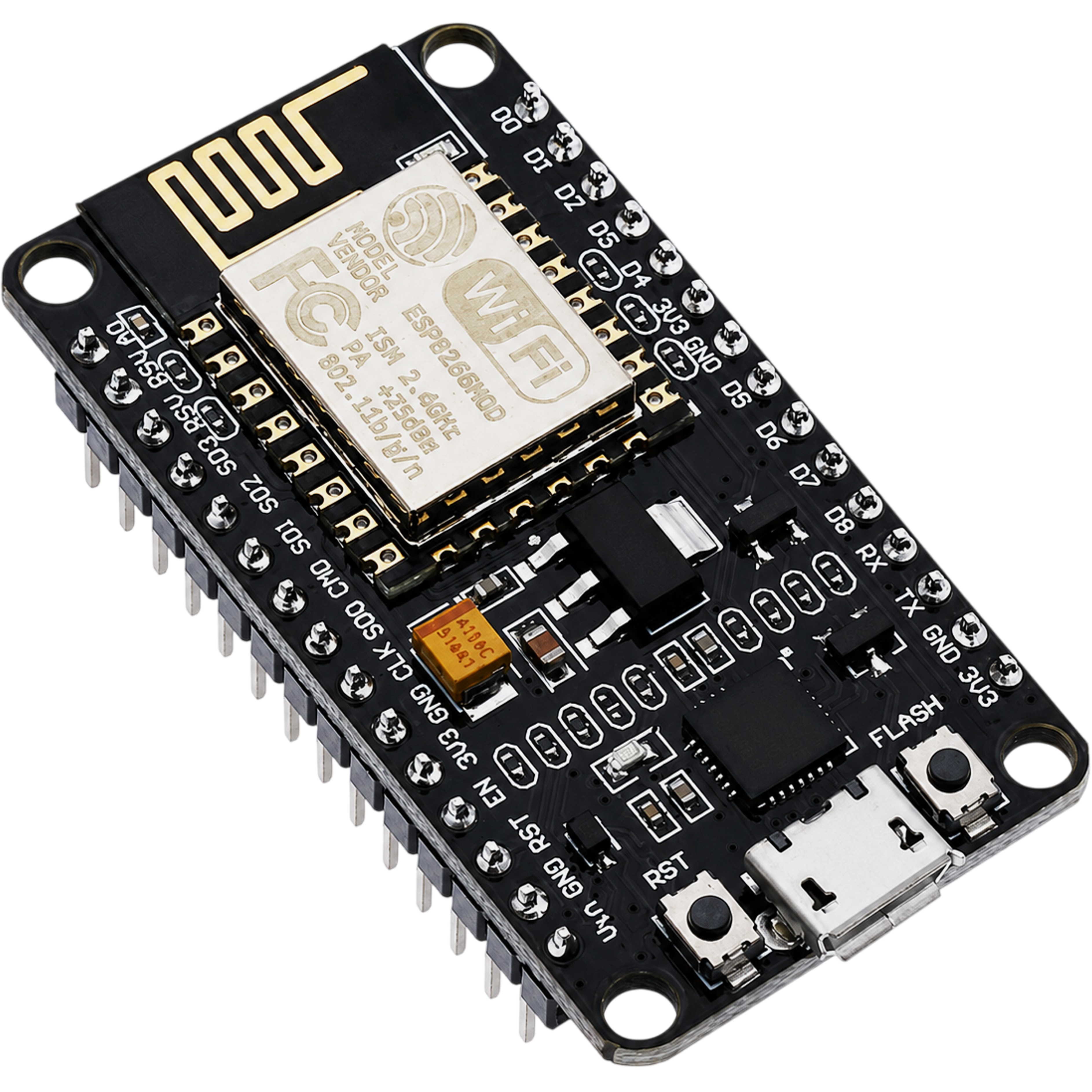
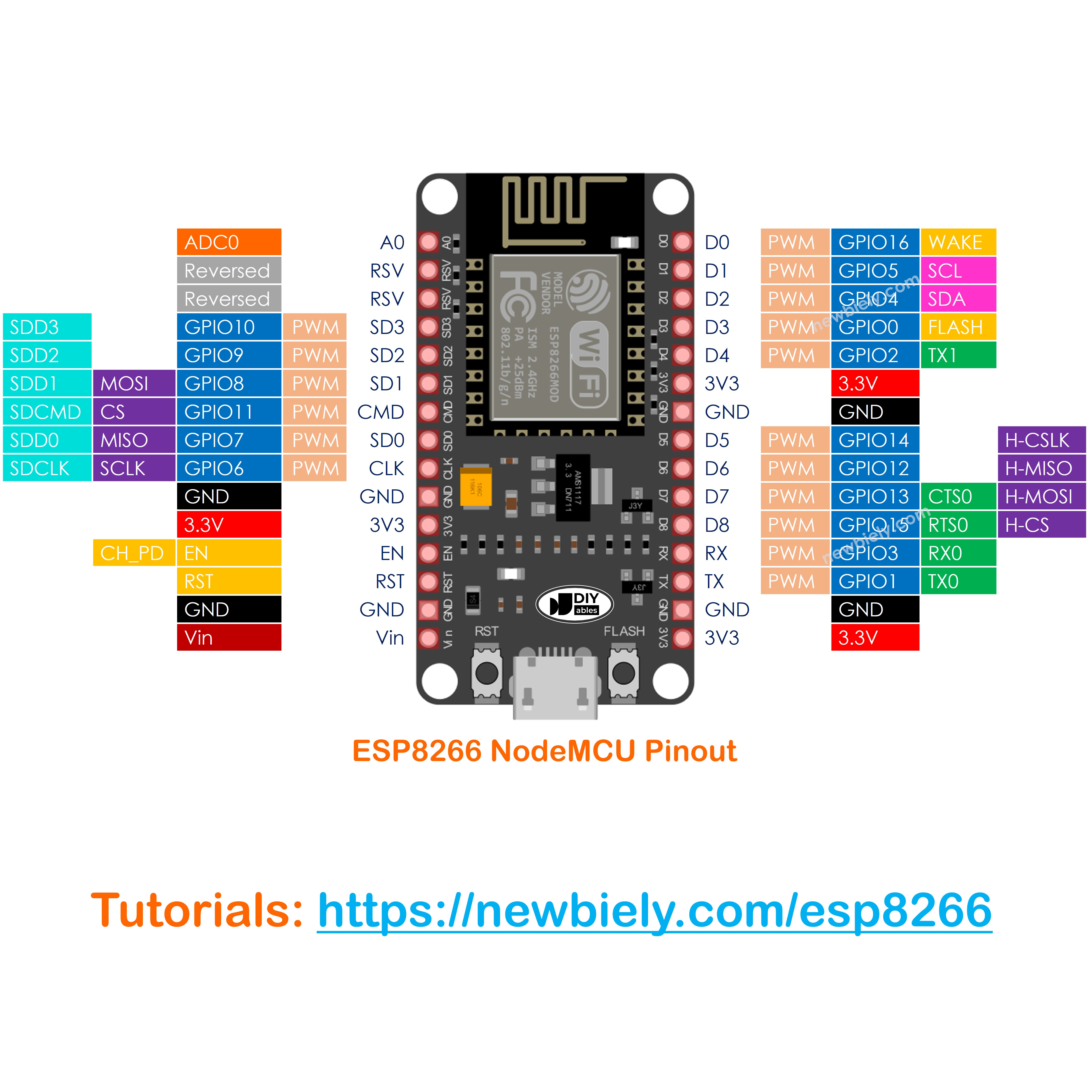
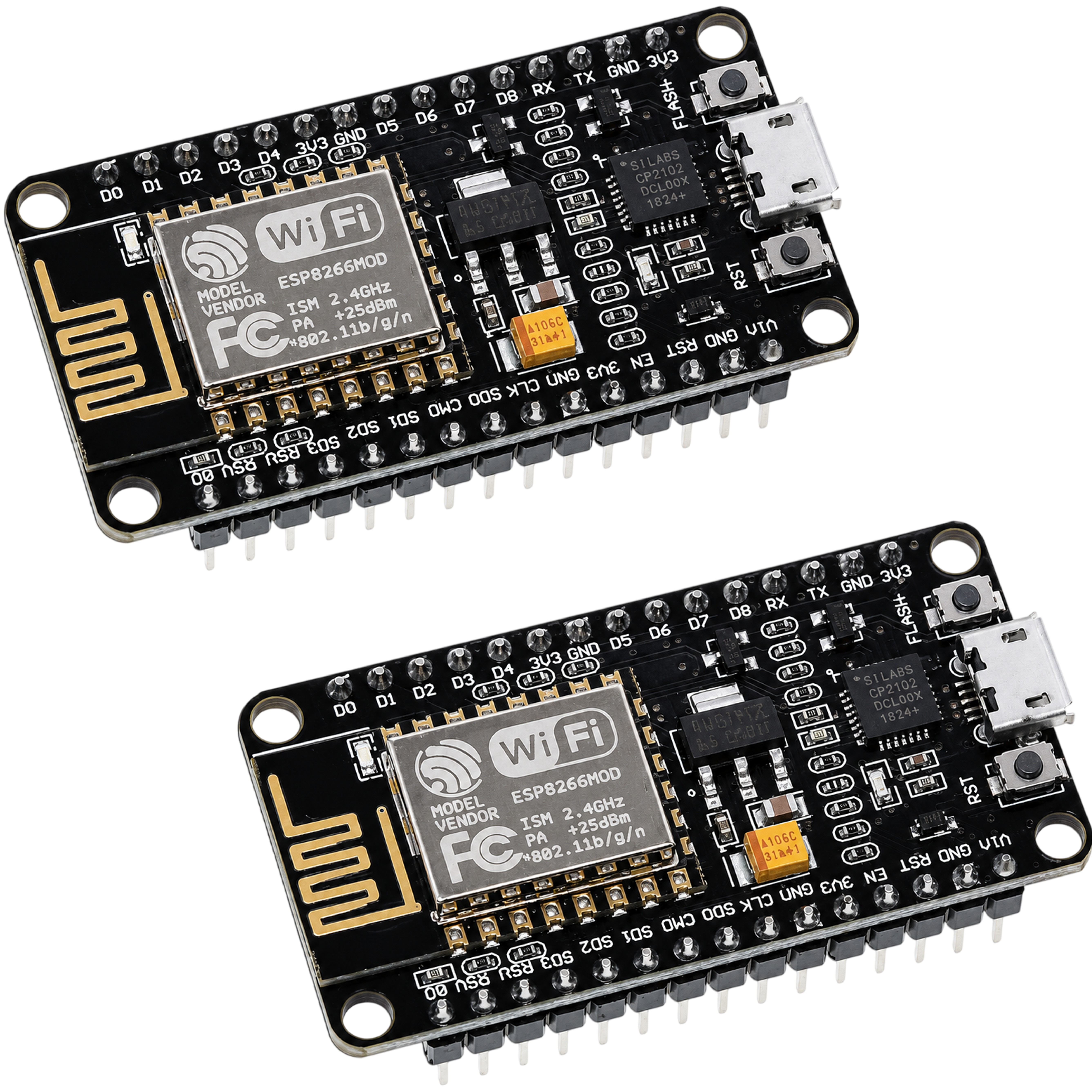
Quick Overview
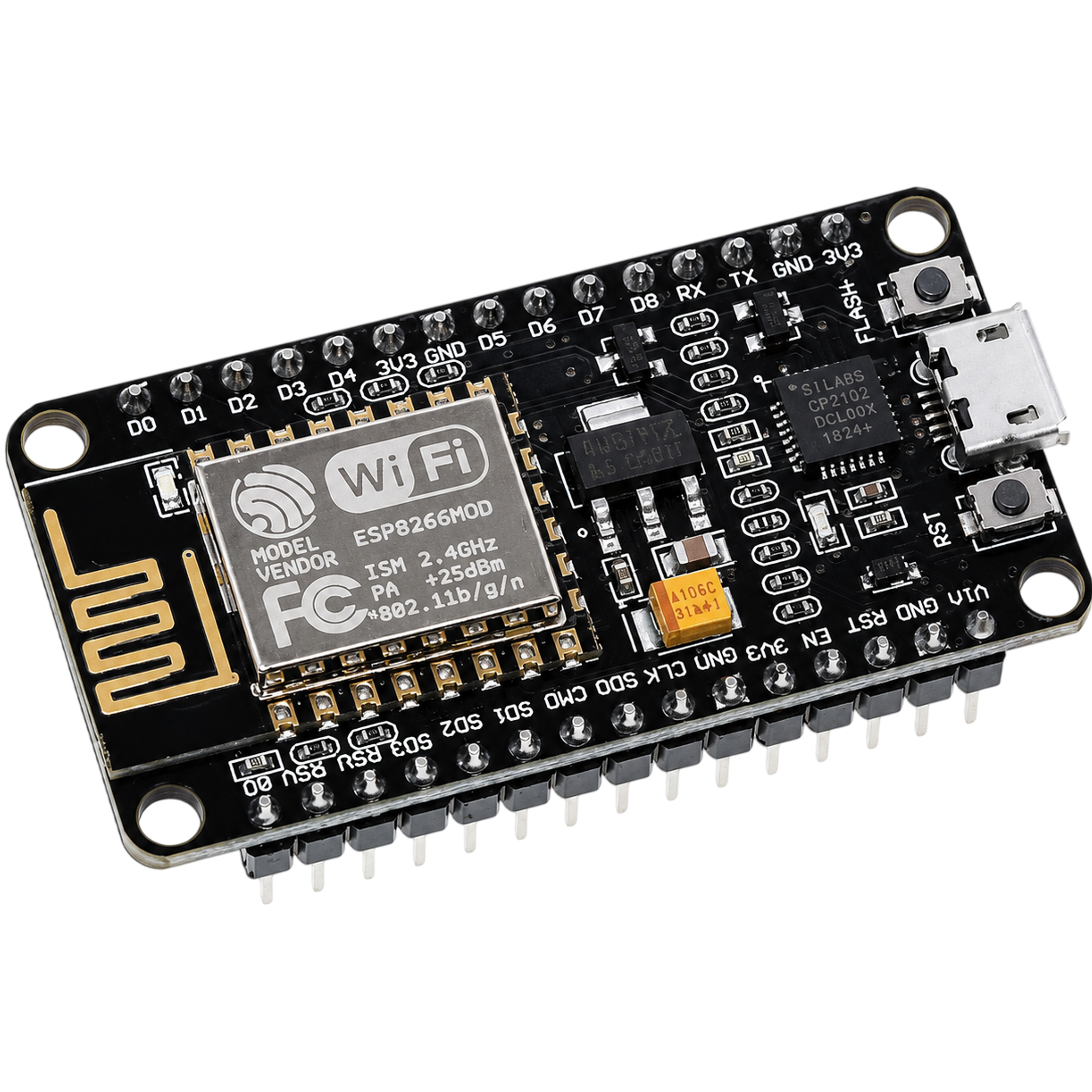
This DIYables ESP8266 ESP-12F NodeMCU development board is powered by the ESP8266 ESP-12F chip, delivering reliable WiFi connectivity for IoT automation, wireless control, and smart home projects. Featuring a CP2102 USB-to-serial chip, the board enables stable programming without requiring repeated pressing of flash and reset buttons, making uploads smooth and frustration-free. Compatible with Arduino IDE (C/C++), MicroPython, and Lua, this board offers flexible programming options for developers of all experience levels.
The board provides multiple GPIO pins for connecting sensors, displays, actuators, and other modules. It operates on 3.3V logic and can be powered via USB, with an onboard voltage regulator handling power conversion. This 2-pack includes two complete development boards along with tutorials, ideal for running multiple nodes in a WiFi network or having a spare board on hand.
Ideal for IoT projects including home automation, wireless sensor networks, remote monitoring systems, and web-connected devices. Works seamlessly with a wide range of shields, modules, and sensors across the ESP8266 ecosystem, and is supported by the Arduino IDE, MicroPython, and Lua development environments.
Key Features
- ESP8266 ESP-12F WiFi Module — Built with ESP8266 ESP-12F chip providing reliable WiFi connectivity for IoT automation and wireless control projects
- CP2102 USB-to-Serial Chip — Features CP2102 interface for stable programming and easy upload without repeatedly pressing flash and reset buttons
- Arduino IDE Compatible — Supports Arduino IDE with C/C++ programming for straightforward sketch upload and testing
- MicroPython Support — Compatible with MicroPython firmware for Python-based scripting and rapid IoT prototyping on ESP8266
- Lua Scripting Support — Works with Lua and the native NodeMCU firmware for lightweight scripting on ESP8266
- Powerful GPIO and Processing — Onboard GPIO supports sensors, modules, and application-specific devices with strong processing capability at up to 160 MHz
- Wide Platform Compatibility — Compatible with Arduino IDE, MicroPython, Lua, and other IoT development environments for flexible programming
- 2-Pack Value — Includes two complete development boards for multi-node projects or having a backup available
- Tutorial Support — Comes with tutorials for quick setup, learning, and project development
SPECIFICATION
| Specification | Value |
|---|---|
| Product Type | WiFi Development Board (NodeMCU) |
| Microcontroller | ESP8266 ESP-12F |
| Clock Speed | 80 MHz (up to 160 MHz) |
| WiFi Connectivity | 802.11 b/g/n (2.4 GHz) |
| USB-to-Serial Chip | CP2102 |
| Operating Voltage | 3.3V |
| Input Voltage | 5V via USB |
| Digital I/O Pins | Multiple GPIO pins |
| Analog Input | 1 (A0, 10-bit ADC) |
| Flash Memory | 4 MB |
| Programming Support | Arduino IDE (C/C++), MicroPython, Lua |
| Form Factor | NodeMCU standard layout |
| Communication | WiFi 802.11 b/g/n, UART, SPI, I2C |
| Package Quantity | 2 pieces |
| Compatibility | Arduino IDE, MicroPython, Lua, ESP8266-compatible environments |
| Applications | IoT automation, smart home, wireless monitoring, web servers, sensor networks |
PACKAGE
A package includes:
| Qty | Items |
|---|---|
| 2 | ESP8266 ESP-12F NodeMCU Development Boards |
Tutorials
COMPATIBLE HARDWARE
- Arduino IDE (Windows, Mac, Linux) — Select "NodeMCU 1.0 (ESP-12E Module)" as the board type
- MicroPython firmware — Full support for ESP8266 with REPL and file system access
- Lua/NodeMCU firmware — Native Lua scripting environment for lightweight ESP8266 projects
- 3.3V sensors and modules — Direct connection to GPIO pins
- 5V modules — Use a level shifter for voltage compatibility
- USB cable (Micro-USB) — For programming and power supply
- Any WiFi-enabled platform — Works alongside Arduino, ESP32, or Raspberry Pi in networked projects