DIYables ESP32-S3-WROOM-1-N16R8 Dev Board and Solder-Free GPIO Expansion Board Combo
 Click to zoom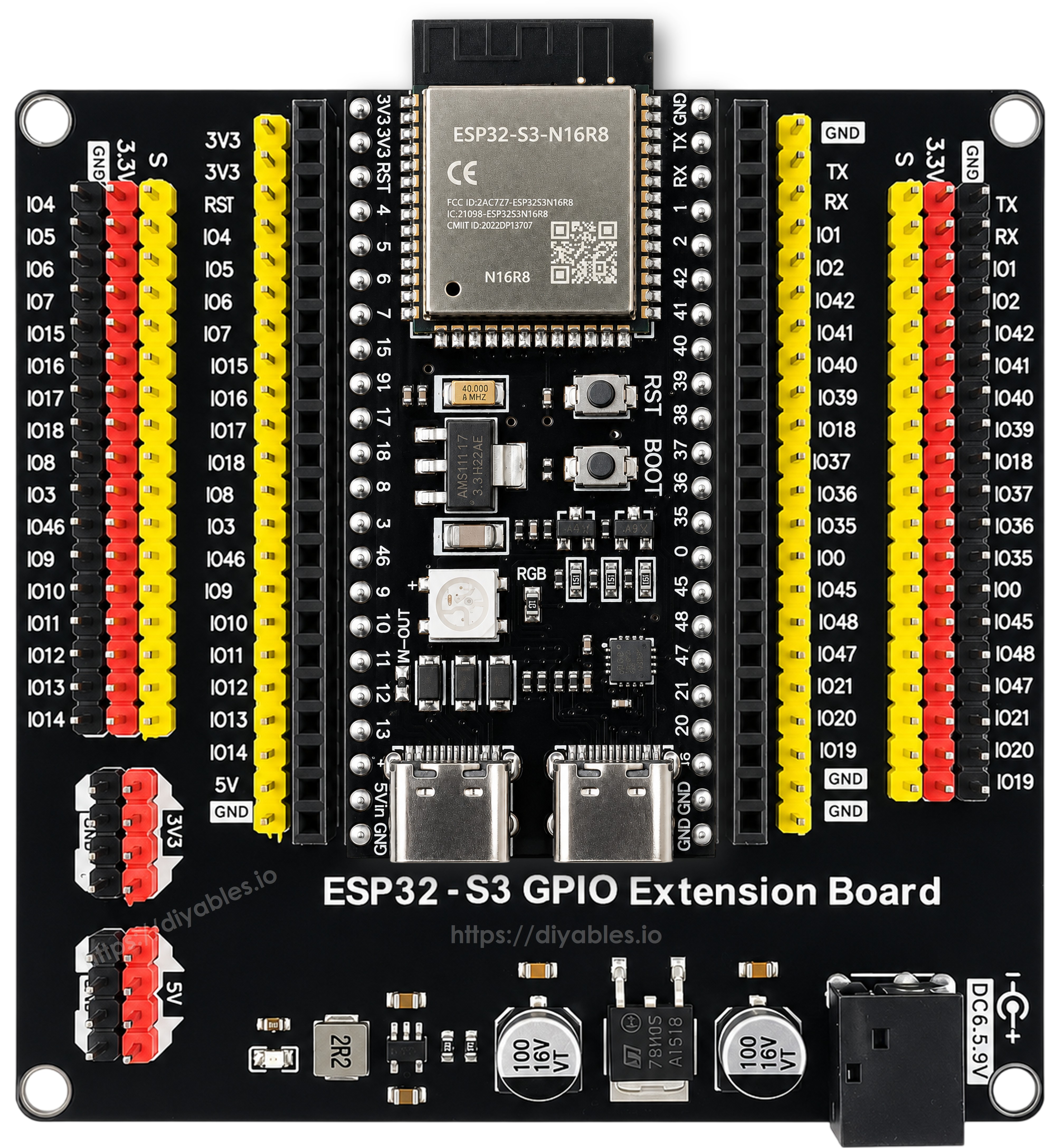
Quick Overview
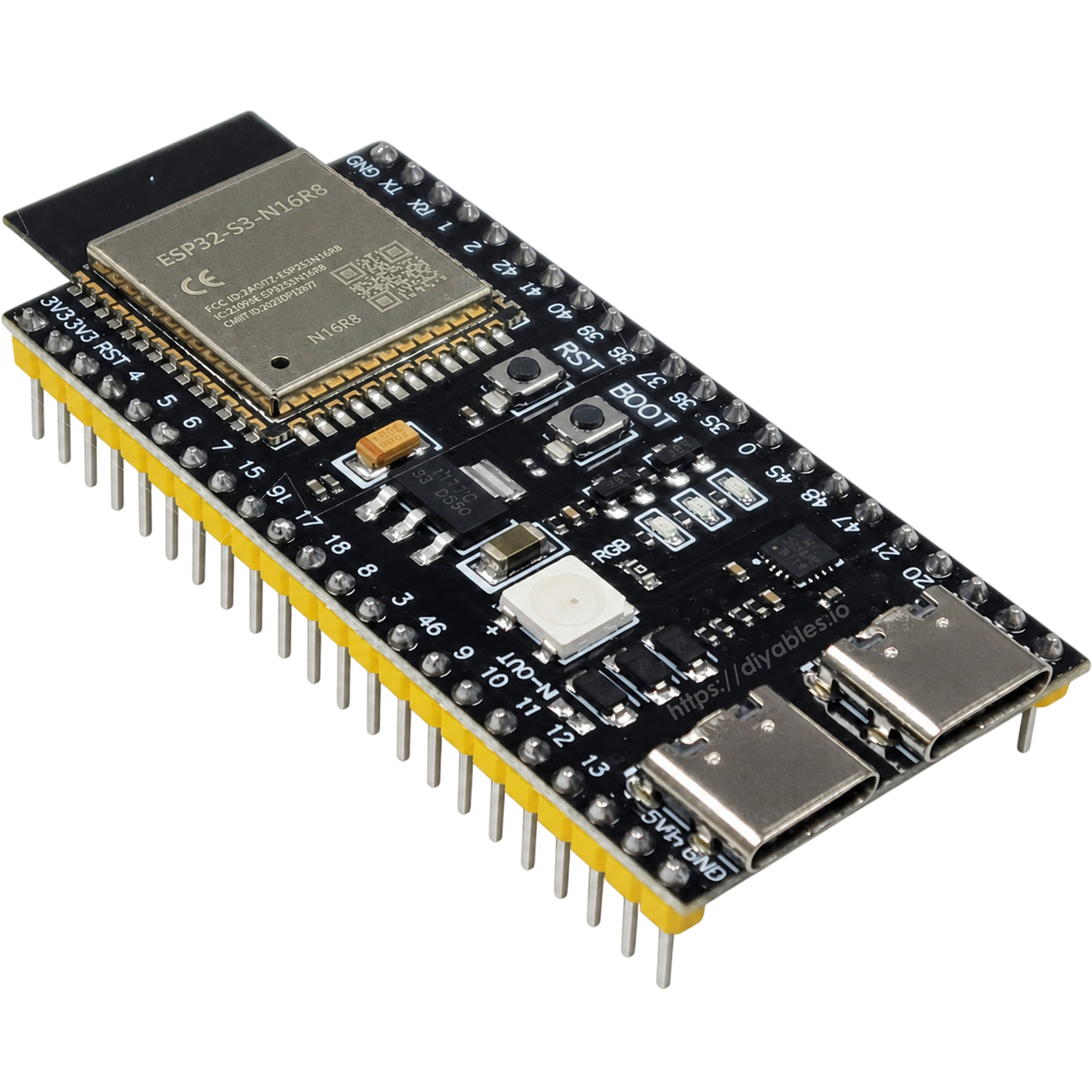
This DIYables combo bundles an ESP32-S3-WROOM-1-N16R8 development board with a solder-free 44-pin GPIO expansion breakout board. The dev board is built around the ESP32-S3-WROOM-1-N16R8 module, featuring a dual-core processor with 16MB flash, 8MB PSRAM, 512KB SRAM, and 384KB ROM, plus integrated 2.4GHz WiFi and Bluetooth 5 LE dual-mode wireless communication for IoT, AI, and automation projects.
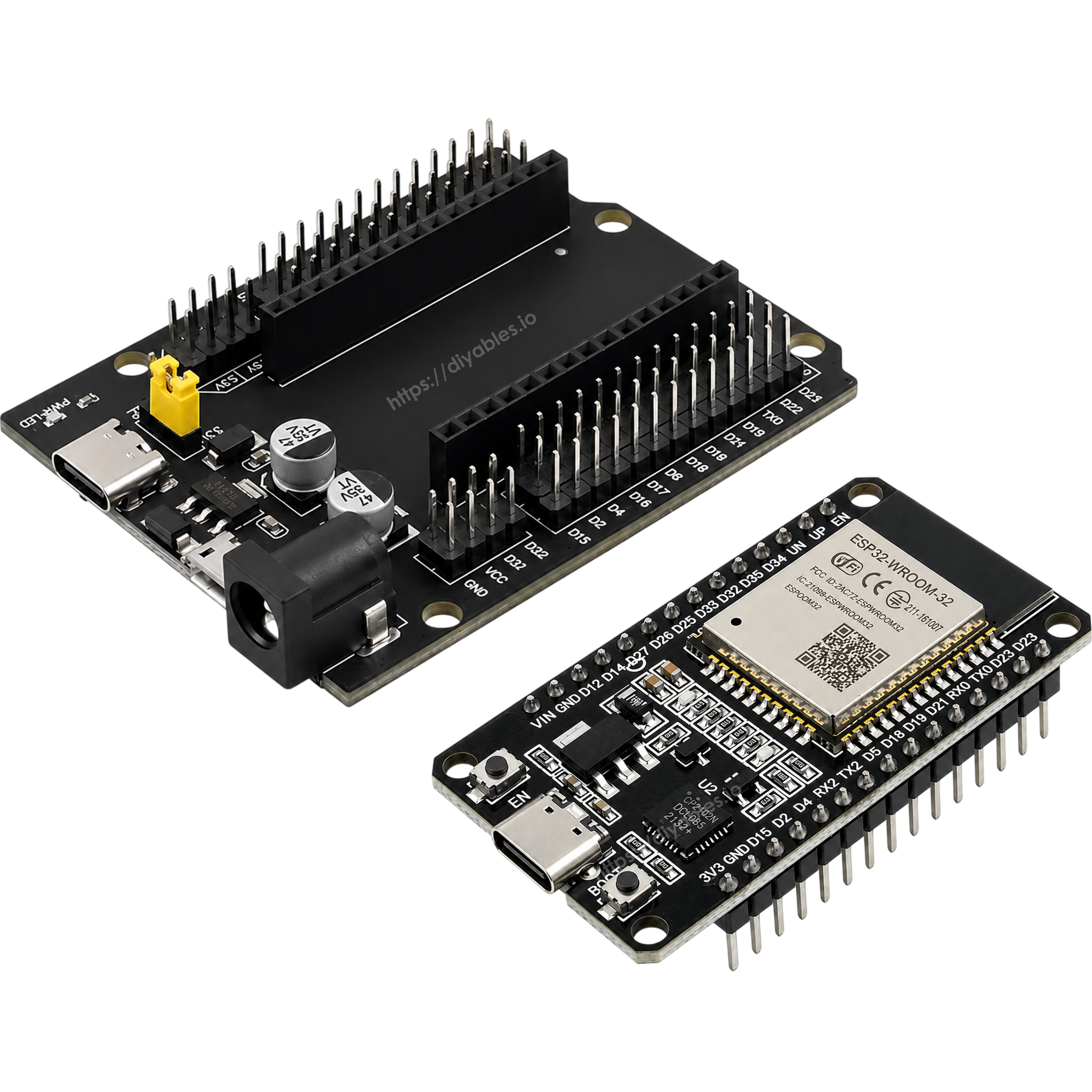
The dev board has dual USB Type-C ports supporting both USB direct connection and UART download modes for programming, debugging, and flashing, with presoldered headers ready for immediate breadboard use. It also carries an onboard addressable RGB LED, plus RST and BOOT buttons for resetting and entering download mode.
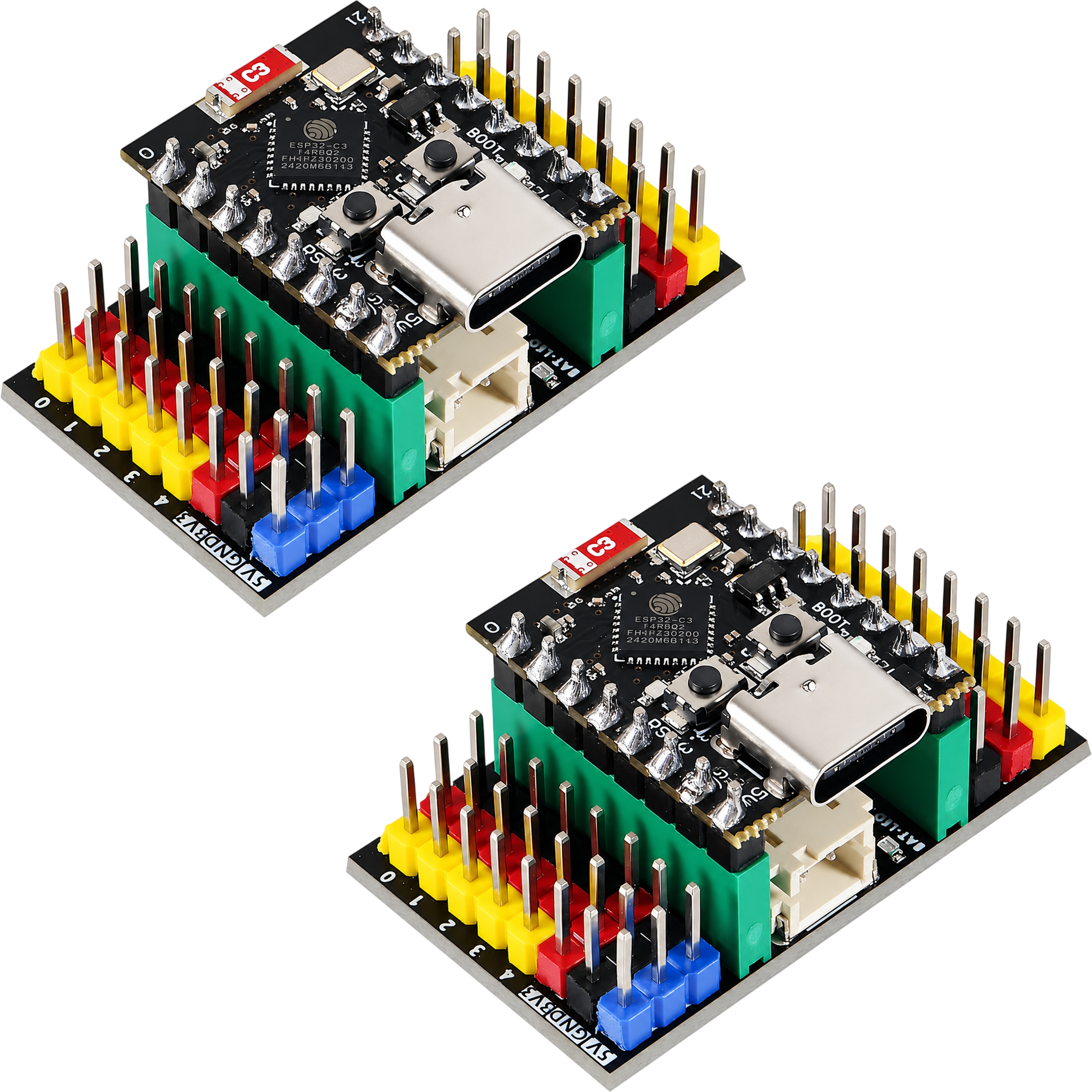
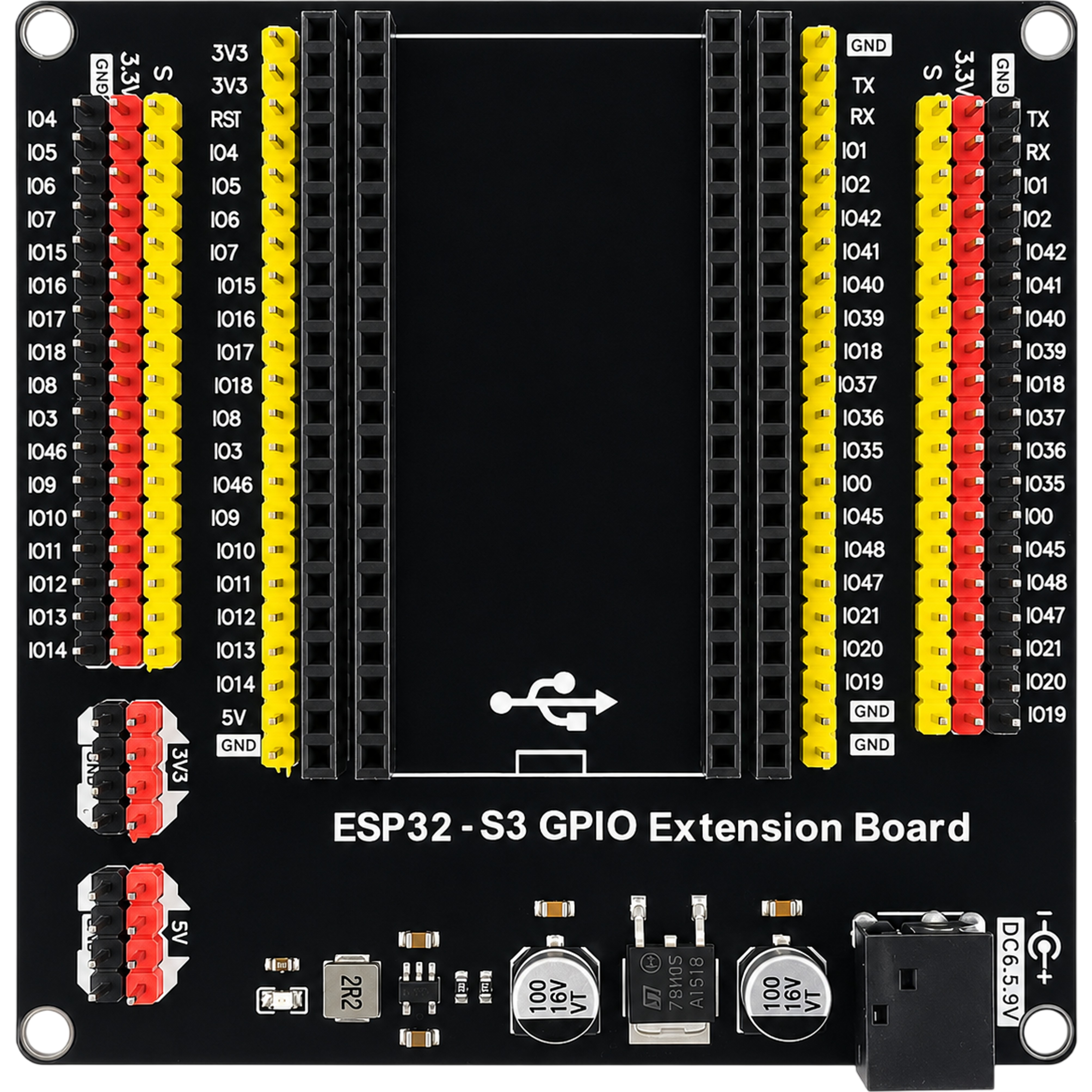
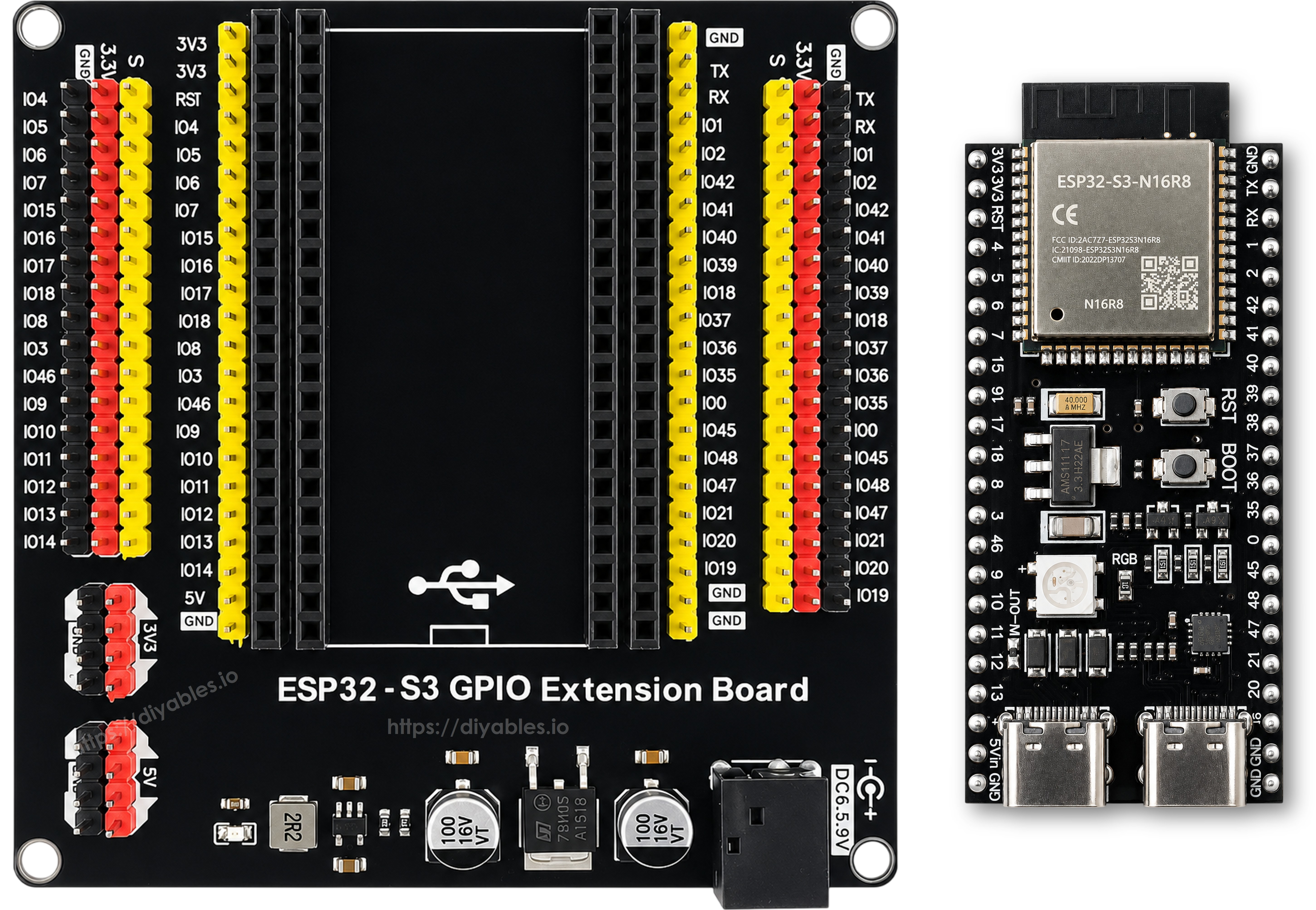
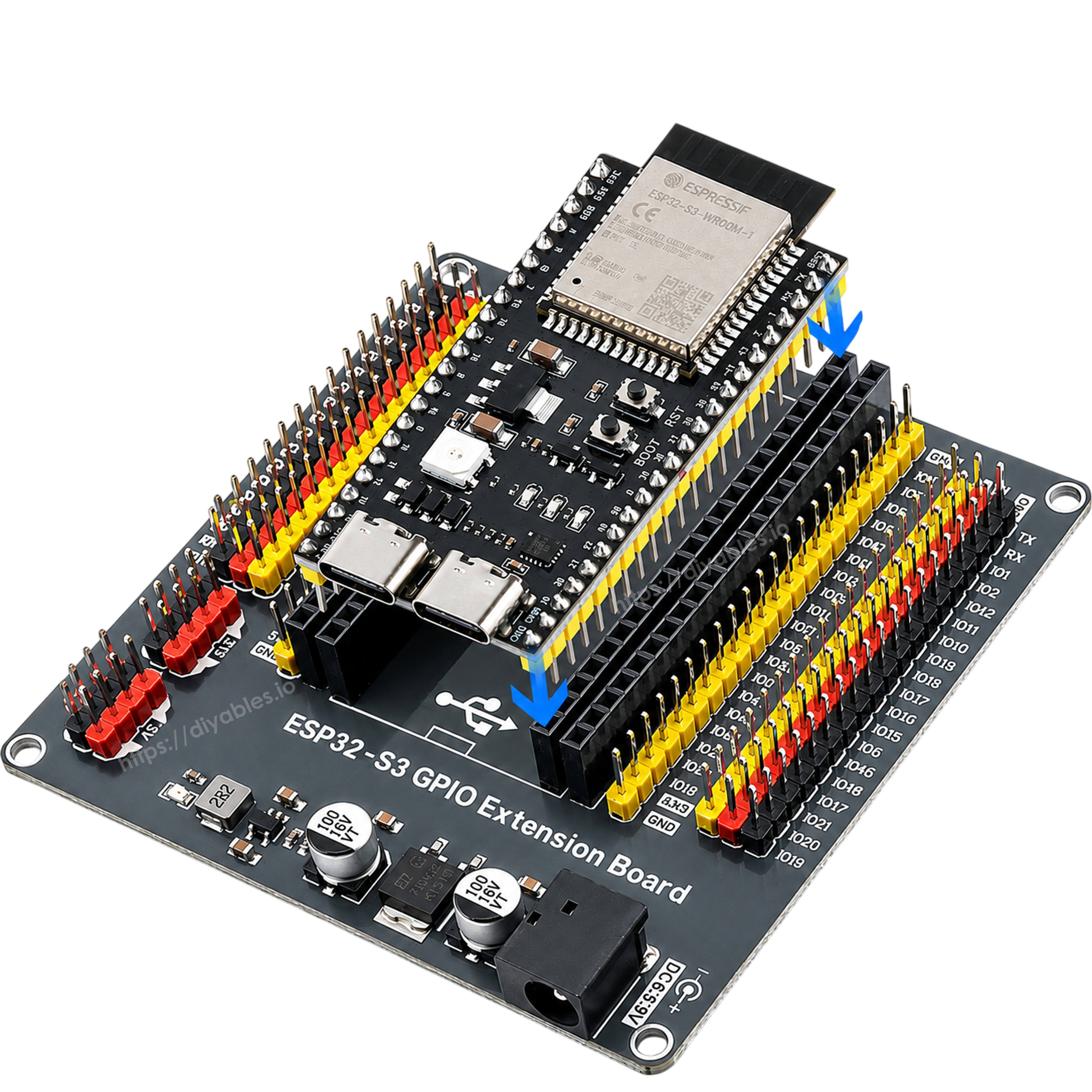
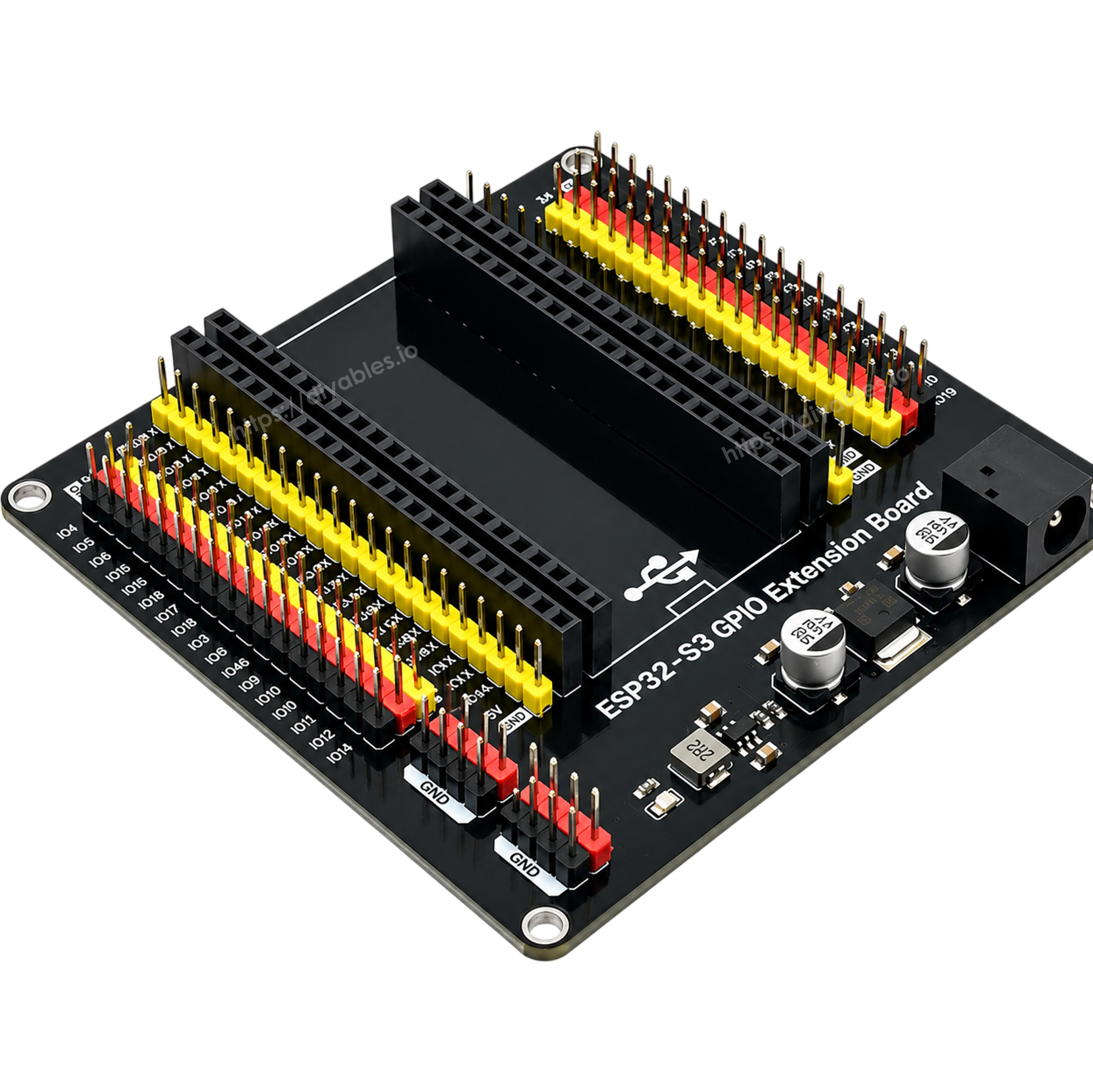
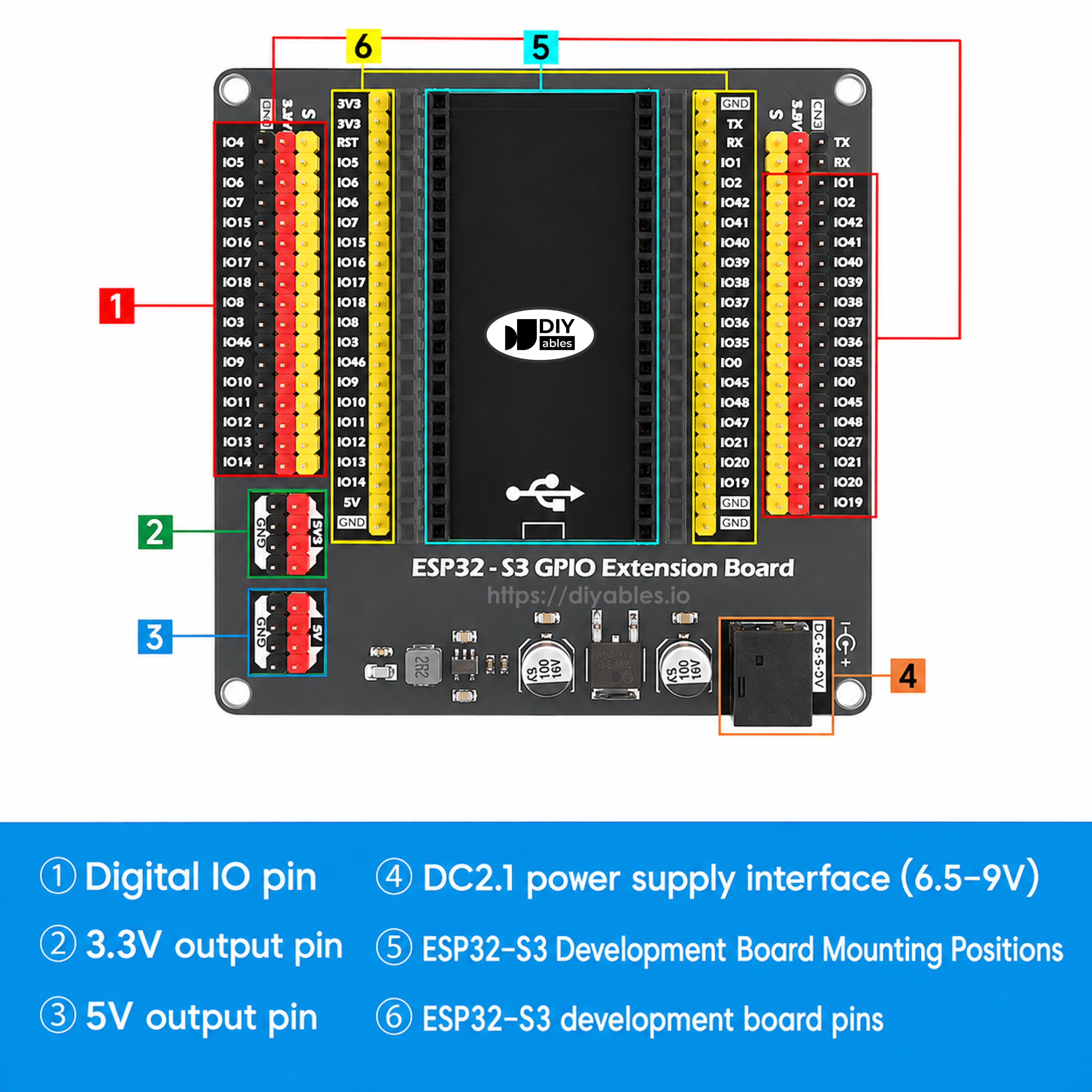
The included expansion board lets you insert the dev board directly into its solder-free 44-pin socket. Rather than a plain pin breakout, every GPIO is routed to a color-coded GVS row — signal (yellow), voltage (red), and ground (black) grouped together — on both sides of the board, so three-wire sensors, servos, and modules plug straight in without a breadboard or splitting out power rails by hand. Dedicated 3.3V and 5V output pin blocks provide extra power taps, and an onboard AMS1117 regulator fed from a DC 2.1mm barrel jack (6.5–9V) powers the whole stack independently of USB — useful once a project moves off the bench.
This combo is ideal for rapid prototyping, IoT development, embedded systems learning, and educational projects using Arduino IDE, MicroPython, or ESP-IDF, giving you both the compute module and a convenient way to access every pin without extra hardware.
Key Features
- ESP32-S3-WROOM-1-N16R8 Module — 16MB flash, 8MB PSRAM, 512KB SRAM, and 384KB ROM dual-core module for powerful IoT, AI, and embedded applications
- WiFi and Bluetooth 5 LE — Integrated 2.4GHz WiFi and Bluetooth 5 LE dual-mode communication for smart devices and wireless control
- Dual USB Type-C Ports — Supports programming, debugging, and flashing via USB direct connection or UART download mode
- Onboard RGB LED and Buttons — Addressable RGB LED plus RST and BOOT buttons on the dev board for status output and download mode
- Presoldered Dev Board — Header pins are presoldered for quick breadboard setup without extra soldering
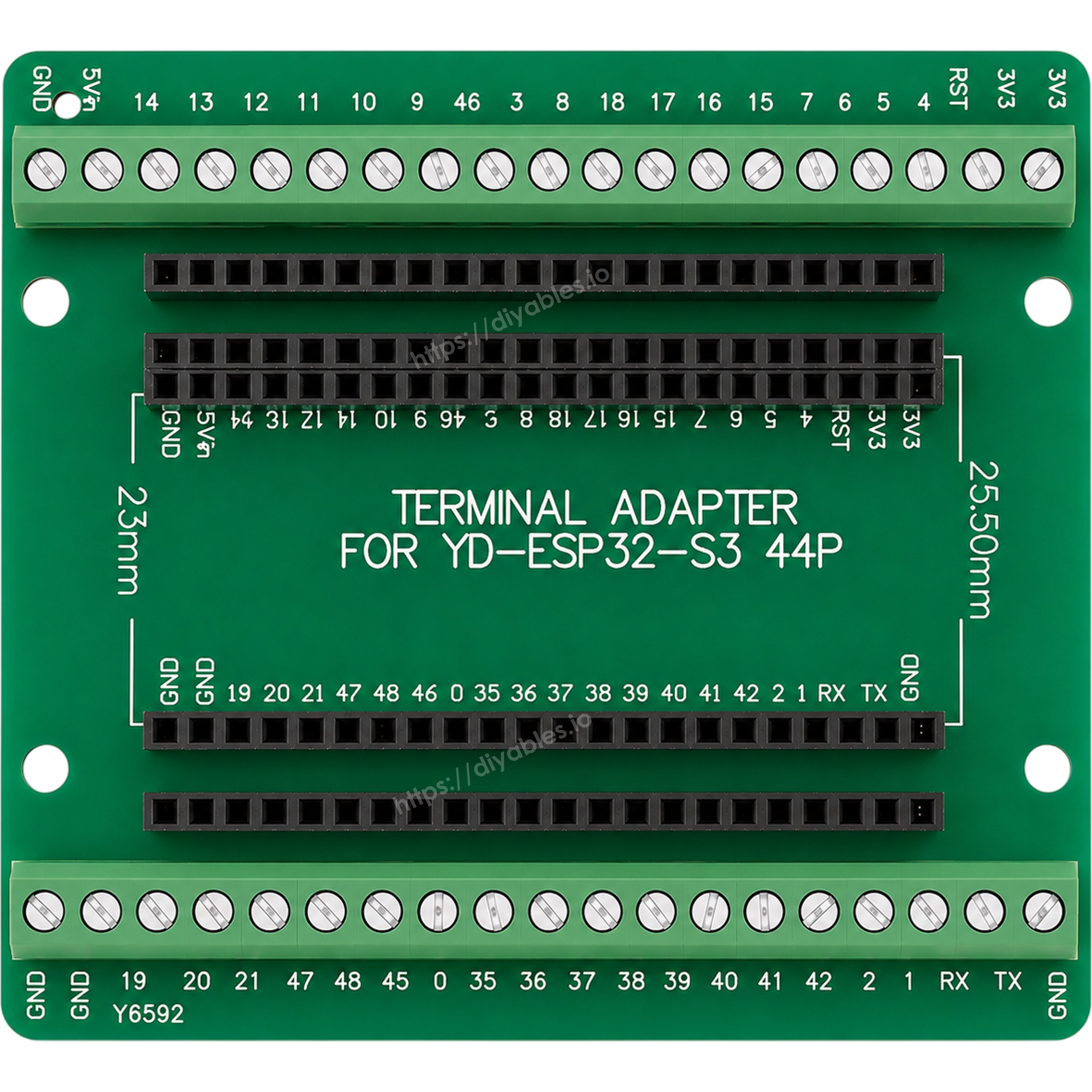
- Solder-Free GPIO Expansion Board — Insert the dev board directly into the 44-pin socket for instant pin access without soldering
- GVS Color-Coded Pin Rows — Every GPIO is broken out as a signal, voltage, and ground trio so three-wire sensors and servos connect directly, no breadboard needed
- Double-Sided Pin Breakout — All 44 GPIO pins broken out on both sides of the expansion board for easy wiring
- 3.3V and 5V Output Blocks — Dedicated power pin blocks on the expansion board supply extra 3.3V and 5V taps for external modules
- DC 6.5–9V Barrel Jack Input — Onboard AMS1117 regulator lets a 2.1mm DC supply power the whole stack independently of USB
- Double-Layer PCB Construction — Durable expansion board PCB for stable signal transmission and reliable connectivity
- Breadboard-Friendly Design — Standard pitch headers on both boards plug directly into breadboards and jumper wires
- Reusable Combo — Swap the dev board in and out of the expansion board for testing, education, or multiple projects
- Arduino IDE, MicroPython, and ESP-IDF Compatible — Full support across all three development environments
SPECIFICATION
| Specification | Value |
|---|---|
| Product Type | ESP32-S3 Development Board + GPIO Expansion Board Combo |
| Module | ESP32-S3-WROOM-1-N16R8 |
| Flash Memory | 16 MB |
| PSRAM | 8 MB |
| SRAM | 512 KB |
| ROM | 384 KB |
| WiFi | 2.4 GHz 802.11 b/g/n |
| Bluetooth | Bluetooth 5 LE |
| USB Ports | Dual USB Type-C |
| Dev Board Header Pins | Presoldered |
| Dev Board Extras | Addressable RGB LED, RST button, BOOT button |
| Expansion Board Socket | 44-pin, solder-free |
| Expansion Board PCB | Double-layer, double-sided breakout |
| Expansion Pin Format | GVS rows (signal / voltage / ground), color coded |
| Expansion Power Outputs | Dedicated 3.3V and 5V pin blocks |
| Expansion Power Input | DC 2.1mm barrel jack, 6.5-9V (onboard AMS1117 regulator) |
| Operating Voltage | 3.3V |
| Input Voltage | 5V via USB Type-C, or 6.5-9V via the expansion board DC jack |
| Package Quantity | 1 dev board + 1 expansion board |
| Compatibility | Arduino IDE, MicroPython, ESP-IDF |
| Applications | IoT development, prototyping, embedded systems, educational projects |
※ NOTE THAT:
The GPIO expansion board works only with ESP32-S3 boards that have exactly 44 pins matching its socket layout, such as the included ESP32-S3-WROOM-1-N16R8 dev board. It is not a universal fit for all ESP32-S3 board variants.
If using the ESP32-S3 with analog sensors, configure the ADC with 11 dB attenuation to set the voltage reference range to handle up to 3.3V.
PACKAGE
A package includes:
| Qty | Items |
|---|---|
| 1 | ESP32-S3-WROOM-1-N16R8 Development Board (Presoldered) |
| 1 | 44-Pin GPIO Expansion Breakout Board (Solder-Free) |
Tutorials
COMPATIBLE HARDWARE
- Arduino IDE (Windows, Mac, Linux) — Select "ESP32S3 Dev Module" as the board type
- MicroPython firmware — Full support for ESP32-S3 with REPL and file system access
- ESP-IDF development environment — Full Espressif IoT Development Framework support
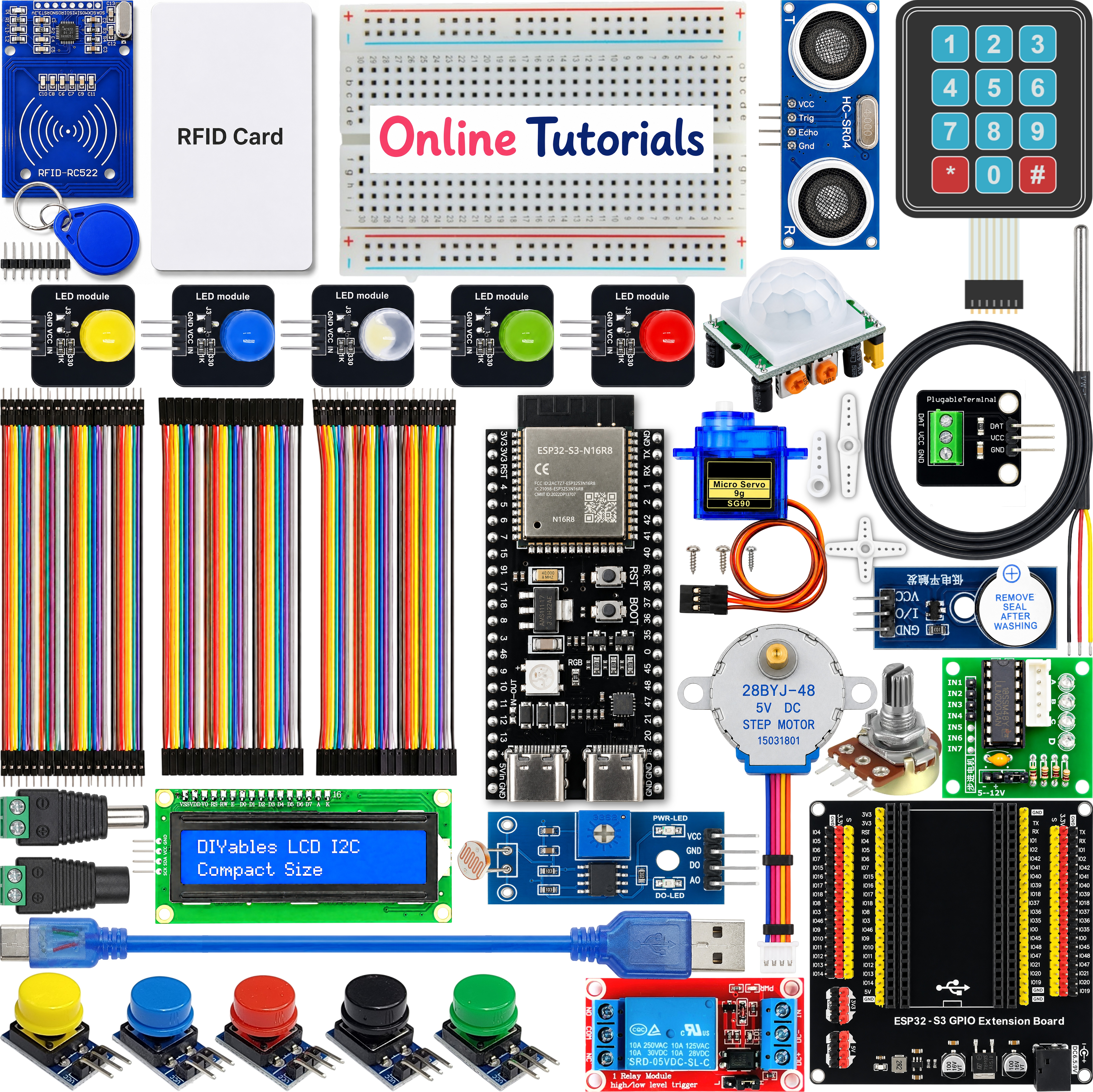
- Temperature and humidity sensors — Digital or I2C interface via expansion board breakout pins
- OLED and LCD displays — I2C and SPI displays for visual feedback
- Motion sensors (PIR, ultrasonic) — Digital GPIO interface for detection applications
- Relay modules — GPIO control for high-power device switching
- Servo motors — PWM control via the GVS rows, with signal, voltage, and ground in one connector
- Three-wire sensor modules with GVS or 3-pin connectors — Plug directly onto the expansion board rows
- DC power adapters (6.5-9V, 2.1mm center-positive barrel plug) — Powers the stack via the expansion board jack
- Breadboards and jumper wires — For prototyping and sensor connections via the expansion board