DIYables ESP32 S3 Starter Kit
 Click to zoom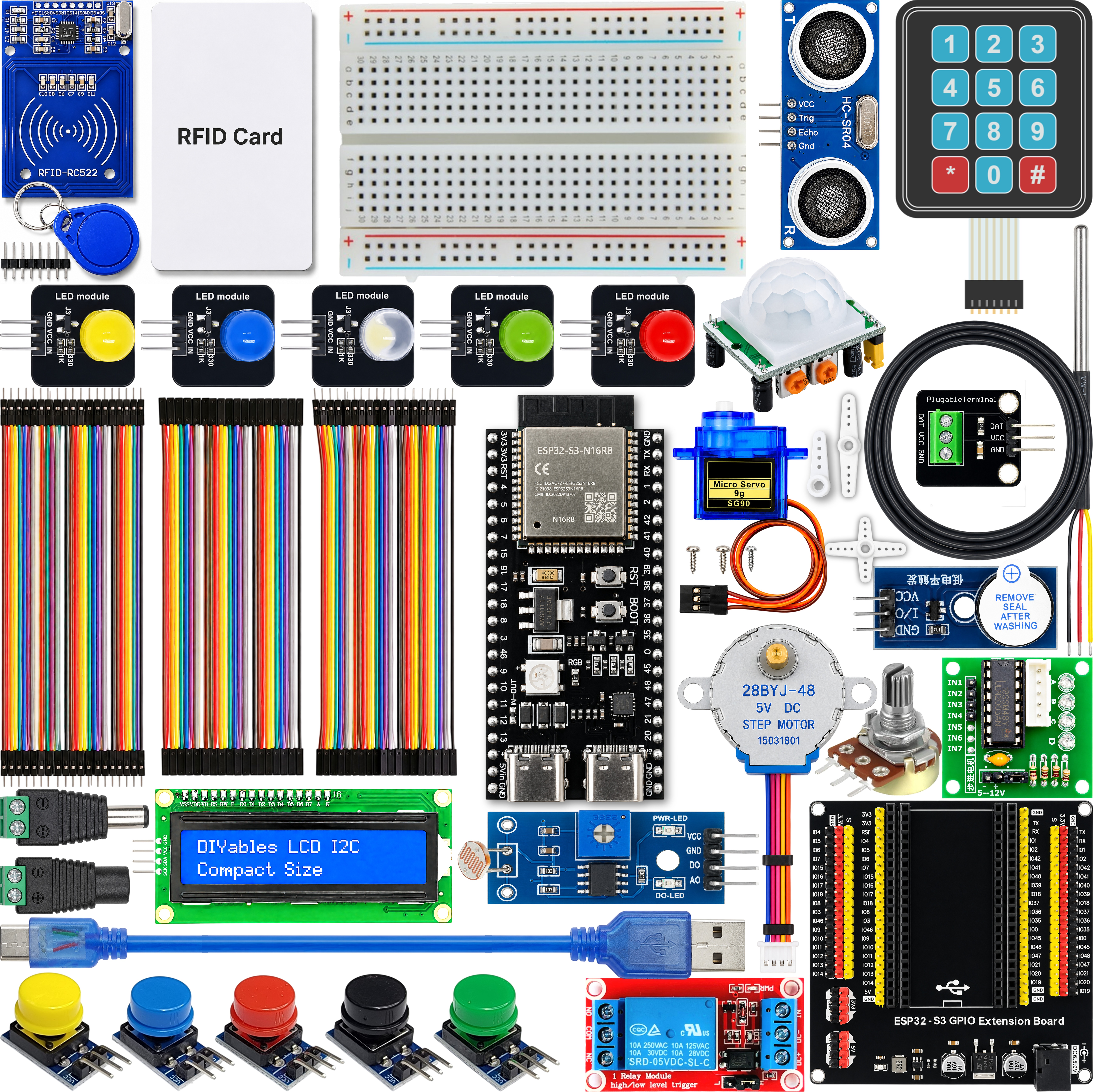
Quick Overview
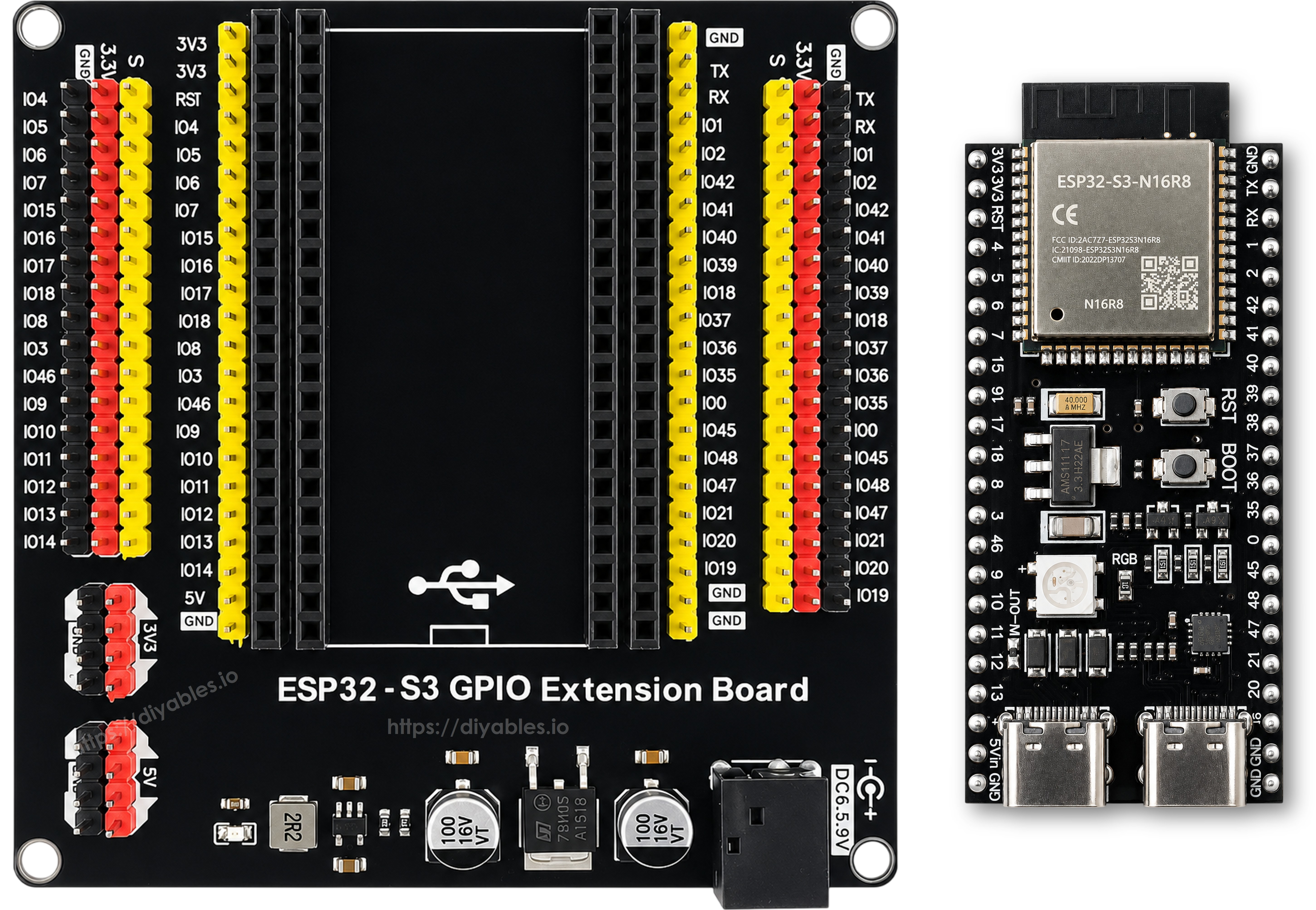
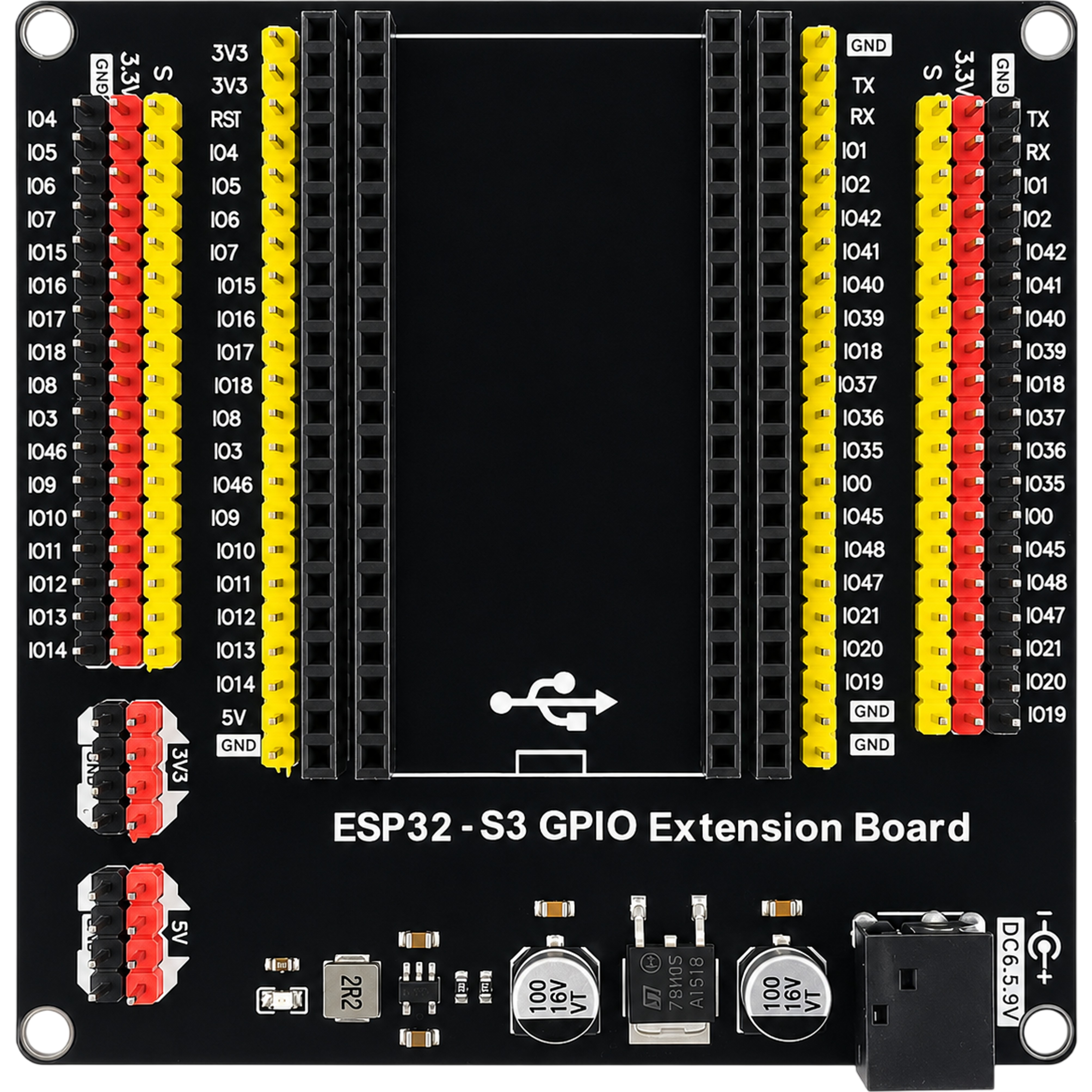
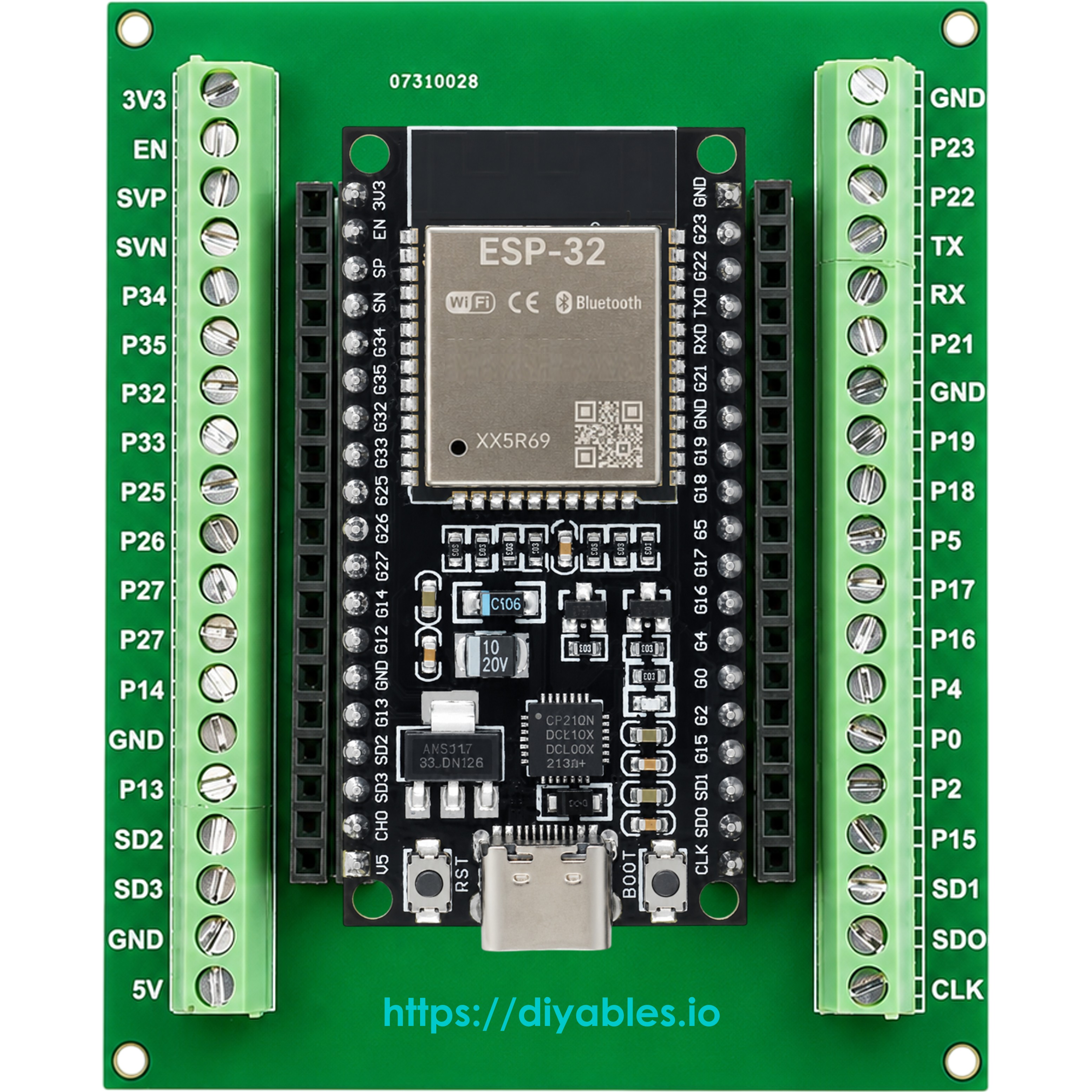
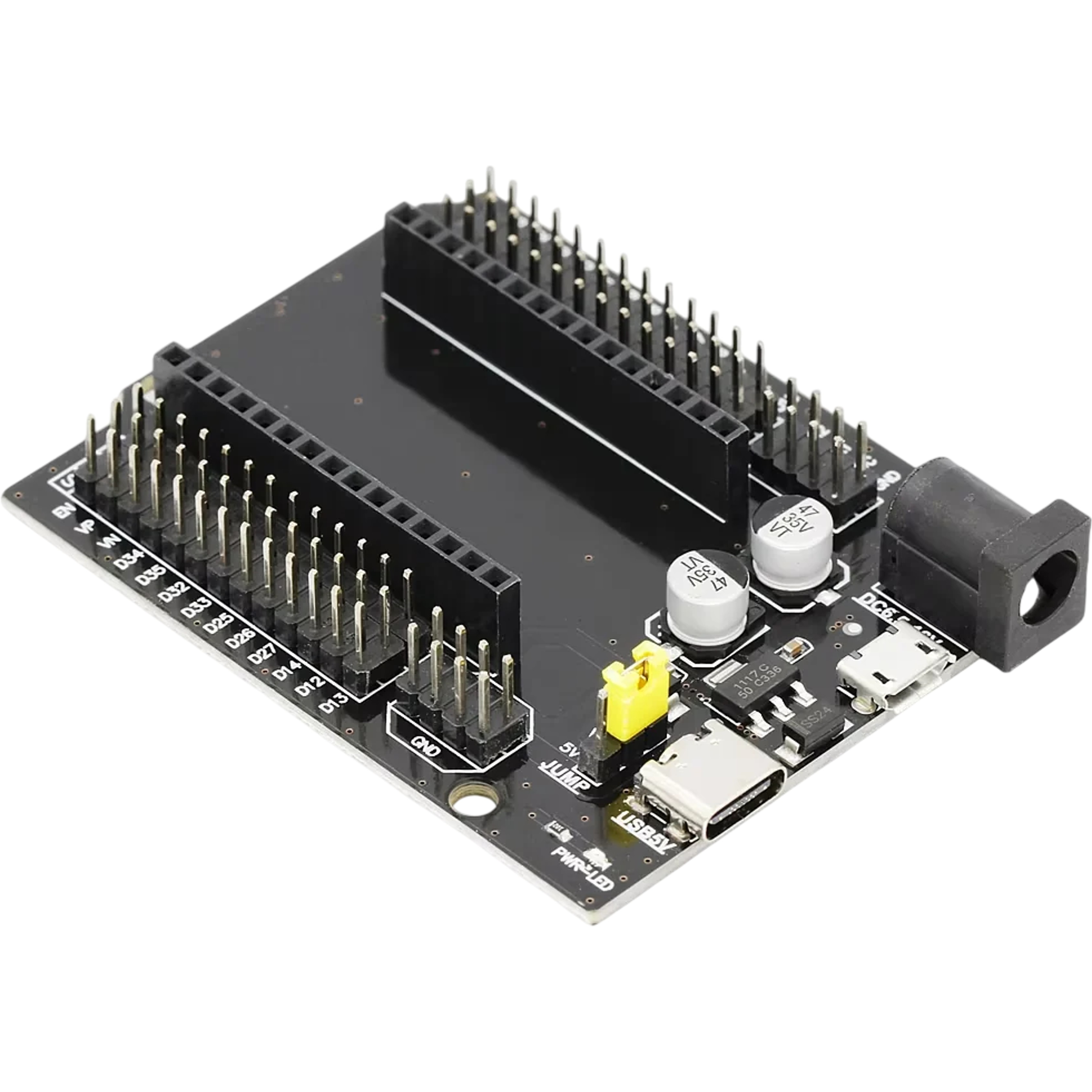
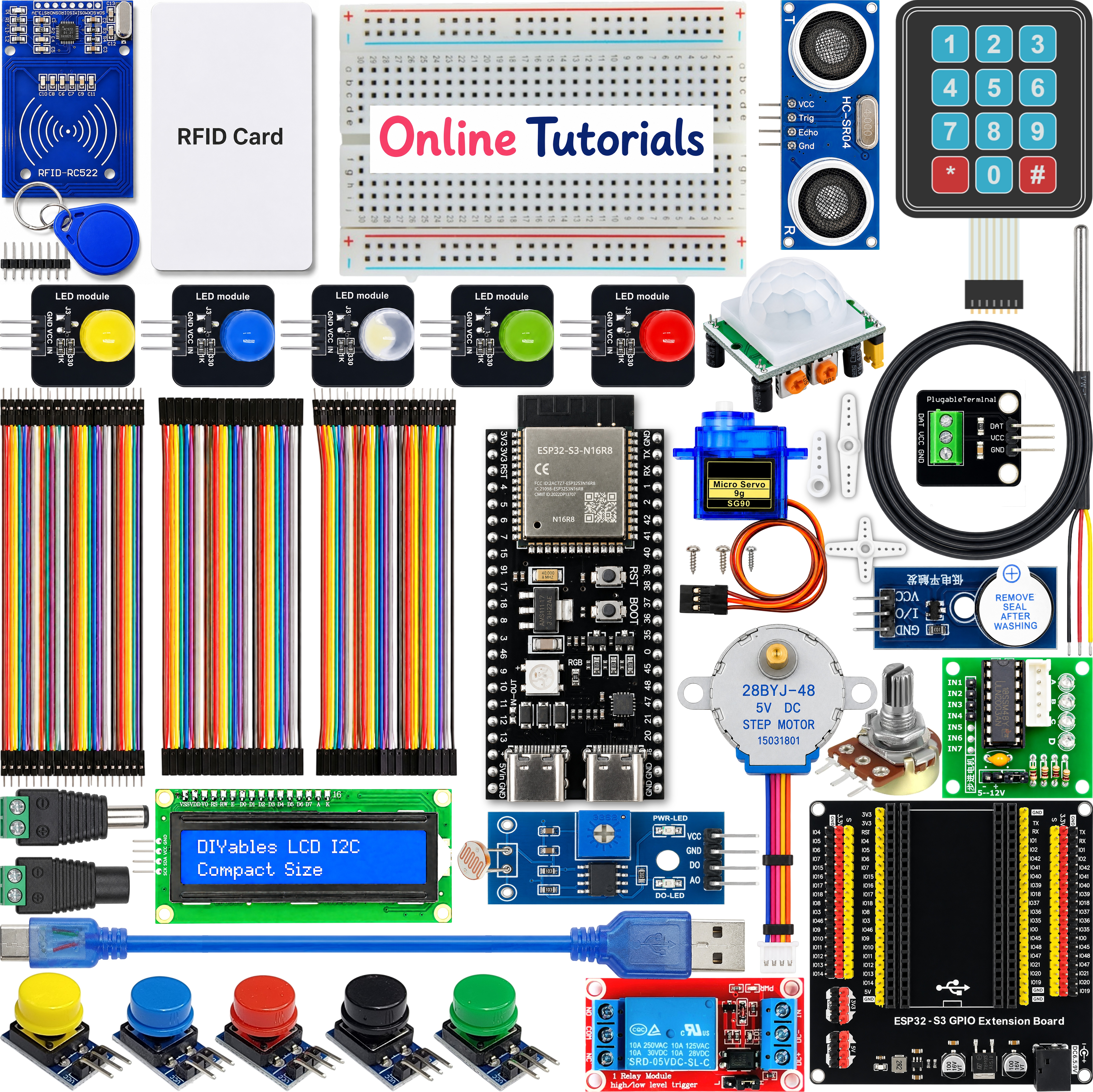
The DIYables ESP32 S3 Starter Kit is a 23-piece learning package built around an ESP32-S3-N16R8 development board with 16MB flash, 8MB PSRAM, WiFi, and Bluetooth LE. The board has dual USB Type-C ports and an onboard addressable RGB LED, and it ships alongside a matching ESP32-S3 GPIO expansion board that breaks every pin out to labelled, colour-coded rows so sensors and modules connect without a rat's nest of jumper wires.
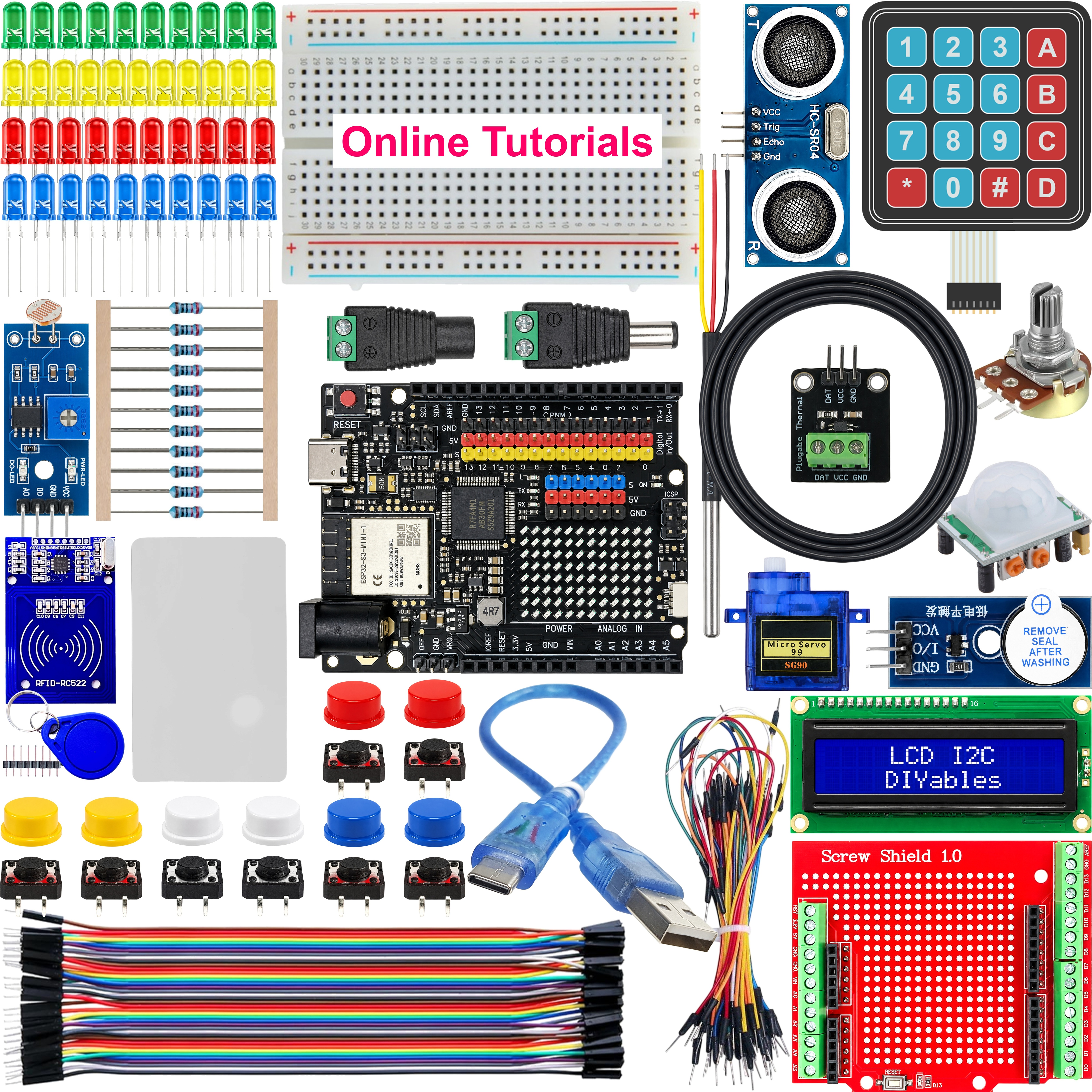
The kit covers the full range of beginner and intermediate topics rather than just lighting an LED. Sensing is handled by an HC-SR04 ultrasonic sensor, an HC-SR501 motion sensor, a DS18B20 temperature probe, and an LDR light sensor module. Output and actuation come from a 16x2 I2C LCD, an SG90 servo, a 28BYJ-48 stepper motor with its ULN2003 driver, a 5V relay module, and an active piezo buzzer. User input is covered by a 3x4 matrix keypad, a potentiometer, and five colour-coded LED modules alongside five colour-coded button modules. An RFID kit with an RC522 reader plus card and keyfob tags rounds out the set, which is what makes access-control and tag-reading projects possible straight out of the box.
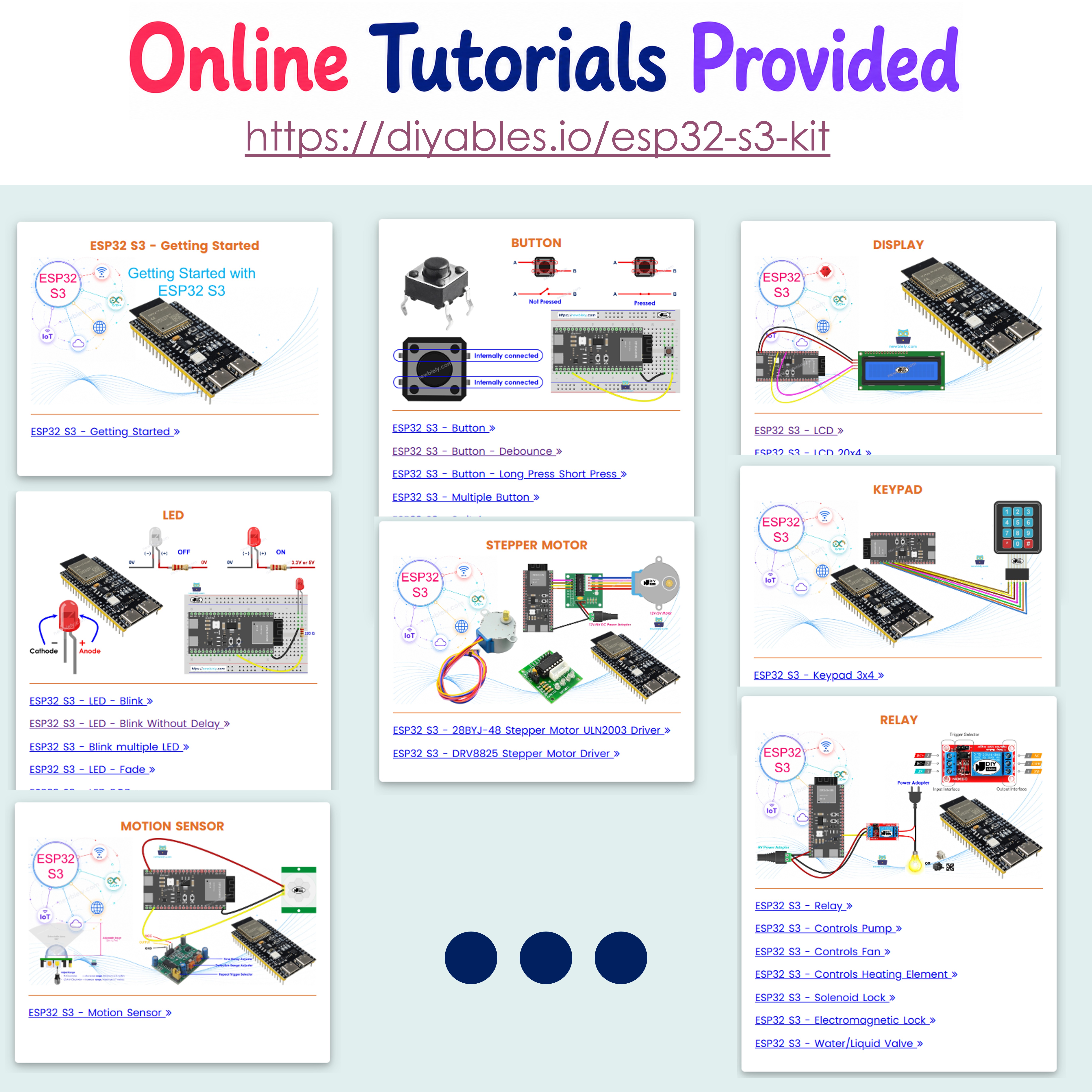
Everything needed to wire it up is included: a half-sized breadboard, 40 each of male-to-male, male-to-female, and female-to-female jumper wires, a USB cable, and both male and female DC power jacks. Online tutorials for the kit are published at https://diyables.io/esp32-s3-kit, covering getting started, LEDs, buttons and debouncing, displays, the keypad, relay control, the stepper motor, and the motion sensor. Ideal for students, classrooms, and makers learning IoT and embedded development with Arduino IDE (C/C++) or MicroPython.
Key Features
- ESP32-S3-N16R8 Development Board — 16MB flash and 8MB PSRAM with WiFi, Bluetooth LE, dual USB Type-C ports, and an onboard RGB LED
- Matching GPIO Expansion Board — Breaks every ESP32-S3 pin out to labelled colour-coded rows for solder-free sensor and module wiring
- Four Sensor Types Included — HC-SR04 ultrasonic, HC-SR501 motion, DS18B20 temperature, and LDR light sensor for real measurement projects
- RFID Kit with Reader and Tags — RC522 reader plus card and keyfob tags for access control and tag reading experiments
- Display and Keypad Input — 16x2 I2C LCD with blue background and a 3x4 matrix keypad for building menus and entry systems
- Two Motor Types — SG90 servo for angular positioning and a 28BYJ-48 stepper with ULN2003 driver for precise rotation
- Relay and Buzzer Output — 5V relay module for switching real loads and an active piezo buzzer for alerts
- Colour-Coded LED and Button Modules — Five of each in matching colours so every signal and control is identifiable at a glance
- 120 Jumper Wires and Breadboard — 40 each of male-to-male, male-to-female, and female-to-female plus a half-sized breadboard
- Online Tutorials Provided — Step-by-step guides at diyables.io/esp32-s3-kit for Arduino IDE (C/C++) and MicroPython
SPECIFICATION
| Specification | Value |
|---|---|
| Product Type | ESP32-S3 Starter Kit / IoT Learning Kit |
| Development Board | ESP32-S3-N16R8 (WiFi + Bluetooth LE) |
| Flash Memory | 16 MB |
| PSRAM | 8 MB |
| USB Interface | Dual USB Type-C (cable included) |
| Expansion Board | ESP32-S3 GPIO expansion board, colour-coded pin rows |
| Sensors Included | HC-SR04 ultrasonic, HC-SR501 motion, DS18B20 temperature, LDR light |
| Identification | RFID RC522 reader with card and keyfob tags |
| Display | 16x2 I2C LCD, blue background |
| Motors | SG90 servo, 28BYJ-48 stepper with ULN2003 driver |
| Other Outputs | 5V relay module, active piezo buzzer |
| Inputs | 3x4 matrix keypad, potentiometer, 5 LED modules, 5 button modules |
| Prototyping | Half-sized breadboard, 120 jumper wires (40 each of M-M, M-F, F-F) |
| Power Accessories | DC power jack male and female |
| Total Items | 23 |
| Programming Support | Arduino IDE (C/C++), MicroPython |
| Applications | IoT learning, sensor projects, access control, motor control, education |
※ NOTE THAT:
The ESP32-S3 runs at 3.3V logic. The 5V relay module and the 28BYJ-48 stepper driver need a 5V supply, which the included DC power jacks provide from an external adapter — do not attempt to drive the stepper motor from the board's 3.3V rail.
If using the ESP32-S3 with analog sensors, configure the ADC with 11 dB attenuation to set the voltage reference range to handle up to 3.3V.
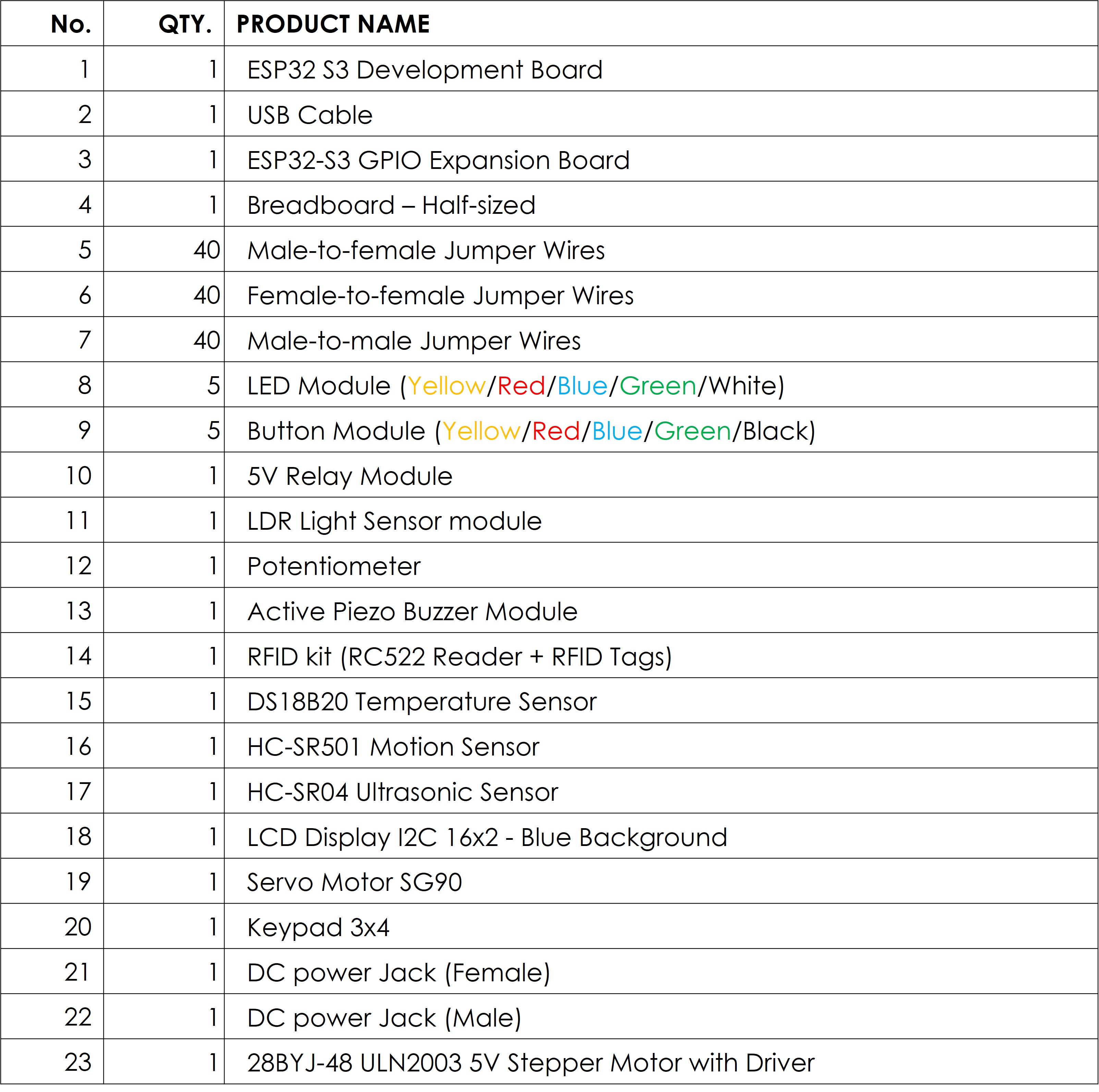
PACKAGE
A package includes:
| Qty | Items |
|---|---|
| 1 | ESP32 S3 Development Board (ESP32-S3-N16R8) |
| 1 | USB Cable |
| 1 | ESP32-S3 GPIO Expansion Board |
| 1 | Breadboard - Half-sized |
| 40 | Male-to-Female Jumper Wires |
| 40 | Female-to-Female Jumper Wires |
| 40 | Male-to-Male Jumper Wires |
| 5 | LED Modules (Yellow, Red, Blue, Green, White) |
| 5 | Button Modules (Yellow, Red, Blue, Green, Black) |
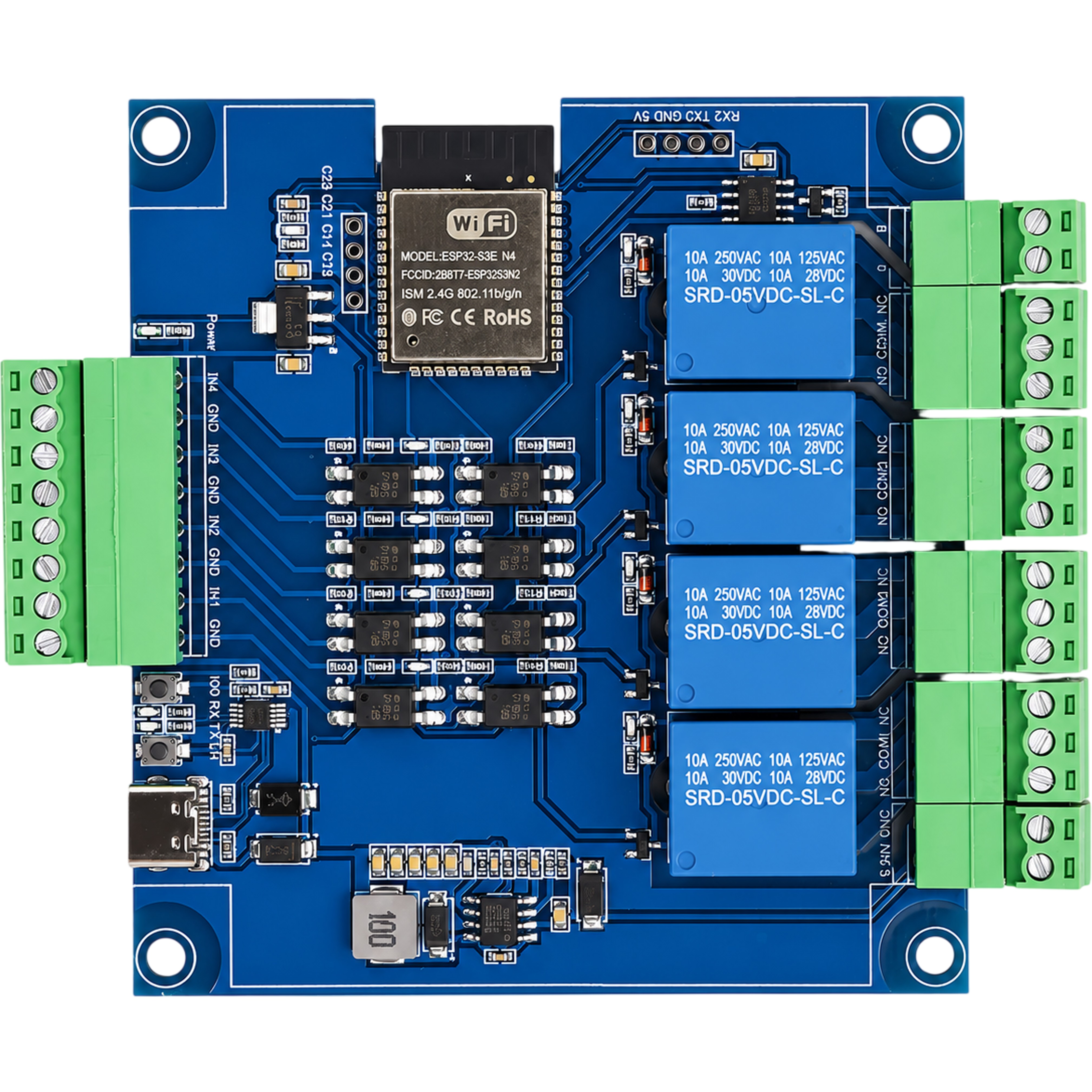
| 1 | 5V Relay Module |
| 1 | LDR Light Sensor Module |
| 1 | Potentiometer |
| 1 | Active Piezo Buzzer Module |
| 1 | RFID Kit (RC522 Reader + RFID Tags) |
| 1 | DS18B20 Temperature Sensor |
| 1 | HC-SR501 Motion Sensor |
| 1 | HC-SR04 Ultrasonic Sensor |
| 1 | LCD Display I2C 16x2 - Blue Background |
| 1 | Servo Motor SG90 |
| 1 | Keypad 3x4 |
| 1 | DC Power Jack (Female) |
| 1 | DC Power Jack (Male) |
| 1 | 28BYJ-48 ULN2003 5V Stepper Motor with Driver |
Tutorials
COMPATIBLE HARDWARE
- Arduino IDE (Windows, macOS, Linux) — Select an ESP32-S3 board type after installing the ESP32 board package
- MicroPython firmware — Flash and program the ESP32-S3 over USB Type-C
- ESP-IDF development environment — Full Espressif framework support for the ESP32-S3
- USB Type-C cable (included) — Programming, serial monitoring, and board power
- External 5V DC power adapter — Required for the relay module and stepper motor via the included DC jacks
- Breadboards and jumper wires (included) — Half-sized breadboard with 120 wires across three types
- Additional 3.3V sensors and modules — Connect through the expansion board's colour-coded rows
- I2C devices — LCD and other I2C modules share the SDA and SCL lines
- WiFi networks and MQTT brokers — For IoT, cloud, and home automation projects
- Any 3.3V logic peripheral — Direct connection to ESP32-S3 GPIO through the expansion board