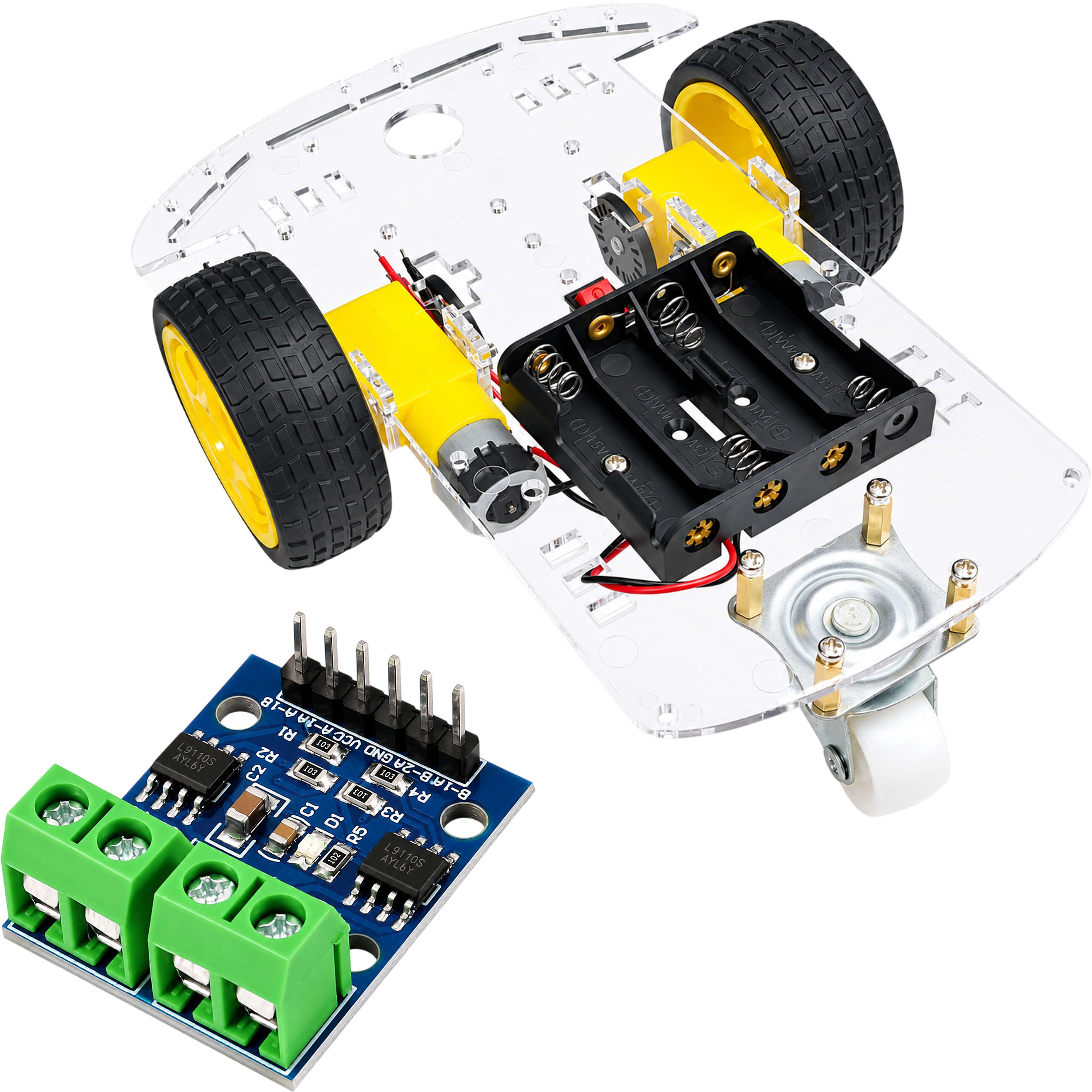
DIYables BTS7960 43A Motor Driver Module H Bridge PWM for Arduino Smart Car
 Click to zoom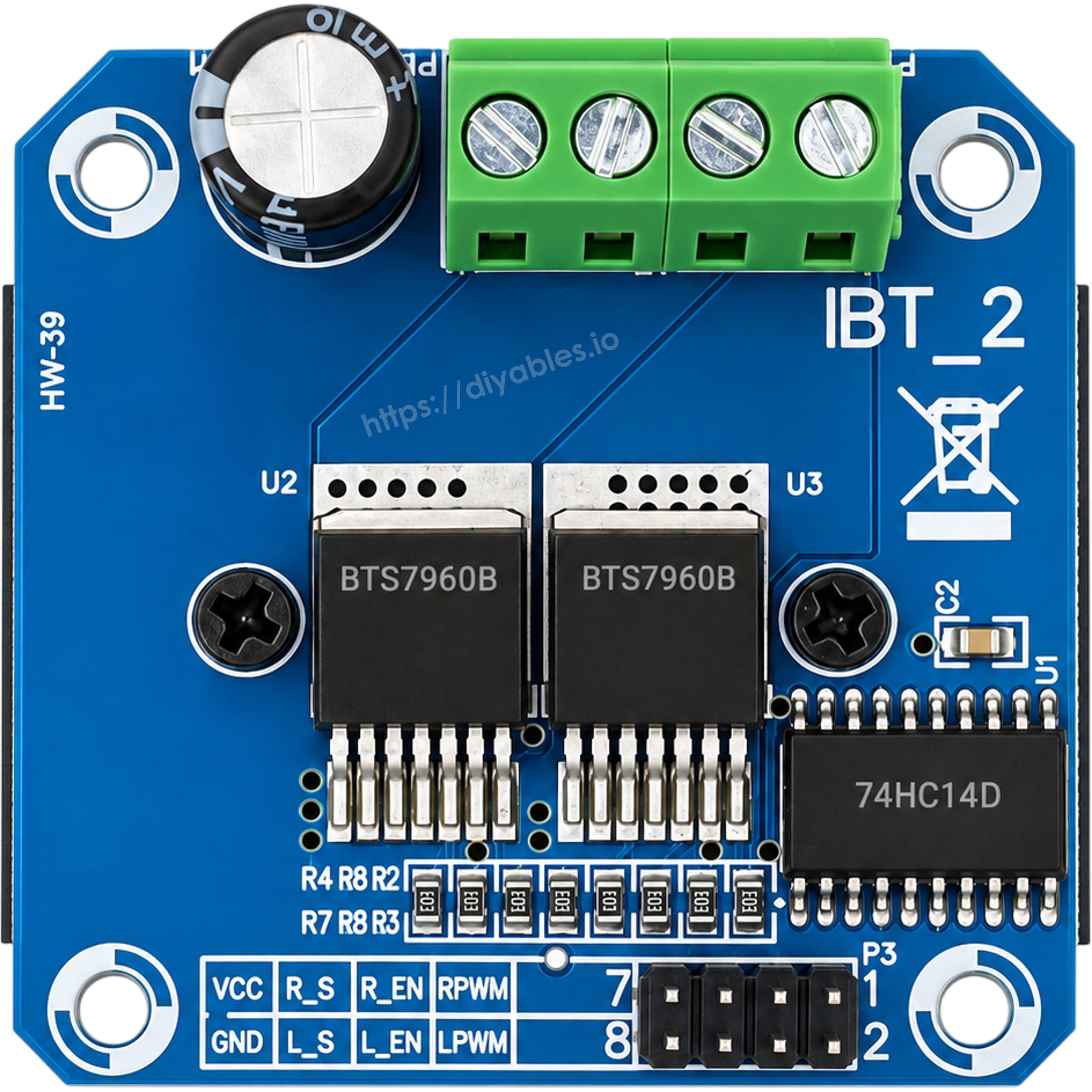
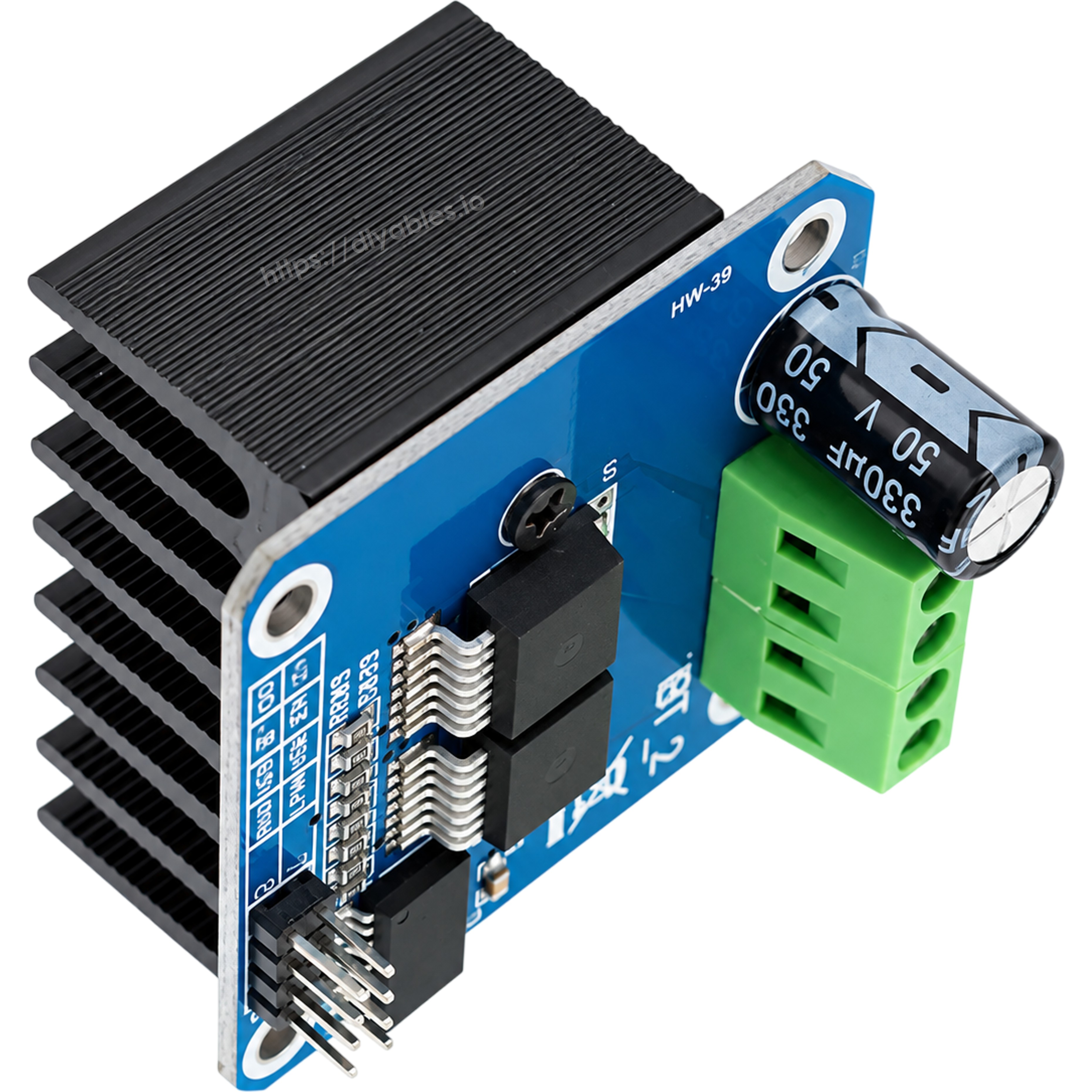
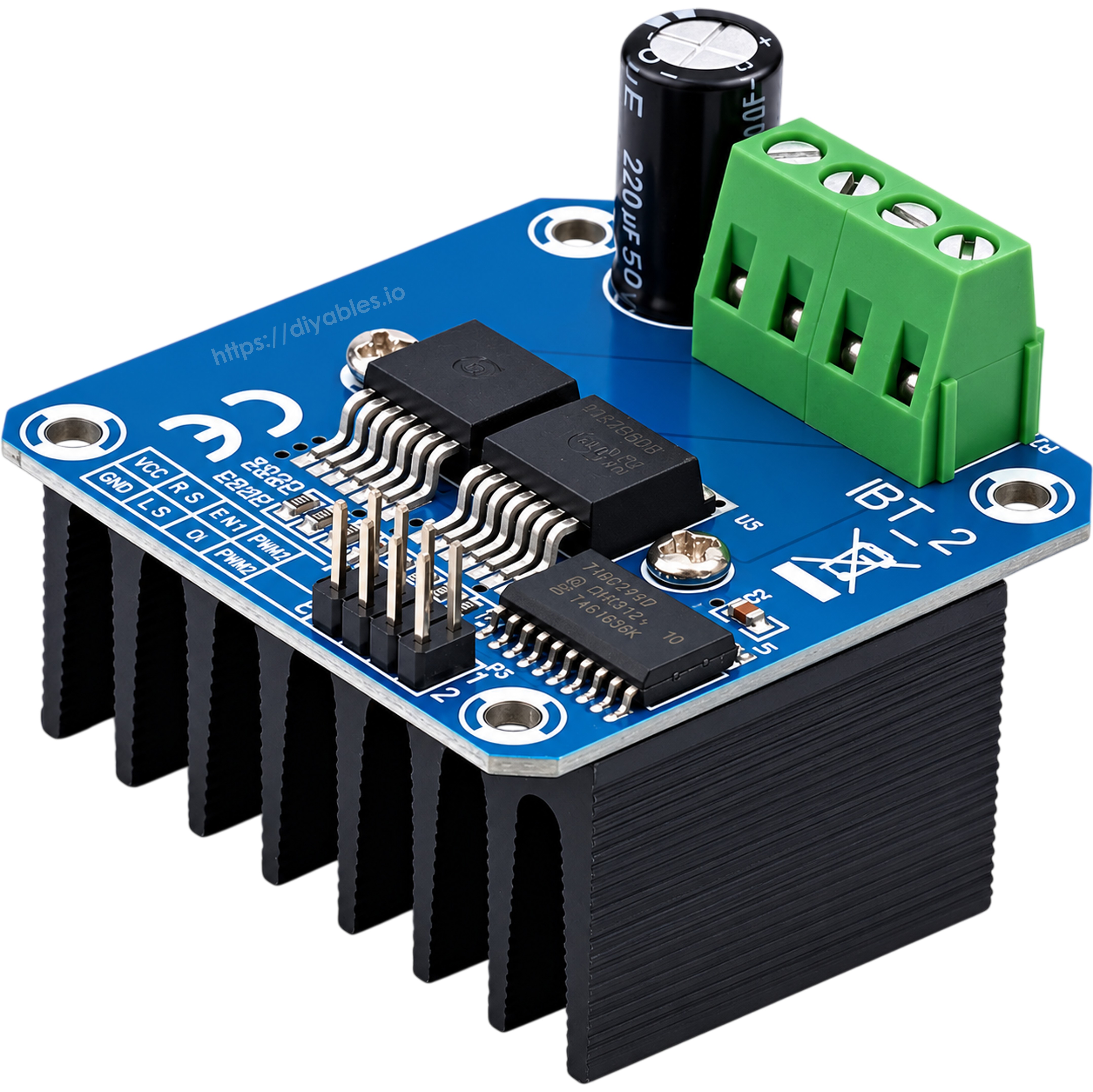
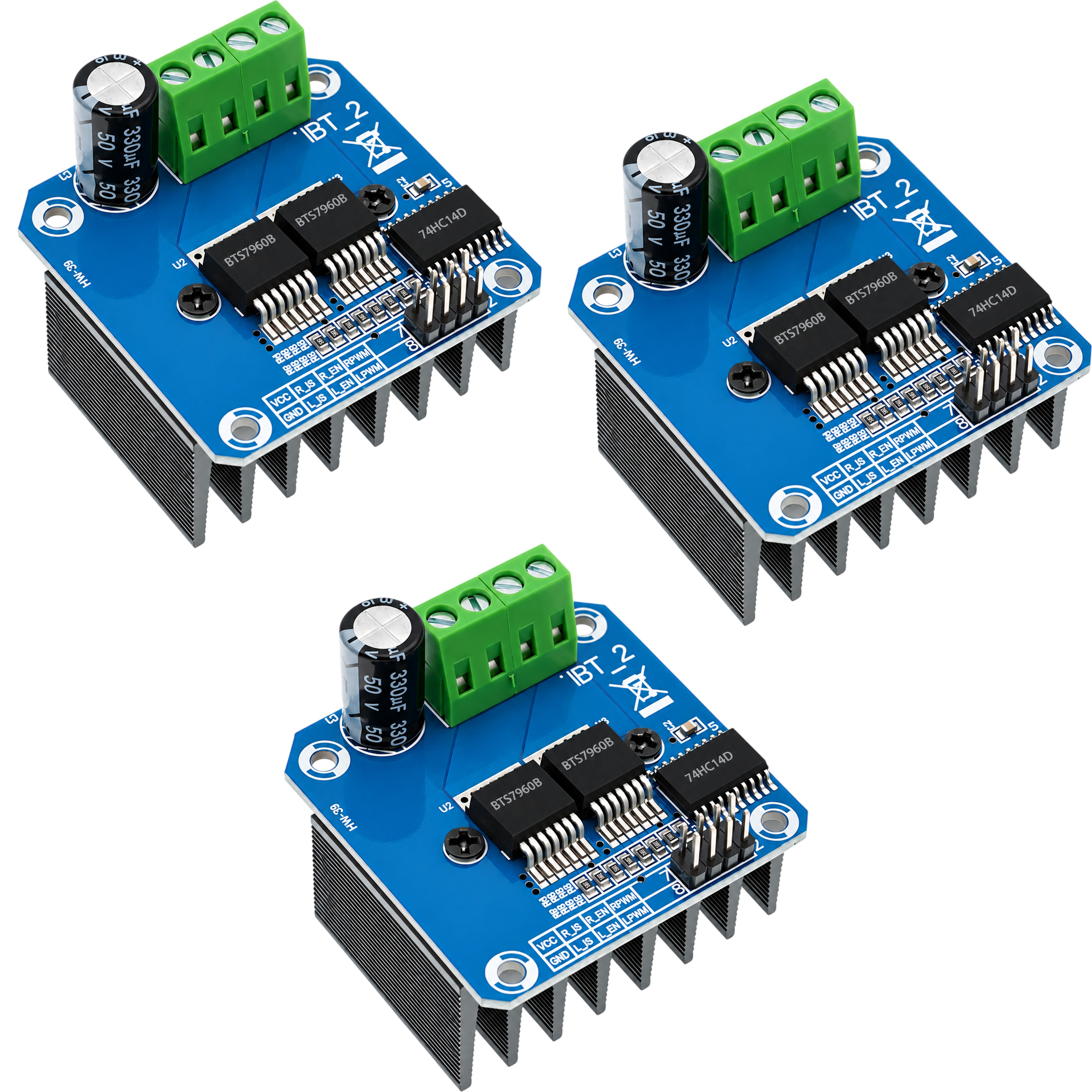
Quick Overview
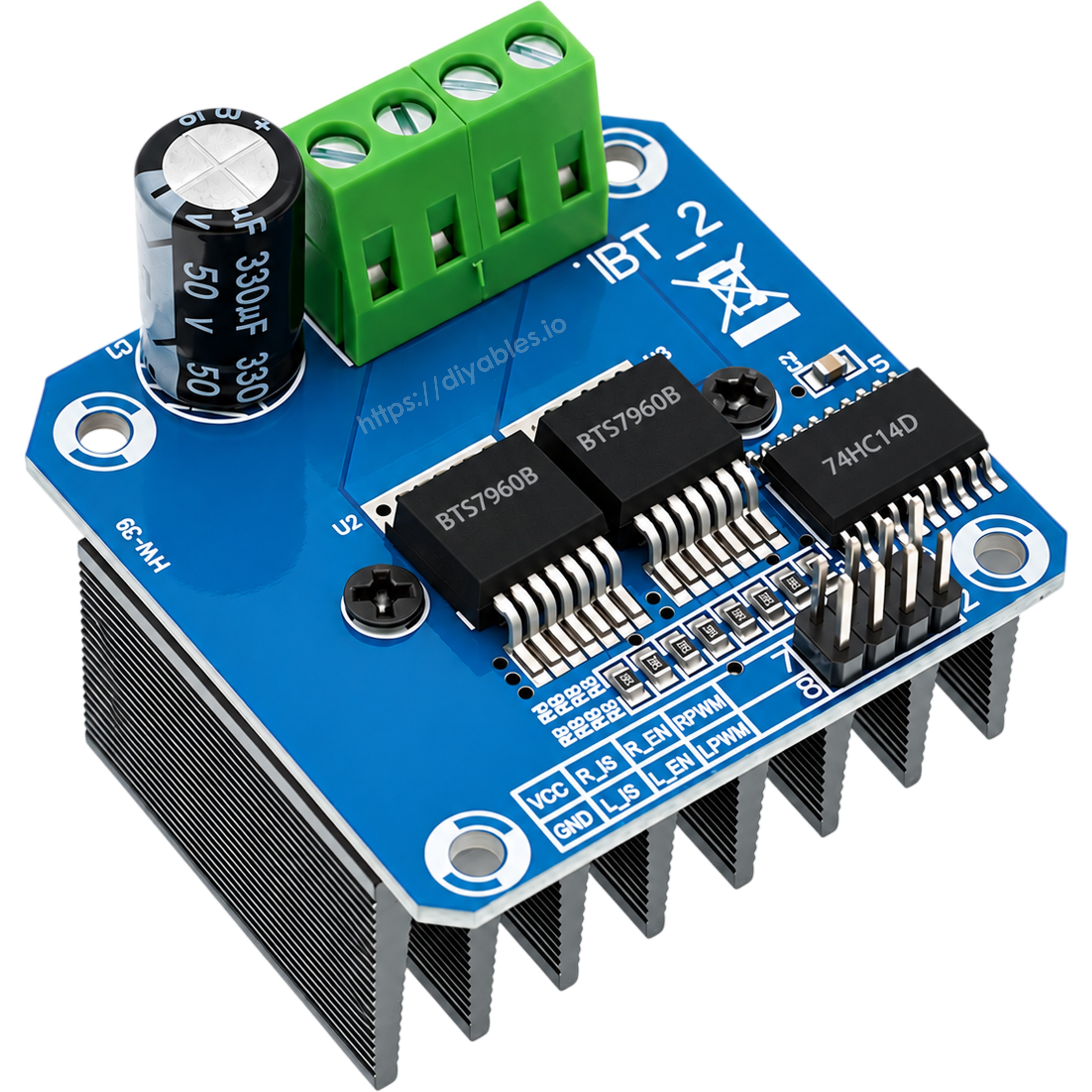
This DIYables BTS7960 motor driver module uses dual BTS7960 half bridge chips to form a full H bridge capable of driving brushed DC motors at up to 43A. It runs from a 5.5V to 27V motor supply, making it a good fit for high power gear motors, robot drivetrains, and smart car chassis that a small L298N style driver cannot handle.
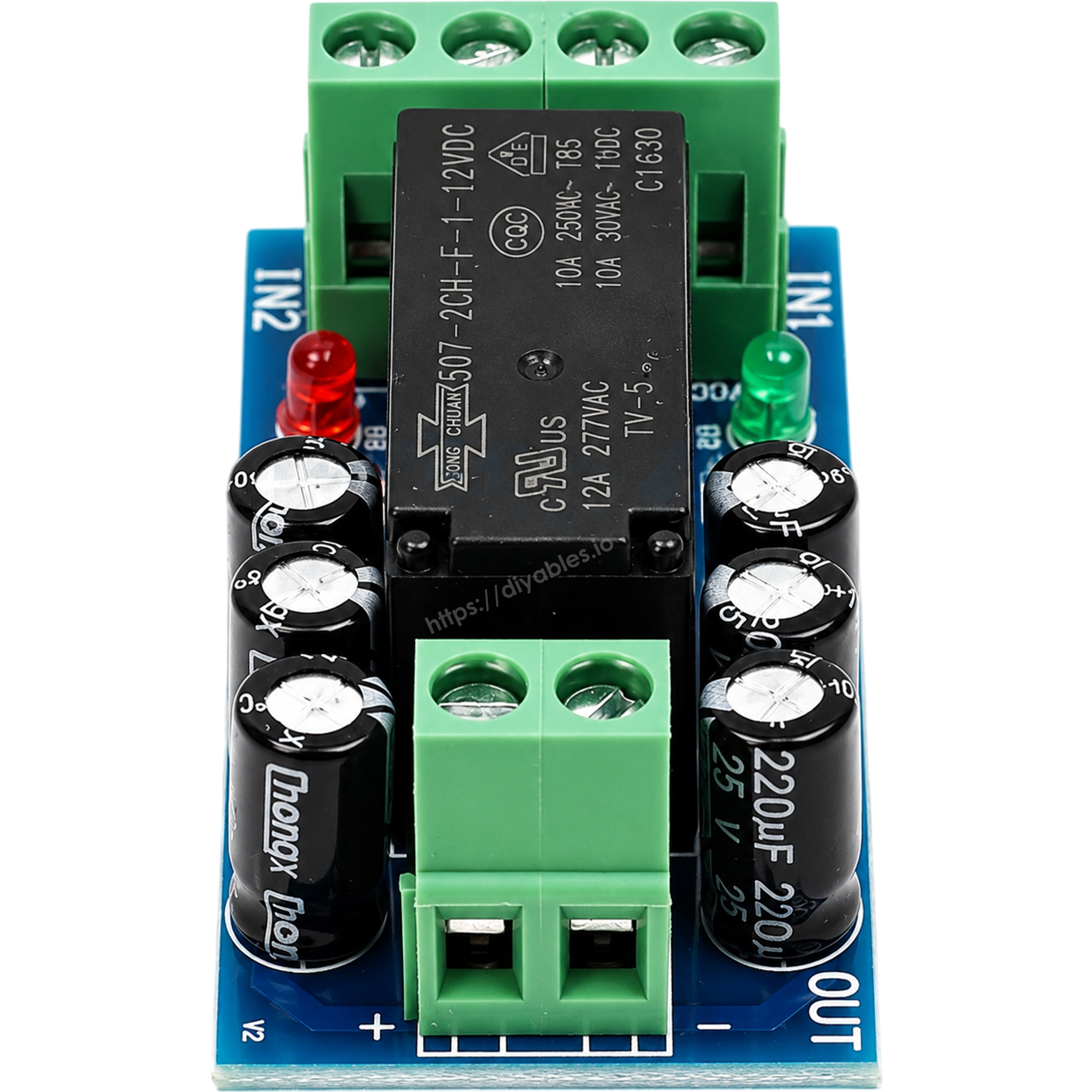
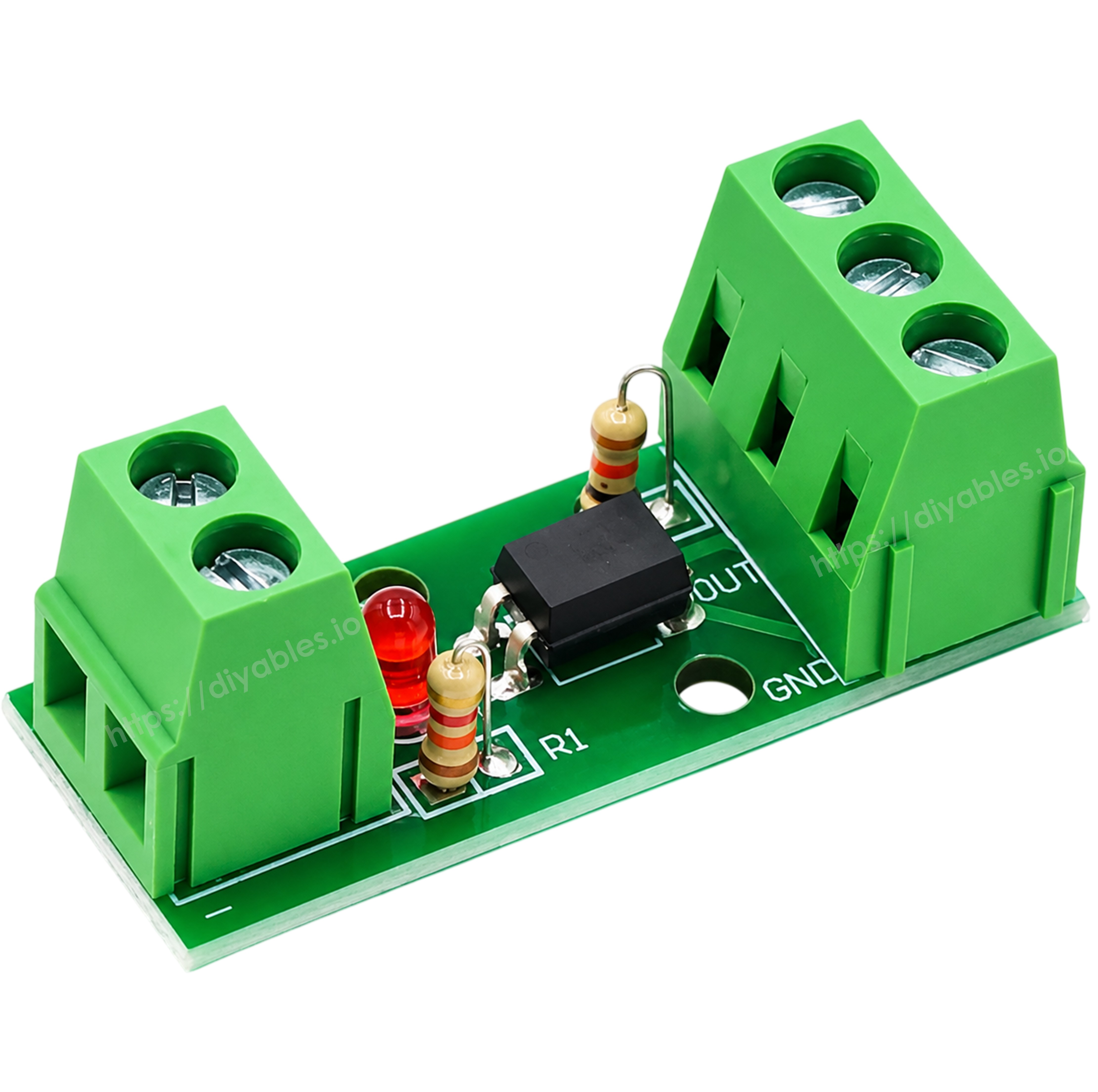
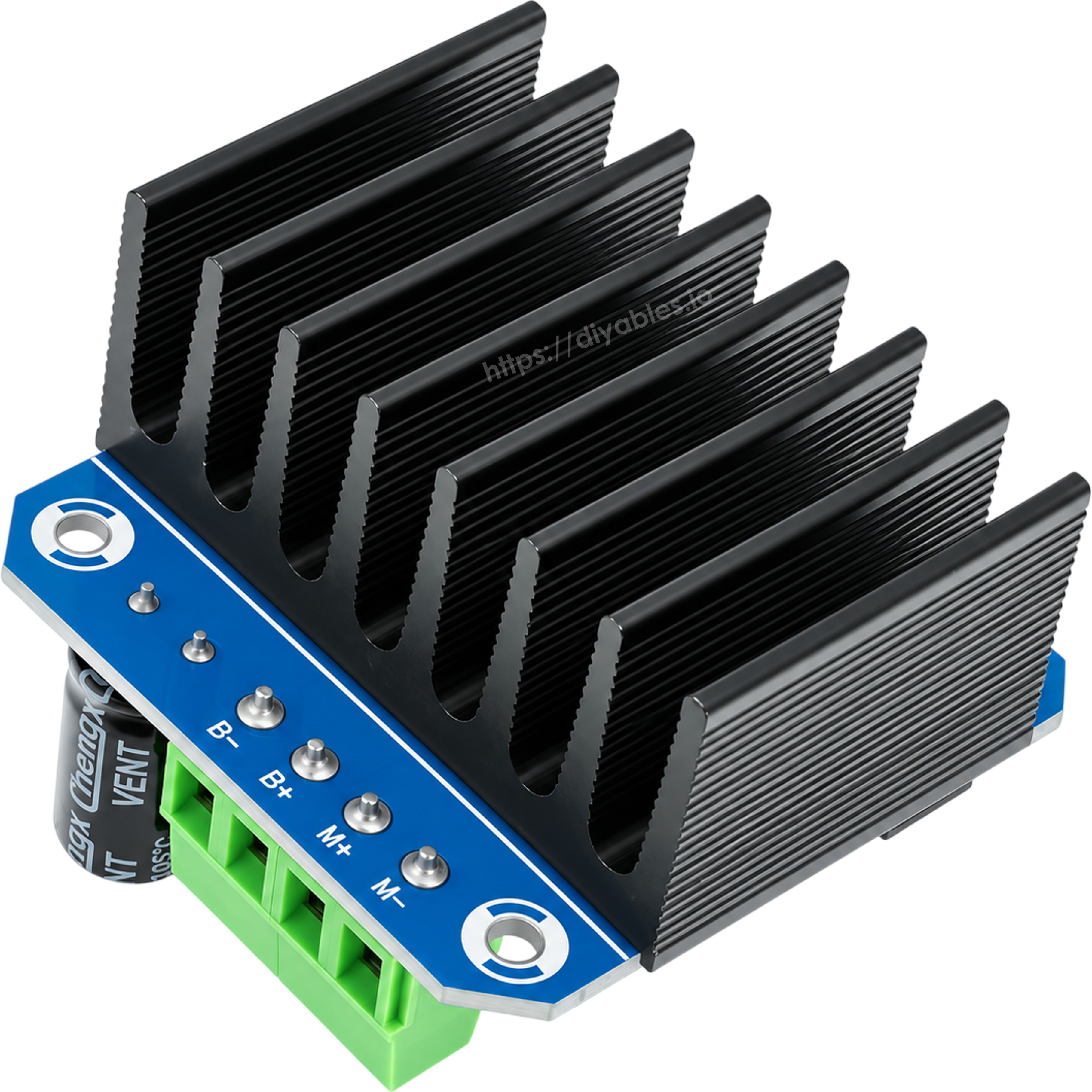
The driver stage is isolated from your microcontroller by an on-board isolation chip, so a fault on the motor side does not reach the MCU. Only four lines are needed between the controller and the module: GND, 5V, PWM1, and PWM2. The isolation chip can share the 5V supply with your MCU or use the module's on-board 5V. Two PWM inputs accept frequencies up to 25kHz for smooth speed control and forward or reverse direction, with built-in current limiting, two error signal outputs for fault feedback, an on-board 5V power indicator, and voltage indication on the motor output end. A solderable heat sink area lets you add cooling for sustained high current loads.
This listing includes 3 BTS7960 motor driver modules, ideal for smart car and robot chassis, conveyor and winch drives, electric scooter and wheelchair motors, and other Arduino, ESP32, and Raspberry Pi motor control projects.
Key Features
- BTS7960 43A High Power Driver — Dual BTS7960 half bridge chips deliver up to 43A current for high power brushed DC motors
- Wide 5.5V to 27V Supply — Accepts a 5.5V to 27V motor supply covering 6V, 12V, and 24V motor systems
- Dual PWM Inputs Up To 25kHz — Two PWM inputs give smooth speed control at frequencies up to 25kHz
- Reversible Motor Direction — Full H bridge topology drives the motor forward or backward under PWM control
- 5V Isolation Protects The MCU — On-board isolation chip separates the driver stage from the microcontroller for effective MCU protection
- Flexible 5V Supply — Isolation chip 5V can be shared with the MCU 5V or taken from the module's on-board 5V supply
- Simple Four Wire Hookup — Needs only GND, 5V, PWM1, and PWM2 from the controller for full motor control
- Built-In Current Limiting — Current limiting and two error signal outputs provide fault feedback during operation
- On-Board Status Indicators — 5V power indicator LED plus voltage indication on the motor driver output end
- Solderable Heat Sink Pad — Heat sink area can be soldered for extended high current operation
- 3-Pack Value Set — Includes 3 BTS7960 motor driver modules for multi-motor builds or spares
SPECIFICATION
| Specification | Value |
|---|---|
| Product Type | DC Motor Driver Module (H Bridge) |
| Driver Chip | BTS7960 (dual half bridge) |
| Maximum Current | 43A |
| Motor Supply Voltage | 5.5V - 27V DC |
| Logic Supply | 5V (shared with MCU or on-board) |
| Control Interface | 2 x PWM input |
| PWM Frequency | Up to 25kHz |
| Direction Control | Forward and reverse |
| Isolation | 5V isolation between MCU and driver stage |
| Protection | Current limiting, 2 error signal outputs |
| Indicators | 5V power LED, motor output voltage indication |
| Cooling | Solderable heat sink pad |
| Package Quantity | 3 pieces |
| Compatibility | Arduino, ESP32, ESP8266, Raspberry Pi, STM32 |
| Applications | Smart car, robot chassis, conveyors, winches, electric scooters |
COMPATIBLE HARDWARE
- Arduino boards (UNO, Mega, Nano, etc.) — 2 PWM output pins plus GND and 5V
- Arduino Uno R4 WiFi/Minima — 2 PWM output pins plus GND and 5V
- ESP32 development boards — 2 LEDC PWM channels, 3.3V logic drives the inputs
- ESP8266 boards (NodeMCU, Wemos D1, etc.) — 2 PWM output pins
- Raspberry Pi (all models) — 2 GPIO pins with hardware or software PWM
- STM32 and other 3.3V/5V microcontrollers — Any 2 PWM capable output pins
- Any microcontroller with 2 PWM outputs — Requires a separate 5.5V-27V motor power supply