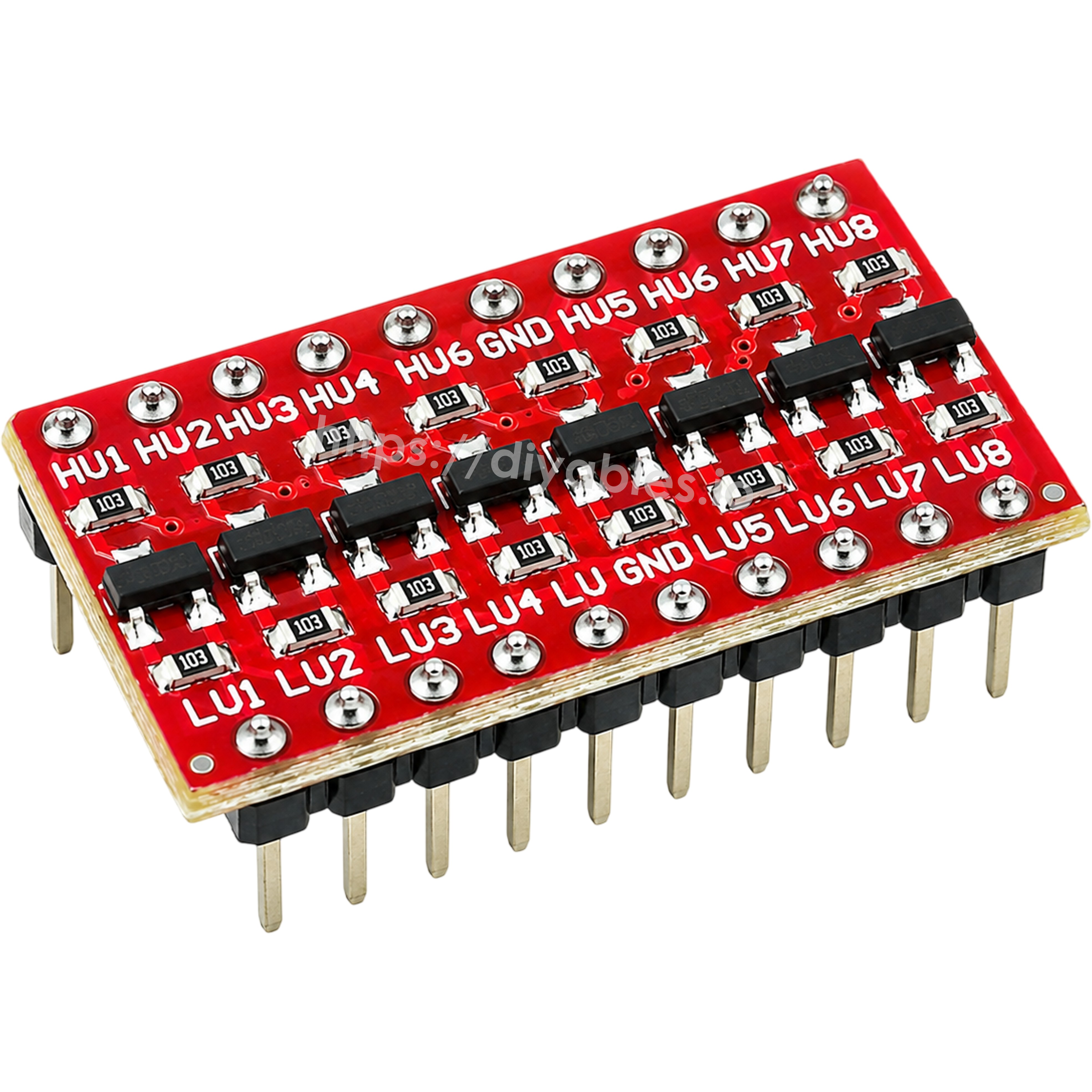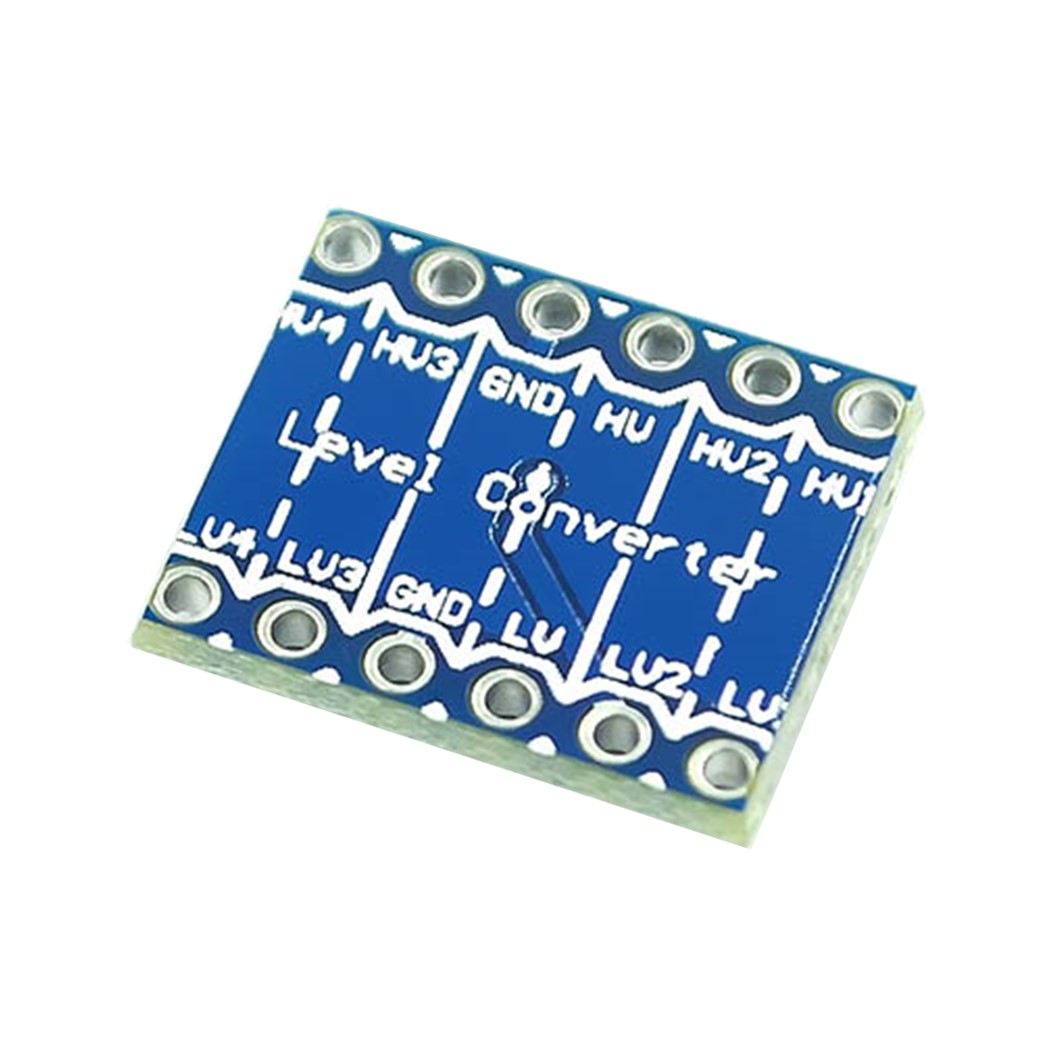
DIYables 5 Pack 4-Channel IIC I2C Level Converter Module Bi-Directional Logic Level Shifter 5V to 3.3V for Arduino Raspberry Pi ESP8266 ESP32 Sensors Presoldered Compact Adapter Board
 Click to zoom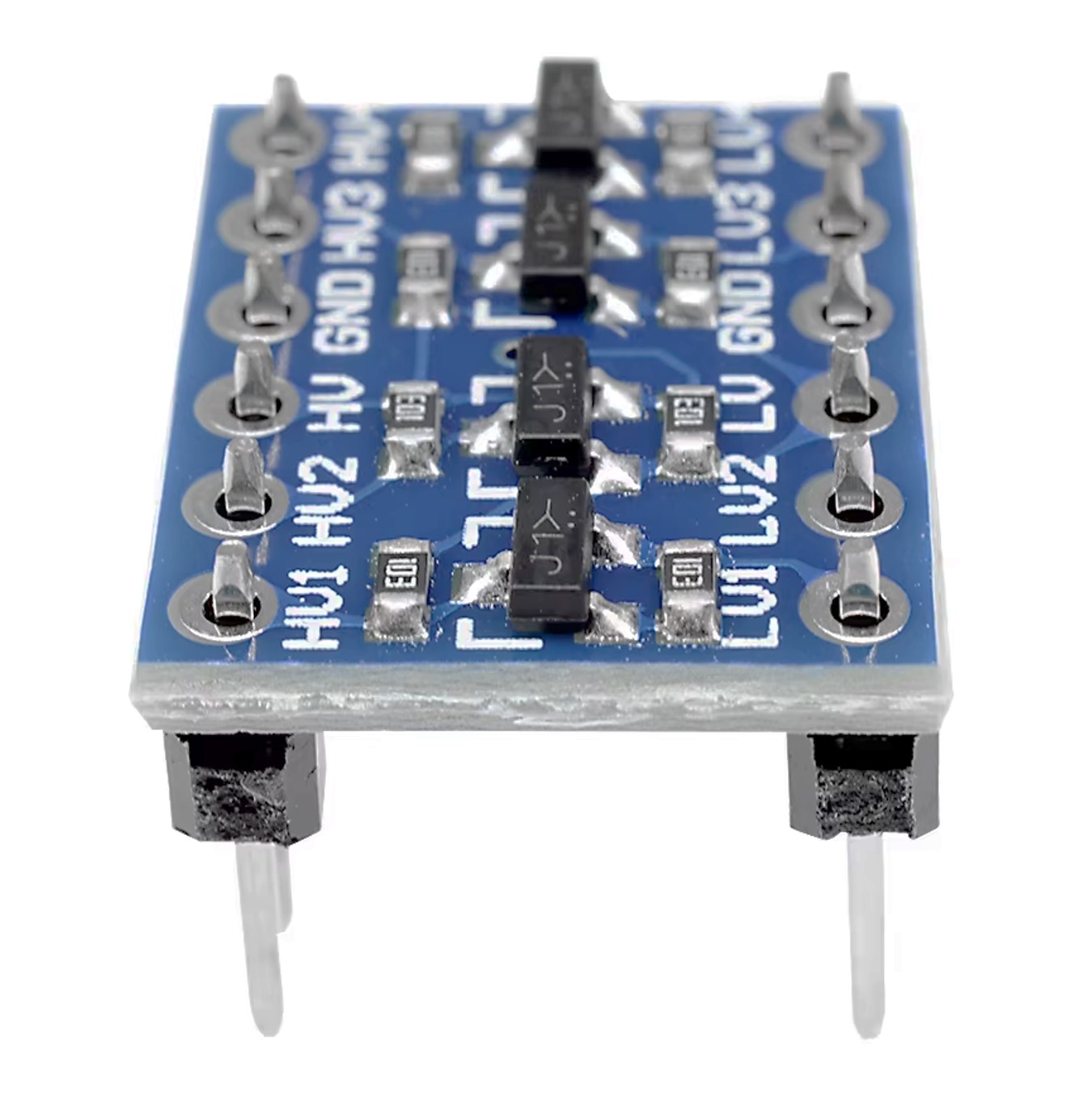
Quick Overview
The DIYables 4-Channel I2C Level Converter is a bi-directional logic level shifter for mixed-voltage projects. It translates signals between a 5V system and a 3.3V system in both directions, which is exactly what is needed when a 5V Arduino has to talk to a 3.3V ESP32, ESP8266, or Raspberry Pi on the same bus. Each board carries four independent channels, so a full I2C bus plus two spare signals can be shifted with a single module.
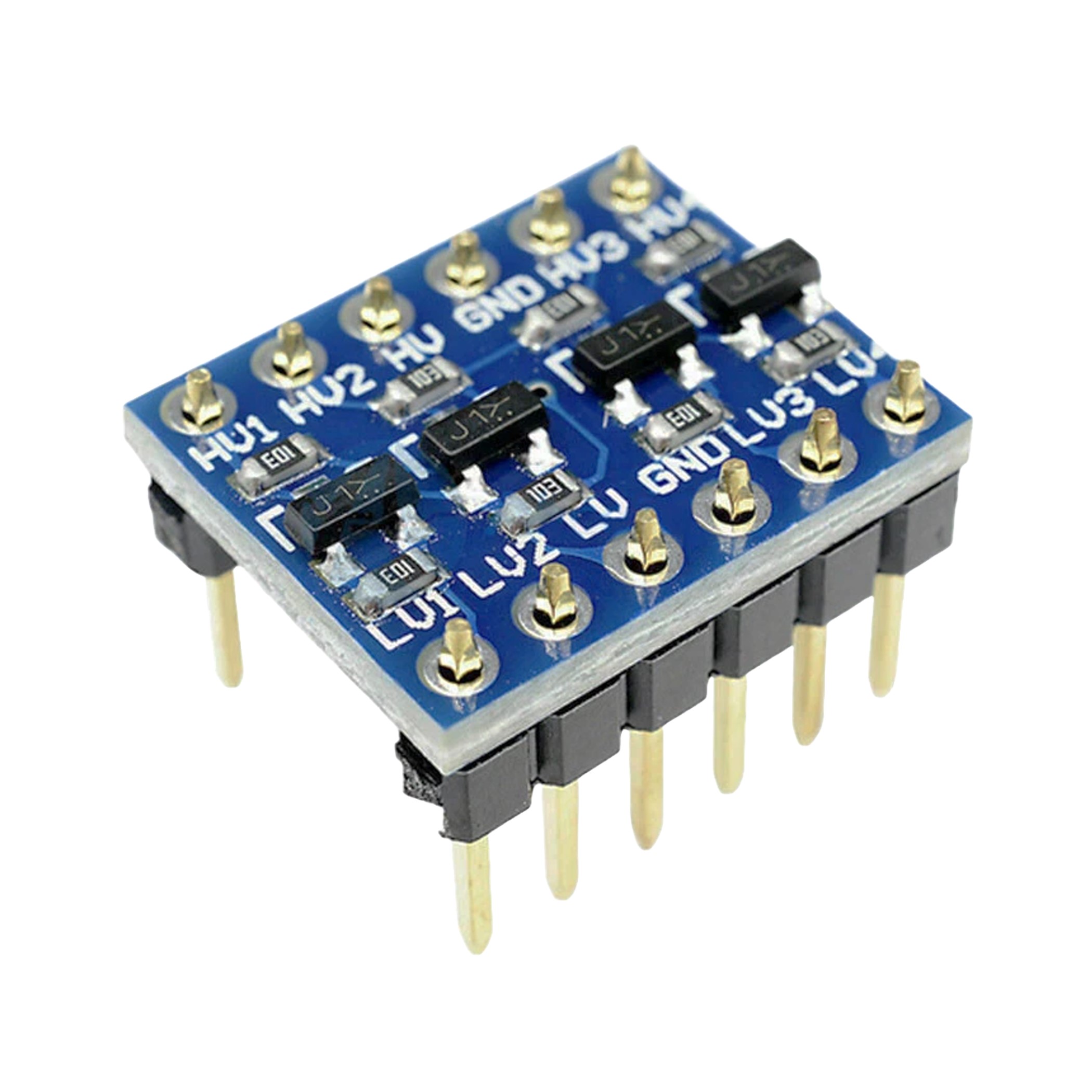
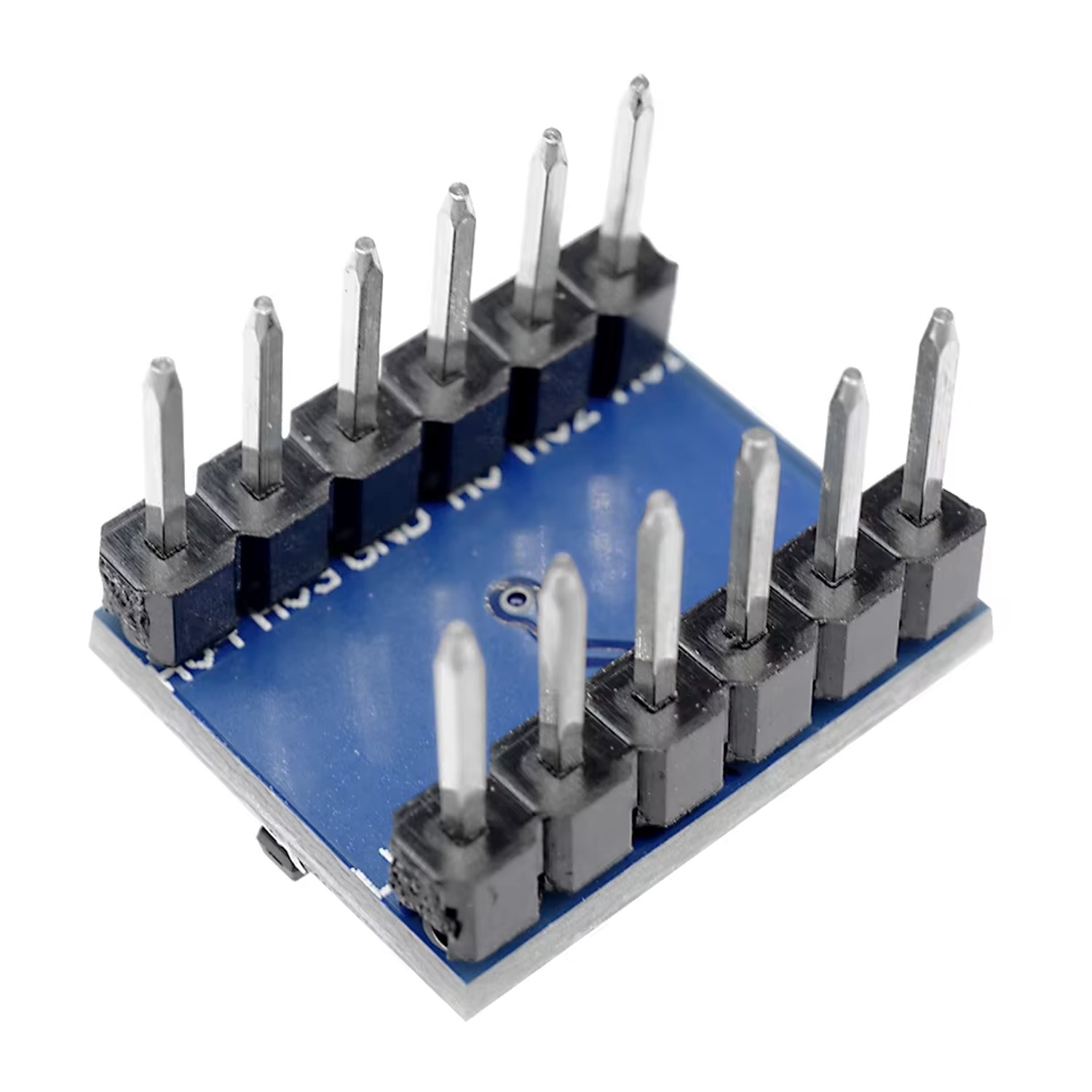
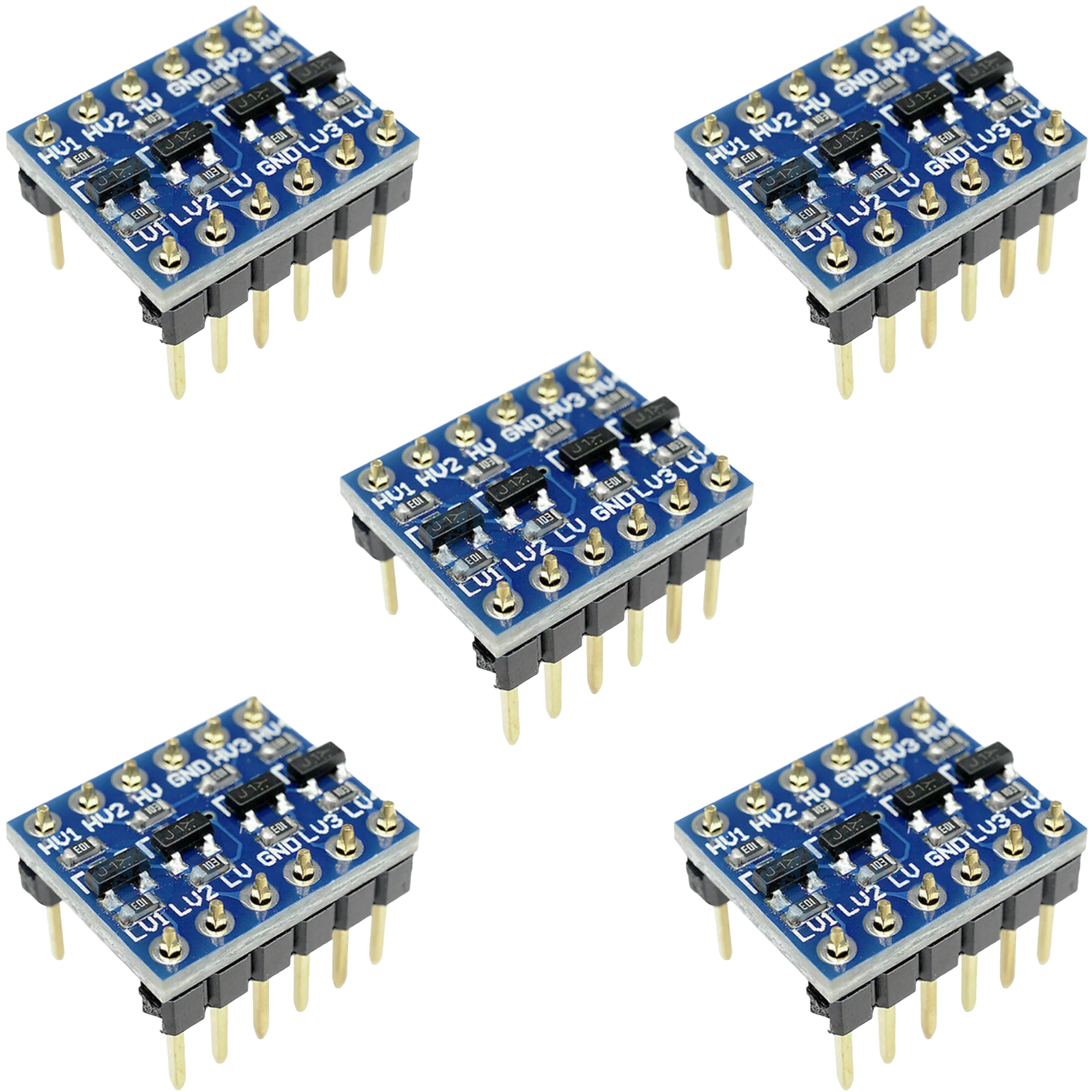
Unlike the bare version of this board, the header pins on this module come presoldered on both sides, so it drops straight into a breadboard or accepts DuPont jumper wires with no soldering iron required. The high-voltage side is marked HV with its channel pins HV1 to HV4, the low-voltage side is marked LV with LV1 to LV4, and both sides share a common ground. Level shifting is done with MOSFETs rather than a driver IC, so each channel is passive, bi-directional, and works with open-drain buses such as I2C as well as ordinary push-pull digital lines.
Ideal for connecting 3.3V sensors to 5V boards, running I2C displays and sensor modules across voltage domains, and any mixed-voltage prototype where a 5V signal would otherwise damage a 3.3V input. This listing includes 5 modules, enough to keep one in each project or several on a single crowded build.
Key Features
- 4-Channel Bi-Directional Conversion — Four independent channels shift signals between 5V and 3.3V in both directions on the same board
- Presoldered Header Pins — Headers are already soldered on both sides so the module plugs into a breadboard immediately with no soldering
- I2C and General Digital Support — MOSFET based channels work with open-drain buses like I2C as well as ordinary push-pull digital signals
- Clear HV and LV Marking — High-voltage and low-voltage sides are silkscreened HV/LV with numbered channel pins for error-free wiring
- Shared Common Ground — Both voltage domains reference a single ground pin, keeping wiring simple
- Protects 3.3V Devices — Prevents 5V logic from reaching 3.3V inputs on ESP32, ESP8266, and Raspberry Pi boards
- Compact Breadboard Format — Small PCB with 2.54mm pitch headers fits neatly alongside other modules
- 5 Pack Value Set — Includes five modules for multiple projects, classroom sets, or spares
- Wide Compatibility — Works with Arduino, ESP32, ESP8266, Raspberry Pi, and any board mixing 3.3V and 5V logic
- No Configuration Needed — Passive design requires no firmware, library, or direction pin
SPECIFICATION
| Specification | Value |
|---|---|
| Product Type | Bi-Directional Logic Level Converter Module |
| Channels | 4 |
| Conversion Type | Bi-directional, MOSFET based |
| Voltage Levels | 5V <-> 3.3V |
| Low Voltage Side | LV, LV1 - LV4 |
| High Voltage Side | HV, HV1 - HV4 |
| Ground | Common GND shared by both sides |
| Designed For | IIC / I2C, plus general digital signals |
| Header Pins | Presoldered, 2.54mm pitch |
| Package Quantity | 5 pieces |
| Compatibility | Arduino, ESP32, ESP8266, Raspberry Pi |
| Applications | Mixed-voltage I2C, sensor interfacing, display wiring, prototyping |
COMPATIBLE HARDWARE
- Arduino boards (UNO, Mega, Nano, etc.) — 5V logic on the HV side
- Arduino Uno R4 WiFi and Minima — 5V logic on the HV side
- ESP32 development boards — 3.3V logic on the LV side
- ESP8266 boards (NodeMCU, Wemos D1, etc.) — 3.3V logic on the LV side
- Raspberry Pi (all models) — 3.3V GPIO on the LV side
- Raspberry Pi Pico — 3.3V GPIO on the LV side
- I2C sensors and modules — SDA and SCL through any two channels
- I2C LCD and OLED displays — connect across voltage domains without damage
- Breadboards and DuPont jumper wires — presoldered 2.54mm headers plug in directly
- Any board mixing 3.3V and 5V logic — requires both supply rails on HV and LV